



Palladium Price Trend in India
Palladium prices can be highly volatile. The market is influenced by concentrated mine supply, automotive demand, recycling, substitution with other platinum group metals, and geopolitical developments.
Use the palladium price trend chart to compare today's price with recent movements. Looking at weekly, monthly, and longer-term trends provides more context than relying on a single day's change.
What affects palladium prices in India?
Major factors include:
- International palladium prices
- USD/INR exchange rate
- Automotive demand
- Vehicle production
- Emissions regulations
- Mining output
- Recycling supply
- Platinum substitution
- Industrial demand
- Investment activity
- Geopolitical developments
- Global economic conditions
For Indian buyers, both the international palladium price and the rupee-dollar exchange rate matter.
Today's Palladium Price Per Gram in India
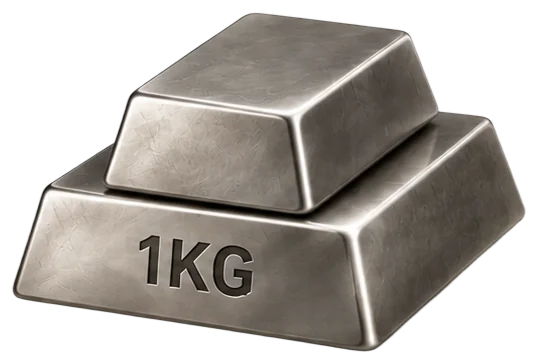
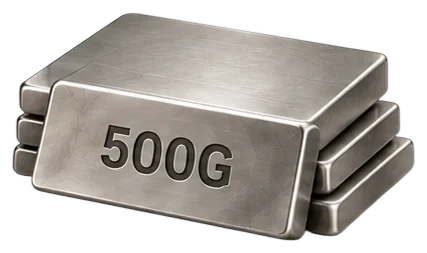
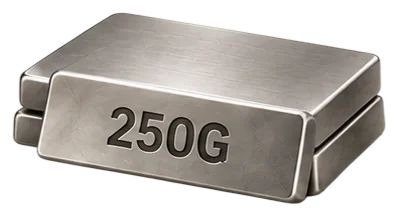
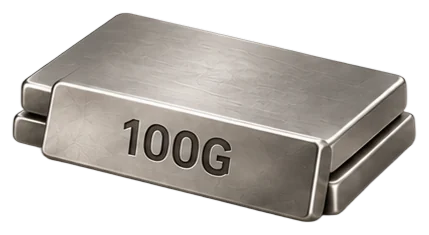
Palladium prices can be converted into different quantities using the current per-gram rate.
These are indicative values based on the underlying palladium rate. Actual physical-market quotations may include premiums, taxes, fabrication costs, and seller margins.
Historical Palladium Rates in India
Historical palladium prices can help you understand how today's rate compares with previous days, months, and longer periods.
Palladium has experienced significant price cycles. Changes in vehicle demand, mine supply, recycling, geopolitical risk, and substitution between platinum group metals can produce sharp movements.
Historical prices provide context, but past performance does not predict future palladium prices.
Why Does the Palladium Price Change Every Day?
Palladium is traded internationally, and its market is relatively concentrated compared with many larger commodities.
Prices can react to changes in:
- Vehicle production
- Automotive catalyst demand
- Mine output
- Recycling
- International inventories
- Currency movements
- Geopolitical events
- Economic expectations
- Investor positioning
A disruption affecting a major producer can have a meaningful effect when supply is already tight.
Top Palladium Market Trends to Watch
Palladium is a precious metal, but industrial demand plays an especially important role in its market.
How does automotive demand affect palladium prices?
One of palladium's major uses is in catalytic converters that help reduce harmful emissions from vehicle exhaust.
Changes in vehicle production and emissions-control requirements can therefore affect palladium demand.
The type of vehicle also matters because manufacturers can use different combinations of platinum group metals depending on technology, cost, availability, and technical requirements.
Why do petrol vehicles matter for palladium demand?
Palladium has historically been widely used in catalytic converters for gasoline-powered vehicles.
Demand can therefore be affected by:
- Petrol vehicle production
- Hybrid vehicle production
- Emissions standards
- Catalyst technology
- Metal substitution
- Recycling
Long-term changes in the vehicle market are an important part of the palladium-demand outlook.
How does mining supply affect palladium prices?
Palladium mine supply is concentrated in a relatively small number of countries.
Production can be affected by:
- Mine disruptions
- Labour issues
- Operational problems
- Sanctions and trade restrictions
- Political developments
- Energy availability
- Production costs
- Changes in ore output
Concentrated supply can make the palladium market particularly sensitive to disruptions.
Why does Russia matter for palladium?
Russia has historically been an important producer of palladium.
Developments affecting Russian production, exports, logistics, sanctions, or access to international markets can therefore influence expectations about global palladium supply.
The actual price effect depends on whether metal availability changes and how demand is behaving at the same time.
Why does South Africa matter?
South Africa is another important producer of platinum group metals.
Palladium is often produced alongside platinum and other PGMs rather than from a mine dedicated solely to palladium.
Changes in South African mining production can therefore influence palladium availability.
How does the rupee-dollar exchange rate affect palladium?
International palladium is generally quoted in US dollars.
For Indian buyers, a weaker rupee can increase the domestic price even when the international dollar price is relatively stable.
A stronger rupee can reduce some of the impact of a rising international price.
How do traders forecast palladium prices?
Analysts may monitor:
- International spot palladium
- Palladium futures
- Automotive production
- Vehicle sales
- Emissions standards
- Mine output
- Russian supply
- South African PGM production
- Recycling volumes
- Platinum prices
- Rhodium prices
- USD/INR
- US dollar movements
- Investor positioning
These indicators can help explain market conditions, but they cannot predict future prices with certainty.
Palladium Rate in India: Buying and Investment Guide
What Is Palladium?
Palladium is a silvery-white precious metal belonging to the platinum group metals, or PGMs.
The group also includes platinum, rhodium, ruthenium, iridium, and osmium.
Palladium is valued for properties such as corrosion resistance, catalytic performance, and its ability to function effectively in specialized industrial applications.
Its price is influenced more heavily by industrial demand than the price of gold.
Where Is Palladium Used?
Palladium has several industrial and commercial applications.
Major uses include:
- Automotive catalytic converters
- Chemical processes
- Electronics
- Dentistry and medical applications
- Jewellery
- Fuel-related technologies
- Industrial catalysts
- Investment products
Automotive demand has historically been particularly important to the palladium market.
Why Is Palladium Used in Catalytic Converters?
Palladium can act as a catalyst, helping chemical reactions occur without itself being consumed in the same way as ordinary reactants.
In vehicle exhaust systems, palladium-containing catalysts can help convert harmful pollutants into less harmful substances.
This application has made vehicle production and emissions regulations important drivers of palladium demand.
Where to Buy Palladium in India?
The retail palladium market in India is considerably smaller than the markets for gold and silver.
Depending on availability, physical palladium may be offered through specialist precious-metal dealers or selected jewellery and bullion businesses.
Products can include:
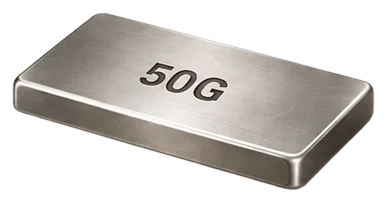
- Palladium bars
- Palladium coins
- Palladium jewellery
- Industrial palladium products
Before purchasing, verify the seller, purity, weight, certification, premium over the underlying metal price, invoice, and buyback conditions.
Is Palladium Jewellery Available in India?
Palladium can be used in jewellery, but its retail jewellery market in India is much smaller than gold, silver, or platinum.
Its naturally white appearance can make it suitable for certain jewellery designs.
Before buying palladium jewellery, ask the seller about:
- Purity
- Metal composition
- Weight
- Making charges
- Certification
- Repair availability
- Resizing
- Buyback terms
Limited resale or servicing options can matter when buying a less common jewellery metal.
How Is Palladium Purity Measured?
Palladium purity is commonly expressed in parts per thousand.
For example:
Pd950 means approximately 950 parts out of 1,000 are palladium, equivalent to 95% palladium.
Other purity levels may exist depending on the product and market.
Check the actual purity specification and certification applicable to the product rather than assuming all palladium items have the same fineness.
What Does Pd950 Mean?
Pd950 indicates an alloy containing approximately 95% palladium.
The remaining portion consists of other metals used in the alloy.
For jewellery, alloying can help produce the physical characteristics needed for manufacturing and everyday use.
A purity marking alone does not establish whether the retail price is competitive, so also compare weight, making charges, and seller premiums.
Palladium vs Platinum: What's the Difference?
Palladium and platinum belong to the same family of metals, but they are different elements with different supply-and-demand conditions.
Their prices can diverge substantially even though some industrial applications overlap.
Is Palladium More Expensive Than Platinum?
Not always.
Palladium has traded well above platinum during some periods and below or closer to it during others.
The relative price changes as automotive demand, mine supply, recycling, substitution, and investor expectations change.
A metal being more expensive today does not necessarily mean it will remain more expensive.
Palladium vs Gold: What's the Difference?
Palladium and gold are both precious metals, but their markets have very different demand structures.
Gold is widely held as jewellery, investment, and reserve assets. Palladium demand is much more closely tied to industrial applications.
Palladium vs Silver: What's the Difference?
Silver has a much larger jewellery, physical-investment, and retail market than palladium.
Both metals have industrial applications, but their uses differ substantially.
Palladium is particularly associated with catalytic applications, while silver has broad use across electronics, electrical systems, solar technologies, jewellery, and other products.
Their prices therefore respond to different combinations of supply and demand.
Palladium vs Rhodium: What's the Difference?
Palladium and rhodium are both platinum group metals used in automotive emission-control systems.
However, rhodium has an even smaller and more specialized market.
Their prices can move very differently because supply, demand, substitution possibilities, and market liquidity differ.
A rise in one PGM does not guarantee that another will move in the same direction.
Why Is Palladium Considered Rare?
Palladium is relatively scarce and is often produced as a by-product or co-product of mining for other metals.
Its supply is also geographically concentrated.
However, rarity alone does not determine price.
Demand, recycling, inventories, substitution, economic conditions, and investor activity all influence market value.
How Does Recycling Affect Palladium Supply?
Used automotive catalytic converters are an important potential source of recycled palladium.
Recycling can supplement mine production and increase available supply.
The amount recovered depends on factors such as:
- Vehicle scrappage
- Collection rates
- Palladium content
- Recycling economics
- Processing capacity
- Metal prices
Higher palladium prices can make recycling more economically attractive.
Can Platinum Replace Palladium?
In some automotive catalyst applications, manufacturers may be able to change the mixture of platinum group metals used.
When palladium becomes expensive relative to platinum, manufacturers may have an economic incentive to explore substitution where technically practical.
Substitution is not instantaneous. Vehicle systems require engineering, testing, regulatory approval, and production changes.
Even so, the relative price of platinum and palladium is an important market factor.
How Do Electric Vehicles Affect Palladium Demand?
Battery electric vehicles do not use conventional internal-combustion exhaust systems, so they do not require the same type of catalytic converter.
Growth in battery EVs can therefore affect the long-term outlook for automotive palladium demand.
The transition is not immediate, however.
Petrol vehicles and hybrids can continue to require emission-control systems, and the speed of EV adoption differs between markets.
Do Hybrid Cars Use Palladium?
Hybrid vehicles that include an internal-combustion engine still produce exhaust emissions and generally require emissions-control systems.
As a result, hybrids can continue to contribute to demand for platinum group metals used in catalytic converters.
The exact metal loading depends on vehicle design, regulations, catalyst technology, and manufacturer choices.
Can You Invest in Palladium in India?
Direct palladium investment options in India are more limited than those available for gold or silver.
Depending on product availability and applicable regulations, exposure may potentially come through:
- Physical palladium
- Overseas palladium-related products
- Mining-company shares
- International commodity products
- Funds with exposure to PGM producers
Check accessibility, regulations, underlying assets, currency risk, liquidity, expenses, and taxation before investing.
Do not assume a mining fund or metals fund directly tracks the palladium spot price.
Are There Palladium ETFs in India?
India does not have the same broad domestic palladium ETF market that exists for gold and silver.
Investors may encounter overseas products or broader commodity and mining funds, but these can have different structures and risks.
Before using any ETF for palladium exposure, determine whether it tracks:
- Physical palladium
- Palladium futures
- A basket of PGMs
- Mining companies
- A broader commodities index
These products can produce very different returns.
Is Physical Palladium a Practical Investment?
Physical palladium provides direct ownership of the metal, but the Indian retail market is relatively limited.
Consider:
- Availability
- Dealer premium
- Purity verification
- Secure storage
- Insurance
- Buy-sell spread
- Resale liquidity
- Buyback availability
A narrow retail market can make resale less convenient than selling widely traded physical gold.
Palladium Jewellery vs Palladium Investment
Palladium jewellery combines metal value with design and craftsmanship.
Its retail price may include:
- Palladium value
- Making charges
- Design premium
- Gemstones
- Taxes
- Retailer margin
These additional costs may not be recovered during resale.
Someone seeking only exposure to palladium prices should therefore distinguish jewellery purchases from investment-oriented products.
Can You Buy Palladium Coins and Bars in India?
Availability is generally more limited than for gold or silver.
If buying palladium bullion, check:
- Purity
- Weight
- Refiner or manufacturer
- Certification
- Premium over spot value
- Invoice
- Storage
- Buyback terms
The dealer premium and resale spread can materially affect returns.
What Are the Risks of Investing in Palladium?
Palladium can be particularly volatile.
Automotive-demand risk
A large part of demand is connected with vehicle emission-control systems.
EV transition risk
Growth in battery electric vehicles can affect long-term demand for conventional automotive catalysts.
Substitution risk
Manufacturers can seek alternatives when palladium becomes expensive relative to other PGMs.
Concentrated supply
Dependence on a small number of producing regions increases exposure to disruptions.
Geopolitical risk
Trade restrictions or geopolitical developments can affect expectations about supply.
Currency risk
Indian prices can change because of USD/INR even when the international palladium price is stable.
Liquidity risk
Physical palladium can be harder to buy or sell in India than gold or silver.
Price volatility
Palladium has experienced substantial price swings historically.
Why Can Palladium Prices Rise?
Prices can rise when:
- Automotive demand strengthens
- Emissions requirements increase metal demand
- Mine production falls
- Supply disruptions occur
- Recycling supply declines
- Inventories tighten
- Investor demand increases
- The dollar weakens
- Geopolitical concerns threaten supply
Several factors can operate simultaneously.
Why Can Palladium Prices Fall?
Prices can decline when:
- Vehicle demand weakens
- Battery EV adoption reduces expected catalyst demand
- Platinum substitution increases
- Recycling supply grows
- Mine production rises
- Inventories increase
- The dollar strengthens
- Investor demand falls
- Economic expectations weaken
A large decline does not necessarily mean palladium has reached its lowest price.
Is Palladium a Hedge Against Inflation?
Palladium can rise during some inflationary periods, but it should not be considered a reliable inflation hedge.
Industrial demand has a major influence on its price.
A global economic slowdown could weaken palladium demand even while consumer-price inflation remains elevated.
Palladium as a Diversification Strategy
Palladium has different demand and supply drivers from equities, bonds, gold, and many other assets.
This can give it diversification characteristics in some portfolios.
However, palladium can be highly volatile and relatively illiquid for Indian retail investors.
Diversification reduces concentration risk, but it does not prevent investment losses.
Palladium vs Mutual Funds: What Should Investors Understand?
Palladium is a commodity. A mutual fund is an investment vehicle.
A mutual fund may hold equities, debt, commodities, international securities, or other permitted assets depending on its mandate.
Even a fund holding shares of PGM mining companies will not necessarily move in line with palladium prices. Mining-company returns can also depend on:
- Production
- Costs
- Debt
- Management
- Other metals produced
- Currency movements
- Political risk
Always check the fund's actual portfolio.
How to Buy Physical Palladium in India
Because palladium is less commonly available than gold, start by identifying a credible specialist seller.
Before purchasing:
- Check the current international and Indian reference price.
- Confirm purity.
- Verify weight.
- Check certification.
- Ask about the premium over metal value.
- Obtain an invoice.
- Understand storage requirements.
- Ask about buyback arrangements.
Do not assume that every precious-metal dealer buys palladium back.
How to Sell Palladium in India
Selling physical palladium may require more research than selling gold.
Check the current palladium rate
Use the live rate as a benchmark.
Confirm purity
Know the purity and weight of the product.
Keep certification
Documentation can help establish product specifications.
Find specialist buyers
A general jeweller may not actively trade palladium.
Compare quotations
Buy-sell spreads can vary significantly in a less liquid retail market.
Understand deductions
Ask about testing, refining, melting, and service charges before accepting an offer.
Why Is the Palladium Buying Price Different From the Selling Price?
Dealers typically maintain a spread between their selling and buying prices.
That difference can reflect:
- Dealer margin
- Market volatility
- Inventory risk
- Testing costs
- Refining costs
- Logistics
- Liquidity
- Currency movements
The spread can be particularly important for metals with a smaller Indian retail market.
Taxation of Palladium in India
Tax treatment depends on the form in which palladium is owned and the type of transaction.
Physical palladium, jewellery, overseas ETFs, mining shares, mutual funds, and other securities can have different tax consequences.
GST, customs duties, and capital-gains rules may also apply depending on the transaction.
Because tax rules can change, verify the current treatment for the specific product before buying or selling.
Importing Palladium Into India
Palladium imports can be subject to customs duties, taxes, trade regulations, and product classification requirements.
Treatment can differ for:
- Palladium bullion
- Coins
- Jewellery
- Industrial palladium
- Palladium compounds
- Scrap
- Other PGM-containing materials
Check current Indian Customs requirements and the correct tariff classification before importing palladium.
Is the Palladium Rate the Same Across India?
Palladium's Indian retail market is much smaller than the gold market, and city-specific consumer pricing is less useful unless you have reliable local feeds.
Actual transaction prices can still differ because of:
- Dealer premiums
- Product availability
- Currency conversion
- Purity
- Quantity
- Logistics
- Taxes
- Buy-sell spreads
Your displayed India rate should therefore be presented as an indicative market reference.
Key Takeaways
- The palladium rate today in India is ₹3,170 per gram, based on the latest reference price displayed on the page.
- Automotive catalytic converters are an important source of palladium demand.
- Russia and South Africa are important to global PGM supply, making supply concentration a key market factor.
- USD/INR movements can affect palladium prices paid by Indian buyers.
- Pd950 means an alloy contains approximately 95% palladium.
- Palladium and platinum can substitute for each other in some industrial applications, which can affect relative demand.
- Battery EV adoption is an important long-term consideration for automotive palladium demand.
- India's physical palladium market is much smaller than its gold and silver markets, so liquidity and buy-sell spreads deserve attention.
- Palladium-related funds or mining shares do not necessarily track the spot palladium price.
- Historical price performance can provide context, but it does not predict future palladium returns.