



Copper Price Trend in India
Copper prices can move considerably over short and long periods because the metal is closely connected with global industrial activity.
The copper price trend chart above shows how prices have changed over the selected period. Rather than looking only at today's rate, compare current prices with recent highs, lows, and longer-term movements.
What affects copper prices in India?
Major factors include:
- International copper prices
- USD/INR exchange rate
- Industrial demand
- Global economic growth
- Construction activity
- Electrical and electronics demand
- Renewable-energy infrastructure
- Electric vehicle demand
- Mining production
- Smelter and refinery output
- Global copper inventories
- Supply disruptions
- Commodity-market sentiment
Unlike gold, copper demand is heavily connected to industrial and economic activity.
Today's Copper Price Per Kg in India
Copper in India is commonly quoted per kilogram for retail and physical-market comparisons.
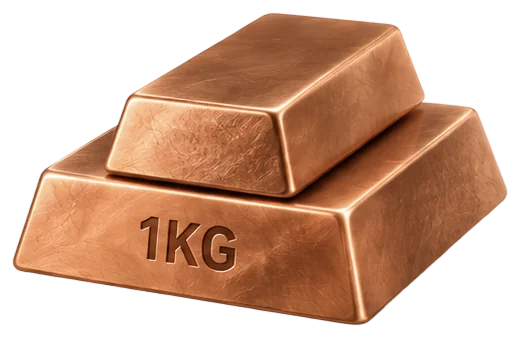
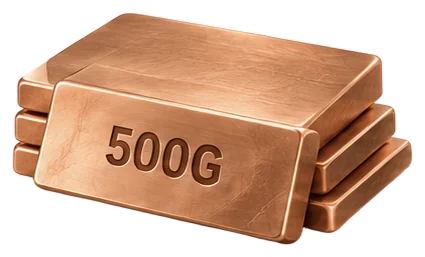
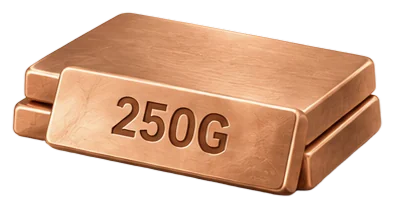
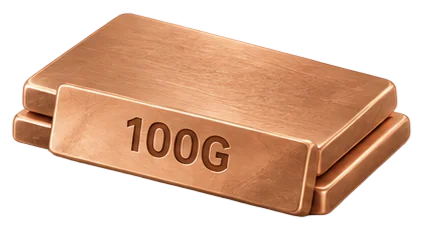
The live table above shows how the current rate translates into different quantities.
These are indicative values based on the underlying copper rate. Actual physical copper prices can differ depending on grade, form, seller margin, taxes, transportation, and processing costs.
Historical Copper Rates in India
Historical copper rates can help you understand whether today's price is relatively high or low compared with recent trading sessions.
Copper can experience significant price cycles. Strong industrial demand or supply constraints can support prices, while weaker manufacturing activity or rising inventories can put pressure on them.
Past price movements do not guarantee future performance, but historical data provides useful context when studying the copper market.
Why Does the Copper Price Change Every Day?
Copper is an internationally traded industrial commodity, so its price responds continuously to changes in supply, demand, currencies, inventories, and expectations about the global economy.
A strong manufacturing outlook may increase expectations for copper consumption. Conversely, weaker construction or manufacturing activity can reduce demand expectations.
Supply matters just as much. Mine disruptions, lower production, transportation problems, or changes in inventories can affect market prices.
Top Copper Market Trends to Watch
Copper is often monitored as an indicator of industrial activity because it is used across construction, electrical systems, manufacturing, transport, and energy infrastructure.
How does industrial demand affect copper prices?
Industrial consumption is one of the most important drivers of copper demand.
Copper is widely used in:
- Electrical wiring
- Power transmission
- Construction
- Electronics
- Industrial machinery
- Vehicles
- Renewable-energy systems
- Electric infrastructure
When activity in copper-intensive industries expands, demand for the metal can increase. Economic slowdowns can have the opposite effect.
How does global economic growth affect copper?
Copper demand is closely linked to construction, manufacturing, infrastructure, and industrial investment.
Expectations of stronger global economic activity can therefore support copper demand, while recession concerns can weaken the outlook.
The relationship is not perfect because supply conditions can move independently of demand.
How does the US dollar affect copper prices in India?
International copper is generally priced in US dollars.
For Indian buyers, the USD/INR exchange rate therefore matters alongside the international copper price.
If the rupee weakens against the dollar, domestic copper can become more expensive even when the international dollar price is relatively stable.
How do copper inventories affect prices?
Commodity exchanges and other market participants monitor copper inventories because stock levels can provide information about the balance between available supply and demand.
Falling inventories can indicate tighter availability, while rising inventories may suggest that more metal is available relative to immediate demand.
Inventory data should still be interpreted alongside production, imports, exports, and consumption.
Why can copper prices be volatile?
Copper prices can react quickly to changes in:
- Economic data
- Manufacturing activity
- Chinese demand
- Mine production
- Global inventories
- Currency movements
- Interest-rate expectations
- Trade policy
- Geopolitical events
- Investor positioning
Unexpected changes in any of these areas can cause significant short-term movements.
How do traders forecast copper prices?
Copper traders and analysts commonly monitor:
- International spot prices
- Copper futures
- MCX copper prices
- LME copper prices
- Global inventories
- Mine production
- Smelter output
- Manufacturing indicators
- Construction activity
- Chinese economic data
- USD/INR
- US dollar movements
- Technical price levels
Forecasts remain estimates. Commodity prices can move sharply when new economic or supply information emerges.
Copper Rate in India: Buying and Investment Guide
What Is Copper?
Copper is a reddish-brown industrial metal known for its electrical and thermal conductivity, durability, and ability to be shaped into different forms.
It is used across industries ranging from construction and electrical equipment to electronics, transportation, manufacturing, and energy infrastructure.
Copper is therefore different from precious metals such as gold. While investment demand can affect copper prices, industrial consumption plays a much larger role.
Where Is Copper Used in India?
Copper has applications across India's economy.
Major uses include:
- Electrical cables and wiring
- Power generation and transmission
- Buildings and construction
- Consumer electronics
- Industrial machinery
- Telecommunications
- Automobiles
- Electric vehicles
- Renewable-energy infrastructure
- Household appliances
- Plumbing and engineering products
This broad industrial use means India's economic and infrastructure activity can influence domestic copper demand.
What Are the Different Types of Copper?
Not every copper product has the same purity, form, or market value.
Common forms include:
Copper cathodes
Cathodes are refined copper products used as raw material for manufacturing copper rods, wires, tubes, sheets, and other products.
Copper rods and wires
These are widely used in electrical and industrial applications.
Copper sheets and plates
Copper sheets can be used in electrical, architectural, engineering, and manufacturing applications.
Copper tubes
Copper tubing has applications in plumbing, refrigeration, air-conditioning, and industrial systems.
Copper scrap
Scrap copper comes from discarded wiring, equipment, machinery, construction materials, and other products.
Its value depends heavily on purity, contamination, grade, and recoverable copper content.
How Is Copper Purity Measured?
Copper purity is generally expressed as a percentage.
For example, copper described as 99.9% pure contains a much higher proportion of copper than scrap material mixed with insulation, solder, other metals, or contaminants.
The exact specifications required depend on the product and industrial application.
When buying physical copper, do not assume that every product quoted as "copper" has identical purity.
Copper Price vs Scrap Copper Price
The market copper price and the amount paid for copper scrap are not necessarily the same.
Scrap copper prices can depend on:
- Copper content
- Scrap grade
- Contamination
- Insulation
- Other attached materials
- Quantity
- Processing requirements
- Local demand
- Dealer margin
Clean, high-copper-content scrap may receive a different price from mixed or heavily contaminated material.
This is why today's copper price per kg should not automatically be treated as today's scrap copper buying price.
Why Is Copper Important for Electrical Infrastructure?
Copper is widely used in electrical systems because it conducts electricity effectively and can be formed into wires, cables, and other components.
As electricity networks expand, demand for conductors, transformers, motors, and related equipment can contribute to copper consumption.
For India, investments in power infrastructure can therefore form part of the long-term copper-demand picture.
Why Is Copper Important for Renewable Energy?
Renewable-energy infrastructure can require substantial amounts of electrical equipment, cables, motors, transformers, and grid connections.
Copper is used across many of these systems.
Growth in solar, wind, energy-storage infrastructure, and electricity grids can therefore affect expectations for long-term copper demand.
However, rising demand does not automatically mean copper prices will continuously increase. Mining supply, recycling, substitution, and economic conditions also matter.
Why Do Electric Vehicles Matter for Copper Demand?
Electric vehicles contain electrical systems, motors, cables, charging components, and other equipment that can require copper.
The broader transition toward electrification can also increase demand for charging infrastructure and electricity-grid investment.
This is one reason investors and commodity analysts monitor EV adoption when studying long-term copper demand.
Why Does China Affect Copper Prices?
China is a major participant in global manufacturing, construction, and commodity consumption.
Changes in Chinese industrial production, construction activity, infrastructure spending, imports, and inventories can therefore influence global expectations for copper demand.
Indian copper prices can respond because domestic prices are linked to international commodity markets.
How Do Mine Disruptions Affect Copper Prices?
Copper supply begins with mining.
Production can be affected by:
- Operational problems
- Labour disputes
- Weather
- Falling ore grades
- Regulatory changes
- Political developments
- Transportation problems
- Project delays
If significant supply becomes unavailable while demand remains strong, copper prices can face upward pressure.
The reverse can occur if supply grows faster than demand.
How Does Recycling Affect Copper Supply?
Copper can be recycled and reused.
Scrap therefore represents an important secondary source of copper alongside newly mined material.
When copper prices rise, collecting and processing scrap can become more economically attractive, potentially increasing secondary supply.
Recycling can help meet demand, but the amount available depends on scrap collection, processing capacity, quality, and market economics.
What Is MCX Copper?
MCX, or the Multi Commodity Exchange of India, provides exchange-traded commodity derivative contracts, including copper contracts.
Copper futures allow eligible market participants to take positions based on future copper prices or manage commodity-price exposure.
An MCX copper futures contract is not the same as buying physical copper.
Futures involve concepts such as:
- Contract specifications
- Lot size
- Margin
- Leverage
- Expiry
- Daily mark-to-market settlement
- Price volatility
Anyone trading commodity derivatives should understand these mechanics and the possibility of substantial losses.
MCX Copper vs Physical Copper
The two serve different purposes.
A futures position should not be treated as a substitute for simply purchasing physical metal.
How Does the International Copper Price Affect India?
India participates in a global commodity market.
International benchmark prices can therefore influence domestic copper rates.
The final Indian price can also reflect:
- USD/INR exchange rate
- Import costs
- Domestic supply
- Taxes and duties
- Logistics
- Local demand
- Dealer margins
This explains why an international copper-price movement may not translate into an identical percentage movement in the physical price quoted by an Indian seller.
What Is the Role of the London Metal Exchange in Copper Prices?
The London Metal Exchange, commonly known as the LME, is an important international market for industrial metals, including copper.
Market participants around the world monitor LME copper prices and inventories as reference points for global market conditions.
Indian copper traders may therefore follow both international benchmarks such as LME copper and domestic commodity prices such as MCX copper.
Can You Invest in Copper in India?
Investors looking for copper exposure need to distinguish between owning the physical metal and investing in financial products connected with copper, commodities, mining, or related sectors.
Possible routes can include:
- Physical copper
- Commodity derivatives
- Shares of copper-related companies
- Mutual funds with relevant commodity or mining exposure, depending on scheme mandate
- Exchange-traded products where eligible products are available
Each route has different risks.
Owning shares in a copper producer, for example, is not the same as owning copper. A company's returns also depend on operating costs, debt, management, production, and other business factors.
Top Copper Mutual Funds
A fund appearing in a copper-related discovery section does not necessarily mean it holds only copper or directly tracks the spot price of copper.
Before investing, check the scheme's:
- Investment objective
- Asset allocation
- Underlying holdings
- Commodity exposure
- Expense ratio
- Risk level
- Historical tracking characteristics
- Tax treatment
The scheme's official documents should be the primary source for understanding what investors actually own.
Top Copper ETFs
Before treating an ETF as a direct copper investment, check what its underlying exposure actually is.
An ETF might track:
- Copper futures
- Commodity indices
- Mining companies
- Metals and mining businesses
- Broader materials-sector companies
These exposures can produce very different returns from the physical copper price.
Is Physical Copper a Practical Investment?
Physical copper can be bought, but it has practical limitations as a retail investment.
Copper has a much lower value per kilogram than gold. A substantial investment can therefore require a large amount of metal and significant storage space.
Other considerations include:
- Storage
- Transportation
- Verification of purity
- Dealer margins
- Buying and selling spreads
- Security
- Resale arrangements
Physical copper may make more sense for businesses that actually consume the metal than for investors who simply want commodity-price exposure.
Copper vs Gold: What Is the Difference?
Copper and gold are both traded commodities, but their demand drivers differ substantially.
Copper prices are particularly sensitive to expectations about manufacturing, construction, infrastructure, and economic growth.
Copper vs Silver: What Is the Difference?
Copper and silver both have industrial applications, but silver is also a precious metal with substantial jewellery and investment demand.
Copper is much more directly associated with large-scale industrial consumption.
Silver, meanwhile, can respond both to industrial conditions and precious-metal investment sentiment.
This means their prices should not be expected to move together at all times.
Is Copper a Hedge Against Inflation?
Copper prices can rise during inflationary periods, particularly when strong commodity demand and rising input costs occur together.
However, copper is not a guaranteed inflation hedge.
During an economic slowdown, industrial demand can weaken even when consumer prices remain elevated.
Copper prices therefore depend on the balance of economic growth, industrial demand, supply, currencies, and market expectations.
Is Copper a Diversification Investment?
Copper exposure can behave differently from equities, bonds, gold, and other assets under certain market conditions.
However, adding copper does not automatically improve every portfolio.
Commodity prices can be volatile, and copper can be particularly sensitive to global economic conditions.
Any allocation should be considered in the context of investment objectives, time horizon, risk tolerance, and the rest of the portfolio.
What Are the Risks of Investing in Copper?
Copper has several important risks.
Economic slowdown
Weak manufacturing or construction activity can reduce demand.
Price volatility
Commodity prices can move sharply over short periods.
Currency risk
For Indian investors, movements in USD/INR can affect domestic commodity prices.
Supply changes
New mines, higher production, recycling, or falling demand can increase available supply relative to consumption.
Derivatives risk
Futures involve leverage, which can magnify both gains and losses.
Company-specific risk
Investing in a copper-related stock adds business risks that do not exist when simply tracking the metal price.
Why Can Copper Prices Fall?
Copper prices can decline when:
- Global economic growth slows
- Manufacturing activity weakens
- Construction demand falls
- Copper inventories rise
- Mine supply increases
- The US dollar strengthens
- Investor sentiment deteriorates
- Demand forecasts are revised lower
A fall in copper prices does not necessarily mean the metal is cheap or that prices will immediately recover.
Why Can Copper Prices Rise?
Prices can increase when:
- Industrial demand strengthens
- Infrastructure spending rises
- Inventories decline
- Mine supply is disrupted
- Production growth disappoints
- The US dollar weakens
- Demand expectations improve
- Electrification increases long-term demand expectations
Several factors can occur simultaneously, making short-term price forecasting difficult.
How to Buy Physical Copper in India
If you are buying copper for physical ownership or commercial use, first identify the exact product you require.
Compare:
- Copper grade
- Purity
- Weight
- Product form
- Price per kg
- Taxes and duties
- Transportation charges
- Seller credentials
- Testing or certification
- Buyback or resale conditions
For a large commercial transaction, product specifications matter more than a generic online "copper rate today."
How to Sell Copper in India
The amount you receive depends on what type of copper you are selling.
Before accepting an offer:
Identify the material
Know whether you have refined copper, wire, tubing, sheet, scrap, or another form.
Determine purity
Attached insulation, solder, other metals, or contamination can reduce recoverable copper value.
Check the current rate
Use the current market price as a reference, not as a guaranteed resale quote.
Compare buyers
Get quotations from established buyers or recyclers.
Understand deductions
Ask how the buyer calculates weight, grade, processing costs, and final payment.
Why Is Scrap Copper Cheaper Than New Copper?
Scrap often requires collection, sorting, cleaning, processing, and refining before the metal can be reused.
The value therefore depends on how much recoverable copper the material contains.
For example, clean copper wire and mixed electrical scrap may receive very different quotations even if both are described casually as "copper scrap."
Taxation of Copper in India
Tax treatment depends on the type of copper transaction.
Physical copper purchased as a commodity, copper used by a business, commodity derivatives, shares of copper-related companies, mutual funds, and overseas investment products can all have different tax implications.
GST and customs treatment can also depend on the specific goods and transaction.
Because tax rates and classifications can change, verify the current rules applicable to the exact copper product or investment before making a significant transaction.
Importing Copper Into India
Copper imports into India are subject to applicable customs, trade, product-quality, and tax requirements.
The rules can vary depending on whether the material is:
- Refined copper
- Copper concentrate
- Copper scrap
- Copper wire
- Copper tubes
- Copper products
- Copper alloys
Businesses importing copper should check the current tariff classification, duties, quality requirements, and trade rules applicable to the specific product.
Is Copper Price the Same Across India?
The displayed copper rate today in India can serve as the main reference rate.
Physical-market quotations can still vary by seller or location because of:
- Freight
- Taxes
- Quantity
- Copper grade
- Product form
- Processing
- Dealer margins
So an India-wide benchmark should not be presented as a guaranteed physical transaction price everywhere in the country.
Key Takeaways
- The copper rate today in India is ₹1,368 per kg based on the latest available benchmark on this page.
- Copper is primarily an industrial metal, so manufacturing, construction, infrastructure, and economic growth strongly influence demand.
- International copper prices and USD/INR can directly affect Indian copper rates.
- Mine production, inventories, recycling, and supply disruptions are important price drivers.
- MCX copper futures are derivative contracts and should not be confused with buying physical copper.
- Copper-related ETFs or mutual funds may not directly track physical copper, so check their underlying holdings and investment strategy.
- Scrap copper prices depend on grade, purity, contamination, and recoverable metal content.
- Physical copper can require substantial storage compared with higher-value precious metals.
- Historical price movements can provide context but do not predict future copper prices.
- Use the India-wide rate as a benchmark, while recognizing that actual physical-market quotations can differ.