Options Scalping in India: A Beginner Guide to Structured Trading
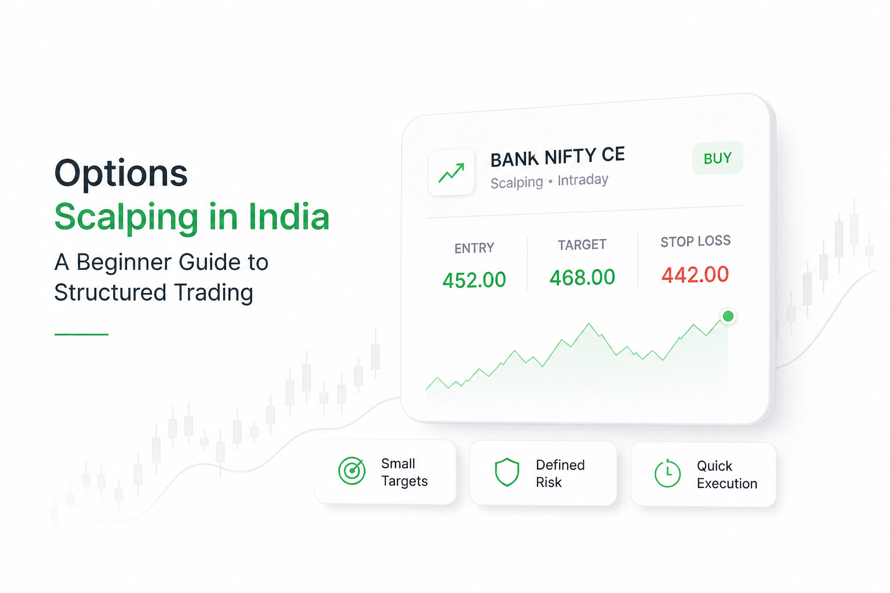
Options scalping in India attracts a lot of curiosity because it looks fast, simple, and potentially rewarding. On social media, the story is often reduced to a few screenshots, a one-line “setup,” and the promise of quick profits in Nifty or Bank Nifty. But for most beginners, the real challenge is not speed. It is structure.
If you are exploring options scalping for beginners, this guide will help you understand what scalping actually involves, when it is unsuitable, how risk builds up quickly, and why a predefined process matters more than instinct. Whether you are looking for a Nifty options scalping strategy, a Bank Nifty scalping guide, or simply want to learn how to scalp options in India without falling for random tips, this article is designed to give you a practical starting point.
A good scalping process is not built on prediction. It is built on rules: what to trade, when to enter, where to exit, how much to risk, and when to stop. That is especially important in intraday options scalping India, where price moves are fast, leverage amplifies outcomes, and emotional mistakes can become expensive in minutes.
What is options scalping in India?
Options scalping is a short-duration trading approach where traders try to capture small price moves in option contracts over very short timeframes, often within minutes. In India, beginners typically attempt this in index options such as Nifty and Bank Nifty because these contracts are highly active and liquid.
In practice, a scalper is not trying to hold a view for the whole day. The goal is to identify a short-term move, enter with a clear plan, and exit quickly based on a predefined target or stop-loss. This is different from positional options trading, where trades may be carried for days or weeks.
What makes scalping attractive is also what makes it dangerous. Options prices move not only because of the underlying index but also because of volatility, time decay, liquidity, and bid-ask spreads. If you are new to derivatives, it helps to first understand the basics of what is F&O trading and how options trading works before trying short-term execution.
According to SEBI’s investor education platform, investors should be cautious about scams, fake trading apps, and misleading market claims, especially those pushed through unofficial channels and social media. That matters because many beginners enter scalping through unverified “tips” rather than a tested framework. SEBI Investor also highlights the need to spot scams and protect investment accounts.
Why options scalping looks easy but feels hard
Most beginners discover scalping through short videos, Telegram groups, WhatsApp forwards, or screenshots showing fast profits. The problem is that scalping is often shown as a reaction game, not a process game.
Here is why it becomes difficult in real trading:
“Start investing with confidence! Explore
option trading
and grow your wealth.”
1. Every decision feels urgent
In scalping, you often have seconds or a few minutes to decide. Without a rule-based setup, urgency turns into impulsive trading.
2. Losses feel emotionally bigger
Even a small adverse move can feel intense when you are watching every tick. This leads many traders to widen stop-losses, average into losing positions, or take revenge trades.
3. Options magnify noise
A small move in the underlying can create a larger percentage swing in the option premium. That makes entries and exits feel more dramatic than cash-market trades.
4. Costs matter more
Brokerage, taxes, and frequent turnover can have a meaningful impact on scalping outcomes. Since scalp trades often aim for smaller gains, costs need to be part of the plan. You can review what is brokerage in trading and estimate trade economics with the Brokerage Calculator.
For beginners, the biggest mistake is assuming scalping is about being fast. In reality, it is about being selective and consistent.
Who should avoid options scalping?
Not everyone should scalp options. In fact, many beginners should avoid it until they build basic market discipline.
You should probably stay away from options scalping in India if:
- You do not yet understand option chains, lot sizes, expiry, and margin basics.
- You frequently trade on tips instead of written rules.
- You struggle to accept small losses.
- You cannot follow a maximum daily loss limit.
- You are trading with money meant for essential expenses.
- You are still learning basic execution, order types, and stop-loss placement.
A more suitable path for many first-time market participants is to start with investment basics, SIPs, or slower trading styles before entering fast-paced derivatives. If you are early in your market journey, reading Demat Account Explained (2026 Guide): Meaning, Benefits, Charges & How It Works in India and Best Share Market Tips for Beginners can help build stronger foundations.
NSE’s derivatives education material also emphasizes that options trading requires an understanding of risk management and trading concepts, not just setups. That is an important reminder for anyone thinking of entering scalp trades casually. See NSE’s educational material
Disclaimer
The stocks mentioned in this article are not recommendations. Please conduct your own research and due diligence before investing. Investment in securities market are subject to market risks, read all the related documents carefully before investing. Please read the Risk Disclosure documents carefully before investing in Equity Shares, Derivatives, Mutual fund, and/or other instruments traded on the Stock Exchanges. As investments are subject to market risks and price fluctuation risk, there is no assurance or guarantee that the investment objectives shall be achieved. Lemonn (Formerly known as NU Investors Technologies Pvt. Ltd) do not guarantee any assured returns on any investments. Past performance of securities/instruments is not indicative of their future performance.
Related Posts
Download Lemonn
Download my app for option trading, IPO, 0 demat account, stocks, and dive into the stock market.