
What Is RBI’s E-Mandate Framework (2026 Update)?
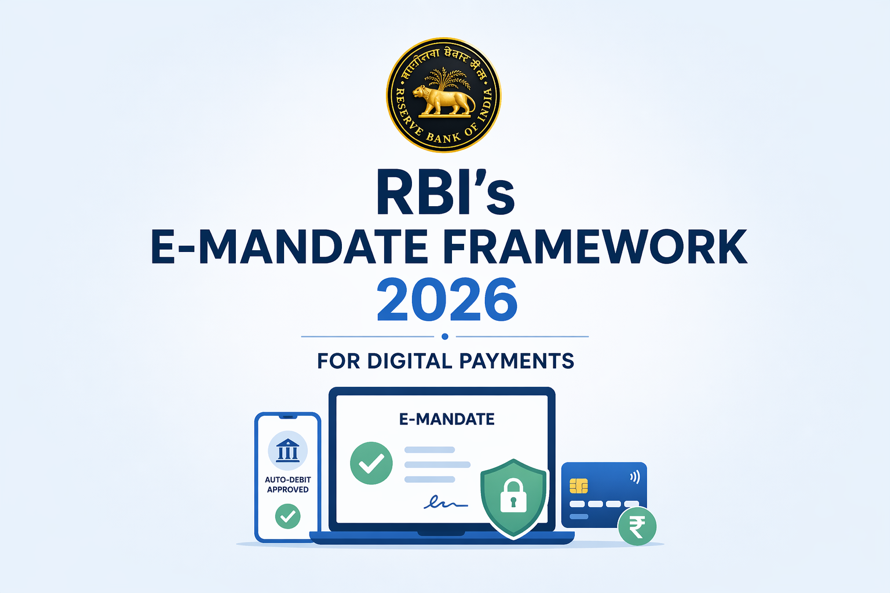
The RBI e-mandate framework is a set of rules that governs recurring digital payments in India. It ensures that automatic payments like OTT subscriptions, EMIs, and utility bills are secure, transparent, and user-approved.
The 2026 updates build on earlier guidelines by improving user control, raising limits, and strengthening fraud protection.
In simple terms, the framework allows businesses to auto-debit your account, but only after clear consent and proper alerts.
Why the RBI Introduced the E-Mandate Framework
Digital payments in India have grown rapidly. With that growth came risks like unauthorized auto-debits and lack of transparency.
RBI introduced the e-mandate system to:
- Protect users from hidden or unexpected charges
- Ensure explicit customer consent
- Improve trust in recurring payments
- Reduce fraud in auto-debit transactions
The 2026 update focuses even more on user awareness and smoother payment experiences.
Key Features of RBI E-Mandate Framework 2026
“Start investing with confidence! Explore
0 demat account
and grow your wealth.”
1. Pre-Debit Notification Is Mandatory
Before every recurring payment, users must receive a notification.
This alert includes:
- Debit amount
- Date of transaction
- Merchant details
Users get the option to approve or cancel the payment.
2. Higher Auto-Debit Limits
RBI has revised the auto-debit threshold.
- Earlier limit: ₹15,000 per transaction
- Updated flexibility in 2026 allows higher limits for select categories like insurance and investments, depending on bank policies
This makes it easier to handle larger recurring payments without manual approval each time.
3. Additional Factor Authentication (AFA)
For certain transactions, especially high-value ones, users must complete AFA.
This usually means:
- OTP verification
- App-based approval
This step adds a strong layer of security.
4. Easy Mandate Registration
Users can set up e-mandates through:
- Debit cards
- Credit cards
- UPI AutoPay
- Net banking
The process is fully digital and takes only a few minutes.
5. Simple Cancellation and Modification
Users have full control over their mandates.
You can:
- Pause a subscription
- Change the amount
- Cancel anytime
This must be available through the bank or merchant interface.
How the E-Mandate Process Works
Here is a simple breakdown:
- User signs up for a recurring payment
- Bank requests authentication (OTP or similar)
- Mandate gets registered
- User receives pre-debit alerts before each payment
- Payment is processed automatically if approved
This ensures transparency at every step.
Impact on Businesses and Merchants
The RBI e-mandate framework has changed how businesses handle subscriptions.
Benefits:
- Higher customer trust
- Reduced payment disputes
- Better compliance standards
Challenges:
- Slight drop in conversion due to extra approval steps
- Need for strong payment infrastructure
Businesses must now integrate with compliant payment gateways that support e-mandates.
Impact on Customers
For users, the changes are mostly positive.
Advantages:
- Full control over auto-debits
- No surprise charges
- Better fraud protection
Minor Inconvenience:
- Extra step for approvals in some cases
Overall, the framework makes digital payments safer and more predictable.
Common Use Cases of E-Mandates
- OTT subscriptions like Netflix, Prime Video
- Utility bills like electricity and water
- Loan EMIs
- Insurance premiums
- SIP investments
These services rely heavily on seamless recurring payments.
Tips to Manage Your E-Mandates Better
- Always read pre-debit notifications carefully
- Set reminders for high-value debits
- Regularly review active mandates in your bank app
- Cancel unused subscriptions
These habits help you stay in control of your finances.
FAQs
Q. What is an e-mandate in India?
An e-mandate is a digital authorization that allows businesses to auto-debit your account for recurring payments.
Q. Is OTP required for every auto-debit?
Not always. It depends on the amount and bank rules. High-value transactions usually need OTP approval.
Q. Can I cancel an e-mandate anytime?
Yes, you can cancel or modify it through your bank or merchant platform.
Q. Are UPI AutoPay transactions covered under this framework?
Yes, UPI AutoPay follows RBI e-mandate guidelines.
Key Takeaways
- RBI’s e-mandate framework ensures safe and transparent recurring payments
- Pre-debit alerts and user consent are mandatory
- 2026 updates improve flexibility and security
- Users have full control over auto-debit transactions
- Businesses must comply to maintain trust and smooth operations
Final Thoughts
RBI’s e-mandate framework is a major step toward making digital payments safer in India. It balances convenience with strong security measures.
For users, it means fewer surprises and more control. For businesses, it builds long-term trust.
As digital payments continue to grow, frameworks like this will play a key role in shaping a reliable financial ecosystem.
Disclaimer
The stocks mentioned in this article are not recommendations. Please conduct your own research and due diligence before investing. Investment in securities market are subject to market risks, read all the related documents carefully before investing. Please read the Risk Disclosure documents carefully before investing in Equity Shares, Derivatives, Mutual fund, and/or other instruments traded on the Stock Exchanges. As investments are subject to market risks and price fluctuation risk, there is no assurance or guarantee that the investment objectives shall be achieved. Lemonn (Formerly known as NU Investors Technologies Pvt. Ltd) do not guarantee any assured returns on any investments. Past performance of securities/instruments is not indicative of their future performance.
Related Posts

Download Lemonn
Download my app for share market trading, ipo investment, trading account, and all your investment needs.



