
PMVVY: LIC Pension Scheme for Senior Citizens Explained
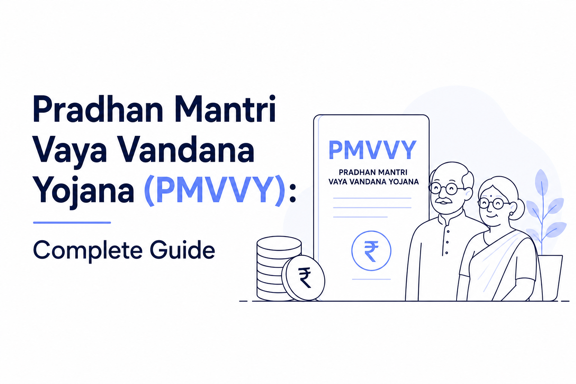
Pradhan Mantri Vaya Vandana Yojana (PMVVY) is a pension scheme for senior citizens that pays a fixed, guaranteed pension in exchange for a one-time lump sum, and it’s run through LIC rather than banks or post offices. If you’re 60 or above and want a predictable pension-style income instead of a regular deposit, PMVVY is designed exactly for that.
Since it works differently from typical bank or post office savings products, it’s worth understanding how PMVVY functions, who can buy it, and what to check before you commit your money.
What is PMVVY and who runs it?
PMVVY stands for Pradhan Mantri Vaya Vandana Yojana. It’s a government-backed pension scheme, but unlike the Senior Citizen Savings Scheme (SCSS) which is offered through banks and post offices, PMVVY is administered exclusively through the Life Insurance Corporation of India (LIC).
In simple terms, you hand over a lump sum to LIC, and in return, LIC promises to pay you a fixed pension at regular intervals for a set period. It works more like an annuity or immediate pension plan than a typical savings account.
Who is eligible for PMVVY?
Eligibility for PMVVY is refreshingly simple:
- You need to be 60 years of age or above.
- There is no upper age limit, so even someone in their 80s or 90s can purchase this policy.
This makes PMVVY genuinely open to all senior citizens, without the complications around early retirement age windows that you sometimes see with other schemes like SCSS.
How does the pension payout work?
When you buy a PMVVY policy, you choose how often you want to receive your pension. The options are:
- Monthly
- Quarterly
- Half-yearly
- Annually
You lock in this choice at the time of purchase, and the pension amount is calculated based on your purchase price and the payout frequency you select. Naturally, monthly payouts will be smaller individual amounts compared to annual payouts, since the same total return gets split across more instalments.
This flexibility is genuinely useful. Someone who wants pension income to cover monthly household expenses can choose monthly payouts, while someone who prefers a larger lump sum less often might go with the annual option.
How much can you invest?
The maximum purchase price allowed under PMVVY is Rs 15 lakh per senior citizen. This is your one-time investment amount, and the pension you receive is calculated as a fixed percentage return on this purchase price.
Because the maximum is capped at Rs 15 lakh (compared to the Rs 30 lakh limit under SCSS), PMVVY tends to work well as one part of a retirement income plan, rather than the sole destination for your entire retirement corpus.
What is the PMVVY interest rate or return?
PMVVY offers an assured, fixed return that LIC sets and periodically resets, broadly in line with rates offered by comparable government-backed senior citizen products like SCSS. Because this rate changes from time to time based on government and LIC guidelines, it’s important to check the current LIC-published rate before you actually purchase the policy, rather than relying on an old number you may have seen elsewhere.
The pension you receive is calculated on this assured rate, applied to your purchase price and adjusted for the payout frequency you’ve chosen.
Policy term and what happens at maturity
A PMVVY policy runs for a term of 10 years. Once the term is complete, LIC returns your original purchase price back to you, in addition to all the periodic pension payments you’ve already received during the 10 years.
If the policyholder passes away during the 10-year term, the purchase price is returned to the nominee, along with the pension due up to that point. This gives PMVVY a built-in safety net for the family, since the invested capital isn’t lost even if the senior citizen doesn’t survive the full term.
Loan facility and premature exit
PMVVY isn’t completely rigid if you need funds urgently before the 10-year term ends.
Loan against policy: You can take a loan against your PMVVY policy after completing 3 years. This can be a useful backup option if you face a cash crunch but don’t want to break the policy entirely.
Premature exit: In genuine medical emergencies, involving the policyholder or their spouse, premature exit is allowed. A small deduction is made from the purchase price in such cases, but it gives you an option beyond simply waiting out the full 10 years.
PMVVY vs SCSS: which one fits you better?
Both PMVVY and SCSS are aimed at senior citizens looking for safe, fixed income, but they work differently:
| Feature | PMVVY | SCSS |
|---|---|---|
| Run by | LIC | Banks and post offices |
| Maximum investment | Rs 15 lakh | Rs 30 lakh |
| Payout frequency | Monthly, quarterly, half-yearly, annual (your choice) | Quarterly only |
| Term | 10 years | 5 years (extendable by 3) |
| Tax deduction on investment | Not available under Section 80C | Available under Section 80C |
| Structure | Insurance-based pension (annuity style) | Bank/post office deposit style |
If you specifically want a flexible payout schedule (like monthly income) and don’t mind locking money in for 10 years, PMVVY has an edge. If you want a shorter commitment and a Section 80C tax deduction on the amount invested, SCSS may suit you better. Many retirees actually use both together to diversify where their retirement income comes from.
Things to check before buying PMVVY
Before you go ahead with a PMVVY purchase, keep these points in mind:
- Confirm the current assured rate directly with LIC, since it’s reset periodically and can differ from the last quarter’s numbers.
- Decide your payout frequency carefully, since this choice usually cannot be changed once the policy starts.
- Remember that unlike SCSS, PMVVY doesn’t offer a Section 80C deduction on the amount you invest, so factor that into your overall tax planning.
- Keep the 10-year lock-in in mind and use the loan facility (after 3 years) or medical emergency exit only when genuinely needed.
Final thoughts
PMVVY fills a specific gap for retirees who want an insurance-backed, pension-style income with flexible payout options, something that traditional bank or post office deposits don’t offer. With a Rs 15 lakh investment cap, a 10-year term, and payout frequency choices, it works best as part of a broader retirement income strategy alongside options like SCSS and the National Pension System (NPS).
Before purchasing, always confirm the current rate with LIC directly, since guaranteed return rates on such schemes are revised from time to time based on prevailing economic conditions.
Key takeaways
- PMVVY is a pension scheme for senior citizens (age 60+, no upper limit) administered through LIC, not banks or post offices.
- You choose your pension payout frequency at purchase: monthly, quarterly, half-yearly, or annually.
- Maximum purchase price allowed is Rs 15 lakh per senior citizen.
- Policy term is 10 years, after which your original purchase price is returned to you (or your nominee).
- A loan facility is available after 3 years, and premature exit is allowed in genuine medical emergencies with a small deduction.
- The assured return rate is reset periodically by LIC, so always check the current rate before purchasing.
FAQs
Is PMVVY better than SCSS for senior citizens?
It depends on your priority. PMVVY offers flexible payout frequency and a pension-style structure through LIC, while SCSS offers a Section 80C tax deduction and a shorter 5-year term. Many retirees use both to balance flexibility, tax benefits, and liquidity needs.
Can I withdraw my PMVVY investment before 10 years?
Yes, premature exit is allowed specifically in genuine medical emergencies involving the policyholder or their spouse, though a small deduction applies to the purchase price. Outside of medical emergencies, the policy is meant to run the full 10-year term.
What happens to PMVVY if the policyholder dies during the term?
If the policyholder passes away during the 10-year term, LIC returns the full purchase price to the nominee, along with any pension due up to that point. This ensures the family doesn’t lose the invested capital.
Does PMVVY offer any tax benefit under Section 80C?
No, the amount you invest in PMVVY does not qualify for a Section 80C deduction, unlike SCSS. This is an important difference to consider if tax saving is a priority in your retirement planning.
Can I take a loan against my PMVVY policy?
Yes, LIC allows you to take a loan against your PMVVY policy once it has completed 3 years. This can help meet urgent cash needs without having to surrender the policy entirely.
Is there an upper age limit to buy PMVVY?
No, PMVVY has no upper age limit. As long as you are 60 years or older, you’re eligible to purchase the policy regardless of how old you are.
Disclaimer
The stocks mentioned in this article are not recommendations. Please conduct your own research and due diligence before investing. Investment in securities market are subject to market risks, read all the related documents carefully before investing. Please read the Risk Disclosure documents carefully before investing in Equity Shares, Derivatives, Mutual fund, and/or other instruments traded on the Stock Exchanges. As investments are subject to market risks and price fluctuation risk, there is no assurance or guarantee that the investment objectives shall be achieved. Lemonn (Formerly known as NU Investors Technologies Pvt. Ltd) do not guarantee any assured returns on any investments. Past performance of securities/instruments is not indicative of their future performance.
Related Posts


Download Lemonn
Download my app for share market trading, ipo investment, trading account, and all your investment needs.



