How Rising Oil Prices Are Causing a Plastic Packaging Crunch in India
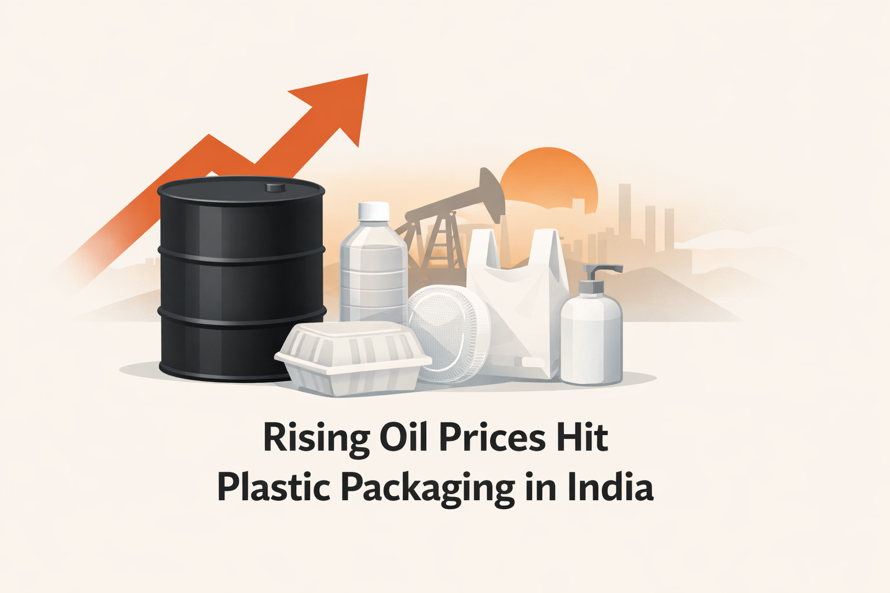
Rising oil prices are starting to squeeze India’s plastic packaging industry, and the effects are already showing up in higher costs, supply pressure, and tighter margins.
Since plastic is made from petroleum-based products, any increase in crude oil prices directly raises production costs. As oil prices climb due to global tensions, especially in West Asia, packaging manufacturers and the industries that depend on them are feeling the impact.
Why Oil Prices Directly Affect Plastic Packaging
Plastic packaging relies heavily on petrochemicals like polyethylene (PE) and polypropylene (PP), which are derived from crude oil and natural gas.
When oil prices rise:
- Raw material costs increase almost immediately
- Polymer prices (PE, PP) go up
- Manufacturing becomes more expensive
- Packaging suppliers pass costs to businesses
This creates a ripple effect across the supply chain.
What Is Causing the Current Price Surge?
The recent spike in oil prices is largely linked to geopolitical instability in West Asia. This region is critical for global oil supply.
Key triggers include:
- Supply disruptions and uncertainty
- Increased shipping and insurance costs
- Production cuts or delays
- Market speculation pushing prices higher
For India, which imports a large share of its crude oil, this translates into higher input costs across industries.
How the Plastic Packaging Crunch Is Affecting Industries
1. FMCG Companies
Fast-moving consumer goods rely heavily on plastic packaging for products like food, personal care, and household items.
Impact:
- Increased packaging costs
- Pressure on profit margins
- Potential price hikes for consumers
- Smaller pack sizes (shrinkflation)
2. Food and Beverage Industry
Plastic packaging is essential for storage, safety, and shelf life.
Impact:
- Higher cost of containers and wraps
- Increased logistics and storage expenses
- Challenges in maintaining affordable pricing
3. E-commerce and Logistics
Packaging is critical for shipping and product protection.
Impact:
- Rising cost of plastic mailers, bubble wrap, and containers
- Increased delivery costs
- Pressure on margins for online sellers
4. MSMEs and Small Manufacturers
Small businesses are the most vulnerable in this situation.
Impact:
- Limited ability to absorb cost increases
- Reduced production or delayed orders
- Cash flow stress
Is There a Supply Shortage Too?
Yes, the issue is not just higher prices, but also tighter availability.
Some factors contributing to the crunch:
- Slower imports of raw materials
- Inventory hoarding due to uncertainty
- Production adjustments by petrochemical companies
- Disruptions in global shipping routes
This combination of high demand and constrained supply is creating a packaging bottleneck.
What Businesses Are Doing to Cope
Companies are already adjusting strategies to manage rising packaging costs:
- Reducing packaging thickness (lightweighting)
- Switching to alternative materials where possible
- Renegotiating supplier contracts
- Passing partial costs to consumers
- Improving packaging efficiency
However, these are short-term fixes and may not fully offset rising input costs.
What This Means for Consumers
Consumers may start noticing:
- Slight price increases in packaged goods
- Reduced product sizes at the same price
- Changes in packaging quality or materials
While the changes may seem small individually, they reflect broader cost pressures in the economy.
What Could Happen Next?
If oil prices remain high:
- Packaging costs will stay elevated
- Inflationary pressure could increase
- More industries will feel the impact
- Demand for alternative packaging solutions may grow
In the long run, this could accelerate innovation in sustainable and non-petroleum-based packaging.
Key Takeaways
- Rising oil prices are directly increasing plastic packaging costs in India
- FMCG, food, e-commerce, and MSMEs are the most affected sectors
- The issue includes both higher prices and supply constraints
- Businesses are adapting, but cost pressures remain
- Consumers may see gradual price increases and packaging changes
FAQs
Q. Why do oil prices affect plastic packaging?
Because plastic is made from petrochemicals derived from crude oil, higher oil prices increase raw material costs.
Q. Which industries are most affected?
FMCG, food and beverage, e-commerce, and small manufacturers are the most impacted.
Q. Is this a temporary issue?
It depends on global oil price trends. If geopolitical tensions continue, the impact may last longer.
Q. Are there alternatives to plastic packaging?
Yes, options like paper-based, biodegradable, and reusable packaging are gaining attention, but scalability and cost remain challenges.
Disclaimer
The stocks mentioned in this article are not recommendations. Please conduct your own research and due diligence before investing. Investment in securities market are subject to market risks, read all the related documents carefully before investing. Please read the Risk Disclosure documents carefully before investing in Equity Shares, Derivatives, Mutual fund, and/or other instruments traded on the Stock Exchanges. As investments are subject to market risks and price fluctuation risk, there is no assurance or guarantee that the investment objectives shall be achieved. Lemonn (Formerly known as NU Investors Technologies Pvt. Ltd) do not guarantee any assured returns on any investments. Past performance of securities/instruments is not indicative of their future performance.