India-EU Free Trade Agreement: Why the 2026 Deal Is a Global Game-Changer
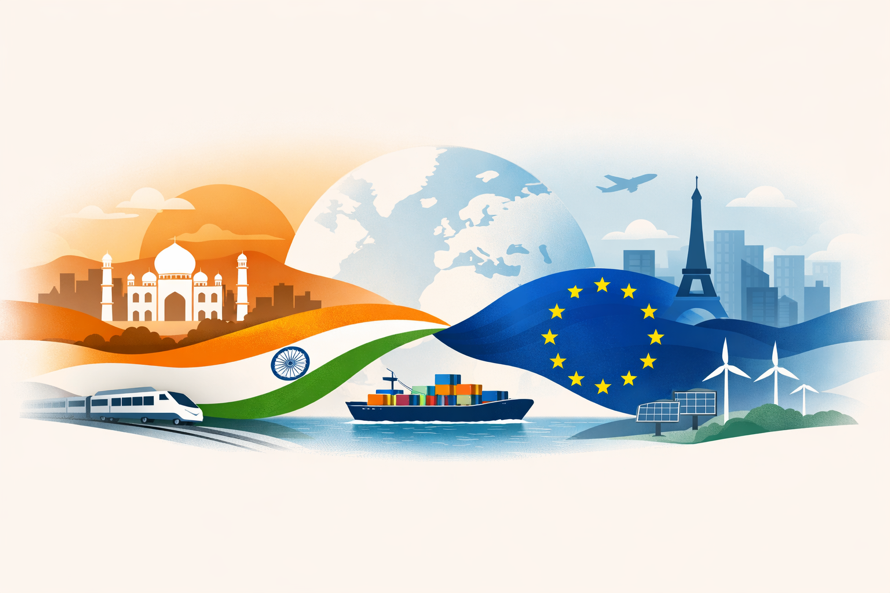
The India-European Union Free Trade Agreement (FTA), finalized in January 2026, is being called the “mother of all deals” – and for good reason. This historic pact reshapes global trade, brings together nearly 2 billion consumers, and charts a new path for economic cooperation between two of the world’s largest democratic economies.
What Is the India-EU Free Trade Agreement?
The India-EU FTA is a wide-ranging trade and strategic partnership that removes tariffs on over 90% of goods, eases service trade, and strengthens cooperation across technology, defense, climate, and mobility. The deal was 18 years in the making and marks a bold shift toward shared prosperity, stability, and sustainability.
Key Takeaways
- Tariffs reduced or eliminated on 90–97% of traded goods
- $250 billion in projected trade by 2035
- Up to 3 million new jobs expected in India
- Boosts for key sectors: autos, textiles, chemicals, IT, and renewable energy
- Stronger digital, defense, and climate cooperation
- Strategic move to diversify supply chains away from China
Why This Deal Matters Now
With rising protectionism from the U.S. and an urgent need to de-risk from Chinese supply chains, both India and the EU needed a reliable partner. The deal sends a clear signal: economic resilience now depends on democratic, rule-based cooperation.
India-EU Trade in Numbers
| Trade Metric | 2024-25 | Projected (2030–35) |
|---|---|---|
| Goods Trade | $136.53 billion | $200–$250 billion |
| Services Trade | $83.1 billion | $150 billion |
| Combined Consumer Market | 1.9 billion | 2.1 billion |
| Global GDP Share | ~25% | ~27% |
Sector Highlights: Who Gains What?
Indian Exporters Win Big
India’s labor-intensive sectors – like textiles, leather, and gems – get duty-free access to Europe’s high-income market. This levels the playing field after losing EU trade perks in 2023.
European Automakers Break In
India will cut import duties on EU luxury cars from 110% to 40%, a long-awaited opening for brands like BMW and Mercedes-Benz. Local EV makers get a 5-year protection window to build scale.
Pharma & IP Balance
The deal protects India’s generic medicine sector while assuring European companies strong IP safeguards. Both sides commit to avoiding “patent evergreening,” a win for public health and innovation.
More Than Trade: A Strategic Pivot
Digital Future & Data Governance
The agreement bridges differing data laws (GDPR vs. India’s DPDP Act), supporting smoother data flows for IT and fintech firms. India’s UPI payment system is also being adopted across EU cities – a leap for digital public infrastructure.
Climate Commitments & CBAM
The EU’s new Carbon Border Adjustment Mechanism (CBAM) could penalize Indian exporters on carbon-heavy goods like steel. The FTA includes technical support to help India green its industries – but challenges remain.
Defense & Security
For the first time, India and the EU formalized a defense partnership, including joint naval exercises and military tech development. This adds a new layer of trust and shared responsibility in a volatile world.
People Power: Mobility and Talent Flows
The “mobility pact” will:
- Ease visas for professionals and students
- Recognize Indian qualifications (CA, nursing, architecture, etc.)
- Promote educational exchanges like Erasmus+
This boosts India’s IT and services sector while helping Europe meet talent shortages.
What’s Not in the Deal?
- Dairy and beef: excluded due to political sensitivities
- Certain agriculture products: remain protected
- Battery electric vehicles: face phased tariff relief after 2031
What Happens Next?
The FTA is expected to take effect in 2027, after legal review and approvals by both sides. Some tariff reductions and market access rules will phase in over the next 10–12 years.
Final Thoughts: A Deal with Global Impact
This agreement isn’t just about commerce. It’s about rewriting the rules of global trade in favor of democratic cooperation, sustainable growth, and economic balance. If implemented well, it could serve as a blueprint for future trade deals that prioritize people, planet, and prosperity.
FAQs About the India-EU Trade Deal
Q: What are the biggest benefits for India?
A: Export growth, job creation, high-tech investment, and stable market access.
Q: Why is it called the “mother of all deals”?
A: Because of its scale, scope, and impact across trade, defense, climate, and digital cooperation.
Q: Does this affect small businesses?
A: Yes – especially MSMEs in textiles, engineering, and IT, which can access new markets but will need support to stay competitive.
Q: Is the EU also benefiting?
A: Absolutely. EU firms gain access to one of the world’s fastest-growing economies and a trusted partner in the Indo-Pacific.
Disclaimer
The stocks mentioned in this article are not recommendations. Please conduct your own research and due diligence before investing. Investment in securities market are subject to market risks, read all the related documents carefully before investing. Please read the Risk Disclosure documents carefully before investing in Equity Shares, Derivatives, Mutual fund, and/or other instruments traded on the Stock Exchanges. As investments are subject to market risks and price fluctuation risk, there is no assurance or guarantee that the investment objectives shall be achieved. Lemonn (Formerly known as NU Investors Technologies Pvt. Ltd) do not guarantee any assured returns on any investments. Past performance of securities/instruments is not indicative of their future performance.