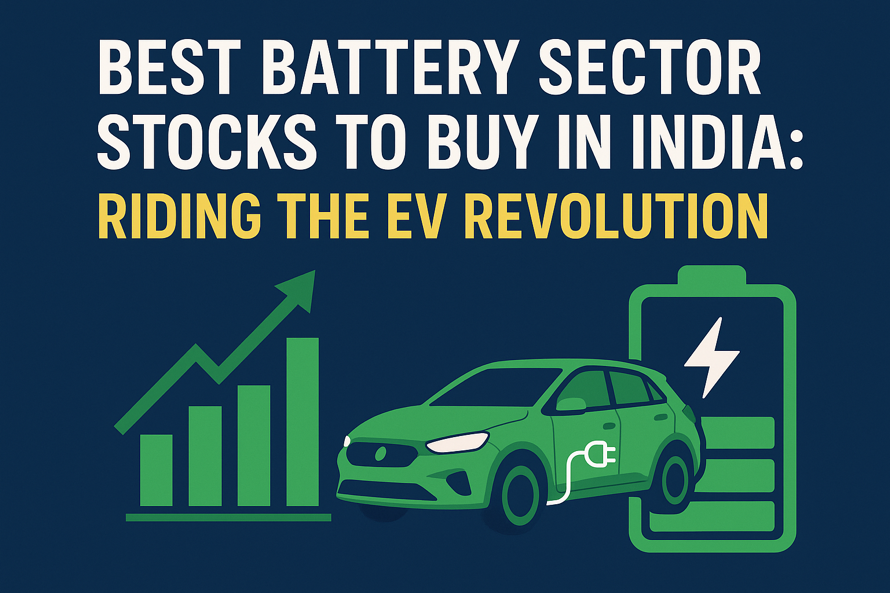
Best Battery Sector Stocks to Buy in India: Riding the EV Revolution
Introduction to India’s Battery and EV Market
The Indian electric vehicle market is booming. Automakers push new models every six months or so, and consumers explore electric options with curiosity and excitement.
The Role of Batteries in the Electric Vehicle Ecosystem
A battery lies at the heart of an EV. It determines range, charging speed, performance, and energy efficiency. The entire user experience is enhanced when battery performance improves.
“Start investing with confidence! Explore
Lemonn
and grow your wealth.”
How the EV Revolution Is Driving Battery Demand
EV adoption is growing across two-wheelers, three-wheelers, buses, and passenger vehicles. Every model added to the market boosts demand for better cells.
Government Push and Industry Initiatives for EV Growth
On its part, the government boosts EV growth through FAME schemes, state-level incentives, and production-linked manufacturing benefits.
Why Invest in Battery Sector Stocks Now
The current decade belongs to electrification—everything from personal mobility to public transport is shifting toward electric vehicles. Energy storage systems integrate with solar and wind.
Rapid Electrification and Green Mobility Goals
India is committed to strong green mobility initiatives. EV adoption is increasing across both rural and urban markets. Large corporations electrify fleets. Delivery companies switch to electric scooters. Mobility apps deploy EV taxis.
Expanding EV Infrastructure and Charging Network
Charging stations are springing up across highways, metro cities, and corporate campuses. Battery-swapping stations enter tier-2 and tier-3 regions.
Long-Term Growth Potential of the Energy Storage Industry
Energy storage moves far beyond EVs. Solar plants depend on large-scale storage. Home inverters shift from lead-acid to lithium.
Top Battery Sector Stocks in India by Market Cap
Here are the current leaders shaping India’s EV storage ecosystem. Investors track these companies thanks to their strong balance sheets, diversified operations, and expansion plans:
Amara Raja Energy & Mobility Ltd.
Amara Raja is aggressively expanding into lithium-ion cell manufacturing and is developing a large-scale gigafactory blueprint. This battery sector firm has strengthened its EV supply chain with deep R&D commitments.
Exide Industries Ltd.
Exide scales advanced-chemistry cell production through its dedicated lithium subsidiary. This battery sector company is pushing the capacity expansion to lead India’s large-format EV battery market.
HBL Engineering Ltd.
HBL was established in 1986. It focuses on manufacturing specialized battery technologies for defense and other industries. HBL operates its five major manufacturing plants in India and exports its products to more than 50 countries worldwide, particularly to Middle Eastern and Southeast Asian countries. The company is concentrating on dominating the lithium-ion battery market, especially in the telecom and defense sectors.
Eveready Industries India Ltd
Eveready Company was started in 1905 as a portable energy and lighting solutions company. Through the years, it has emerged as a household brand known for its batteries and portable lights. This battery sector stock has a major presence in the dry cell battery market, and its products are available through more than 4 million retail outlets.
Indo National
Indo National Limited, better known as Nippo, makes and sells batteries, LED products, torches, electrical accessories, mosquito bats, razors, and blades since 1972. It has a variety of portable lighting solutions, which are both battery-powered and rechargeable. The company’s flashlights are available in various colors, wattages, sizes, and price ranges. The battery sector stock offers alkaline and zinc-carbon batteries.
Emerging Players in India’s EV Battery Space
New-age companies have entered the EV race with aggressive plans. These players ride innovation, partnerships, and gigafactory projects.
Ola Electric
Ola Electric builds large battery plants and develops cell technology for its scooter lineup. The company invests in cell chemistry, battery packs, and localized manufacturing.
Reliance New Energy Ltd.
Reliance entered the battery space with bold ambitions — optimized cell chemistry, breakthrough storage systems, and integrated renewable-linked battery technologies. The company builds supply chains linking raw material sourcing, manufacturing, and technology development.
Rajesh Exports (Karnataka Gigafactory Project)
Rajesh Exports is focused on building a massive battery manufacturing plant in Karnataka under the ACC PLI scheme.
Tata Power and Battery Storage Initiatives
Tata Power strengthens the energy storage segment through grid-scale batteries, hybrid power projects, and EV charging networks. Their work impacts both infrastructure and EV users, creating a strong leadership footprint.
Comparative Analysis of Leading Battery Stocks
Investors compare battery sector stocks based on market cap, revenue patterns, manufacturing capabilities, and innovation strength. Each factor points to the stock’s long-term potential.
Market Capitalization and Revenue Growth
Established players like Exide and Amara Raja show consistent revenue growth. Their long-standing dealer networks offer stability.
EV Battery Manufacturing Capabilities
Manufacturing capability becomes the strongest indicator of competitive advantage. Companies with cell-level production capacity hold significant strategic power. Firms with pack assembly units move faster but depend on external suppliers.
R&D Investments and Technological Innovation
Innovation defines future competition. Companies invest in solid-state cells, high-nickel chemistry, fast-charging materials, and thermal management systems.
Global Partnerships and Export Potential
Indian companies sign partnerships with international technology firms. These collaborations accelerate local capability. Export potential rises as global EV production expands.
Key Growth Drivers for Battery Sector Stocks
India’s policy structure and market momentum have pushed the industry into a powerful growth phase. These growth drivers shape long-term opportunities for investors in battery sector stocks.
Production Linked Incentive (PLI) Scheme for Advanced Chemistry Cells
The PLI scheme attracts massive corporate investment. Companies receive structured incentives for manufacturing advanced-chemistry cells domestically.
Rising Demand for Lithium-Ion Batteries
Lithium-ion chemistry dominates EVs, consumer electronics, telecom storage, and renewable energy. Adoption is increasing rapidly.
Expansion of Renewable Energy Storage Solutions
Solar and wind energy require efficient storage systems. Grid operators deploy large battery banks. Industrial users shift to battery-based backup systems.
Risks and Challenges in the Battery Industry
The battery segment is expanding rapidly, but challenges shape strategic decisions. Investors evaluate these risks before allocating capital.
Lithium Supply Constraints and Price Volatility
Lithium sourcing impacts pricing, margins, and production schedules. Mining constraints shape cost structures. Companies rely on international partnerships for a stable supply.
Technology Obsolescence Risks
Battery technology evolves fast. Companies invest heavily in new chemistry to remain competitive. Firms that innovate consistently stay relevant. Others struggle to match the pace.
Competition from Global Battery Giants
Global giants bring advanced designs, deep patents, and enormous scale. Indian companies have local advantages of domestic supply chains and government incentives.
How to Invest in a Battery Sector Stock
Investors follow structured frameworks to approach this sector. A clear strategy improves outcomes and reduces confusion.
Direct Equity Investment vs. Thematic ETFs
Direct equity investment offers control and targeted exposure. Investors pick companies with strong fundamentals. Thematic ETFs provide diversified exposure to the broader EV and energy-storage theme.
Evaluating Company Fundamentals
Fundamentals matter. Strong companies show revenue consistency, manufacturing expansion, R&D focus, and cash-flow stability.
Long-Term vs. Short-Term Investment Strategies
Short-term strategies follow market sentiment. Long-term strategies track industry cycles, production scaling, and technology evolution.
Future Outlook for India’s Battery Sector
The future looks bright for India’s battery sector. Gigafactory announcements rise. Technology partnerships accelerate, and demand for cells skyrockets.
Upcoming Gigafactories and Local Manufacturing Plans
India expects to build several gigafactories across states. Companies invest in plant automation, assembly lines, and raw material partnerships.
Transition from Lead-Acid to Lithium-Ion Technologies
Lithium-ion batteries are moving deeper into automotive, industrial, and residential applications. This transition creates an enormous market shift.
Projected Market Size by 2030
Analysts forecast multi-billion dollar valuations for India’s battery sector by 2030 as EV penetration rises, renewable energy storage expands, and telecom and electronics demand grow.
Conclusion
India’s battery and EV space stands at a defining moment. Charge cycles improve. Factories scale up. R&D teams push boundaries. The future is here, and investors are not holding back.
Key Takeaways for Battery Sector Investors
Strong companies combine manufacturing depth, R&D power, partnerships, and clear roadmaps. Leaders like Exide, Amara Raja, Tata group entities, and emerging players like Ola Electric position themselves for long-term relevance.
Is Now the Right Time to Ride the EV Revolution?
The EV sector is growing consistently through policy support, corporate investment, and consumer acceptance. The battery industry stands at the center of this transformation.
FAQs on the Best Battery Sector Stock in India
Q1: Which is the best battery stock to buy in India for the long term?
Long-term investors evaluate Amara Raja, Exide, and Tata-linked energy storage entities.
Q2: How will the EV revolution impact battery sector companies?
EV adoption increases demand across manufacturing, R&D, and storage infrastructure.
Q3: Are lithium-ion battery manufacturers listed in India?
Yes, several listed companies work on Li-ion modules, packs, and materials.
Q4: What are the government incentives for battery manufacturers in India?
The PLI scheme supports ACC cell manufacturing and large-scale gigafactories.
Q5: Which battery stocks have future growth potential?
Companies with lithium-ion, solid-state, and grid-storage plans show strong potential.
Q6: Is it better to invest in EV companies or battery manufacturers?
Both offer strong opportunities based on risk appetite and sector preference.
Q7: What are the risks of investing in battery sector stocks?
Supply-chain constraints, technology shifts, and global competition could impact battery sector stocks.
Disclaimer
The stocks mentioned in this article are not recommendations. Please conduct your own research and due diligence before investing. Investment in securities market are subject to market risks, read all the related documents carefully before investing. Please read the Risk Disclosure documents carefully before investing in Equity Shares, Derivatives, Mutual fund, and/or other instruments traded on the Stock Exchanges. As investments are subject to market risks and price fluctuation risk, there is no assurance or guarantee that the investment objectives shall be achieved. Lemonn do not guarantee any assured returns on any investments. Past performance of securities/instruments is not indicative of their future performance.
To read the RA disclaimer
Research Analyst - Gaurav Garg
Related Posts


Download Lemonn
Download my share market app for stock trading—trade stocks effortlessly in the market.