SIP vs. STP vs. SWP – Which Is Better for You in 2026?
Introduction – Understanding Mutual Fund Investment Options
Every investor eventually reaches a point where they must pick a style that fits their financial rhythm. Some prefer steady contributions. Some want a smooth transfer between funds. Others want a monthly payout that feels predictable. To compare SIP vs. STP vs. SWP, it helps to begin with how they shape cash flow and investor discipline.
The Rise of Systematic Plans in Mutual Funds
India’s investor base expanded rapidly as people looked for structured ways to invest. Systematic plans offered a simple entry point.
“Start investing with confidence! Explore the best
mutual funds
and grow your wealth.”
Why Choosing Between SIP, STP, and SWP Matters
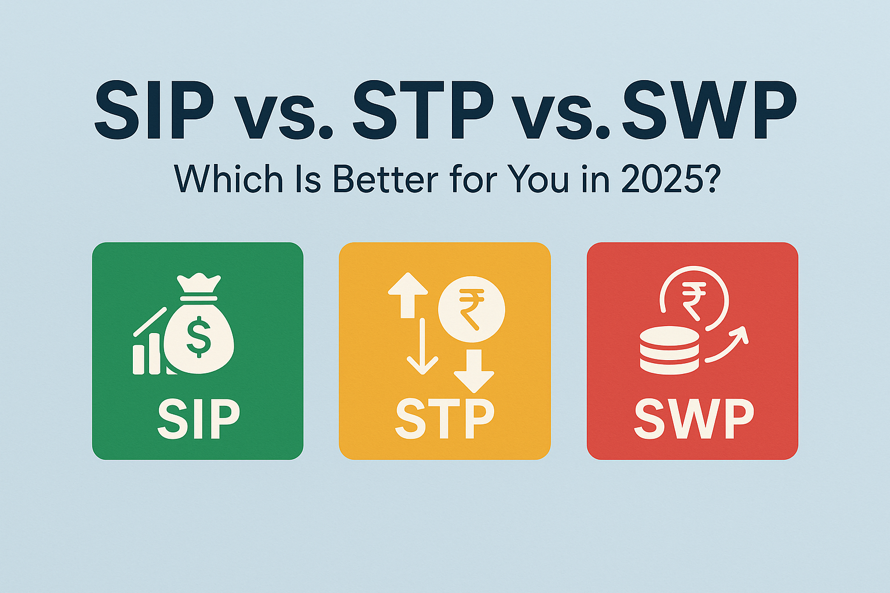
Each plan serves a different purpose. SIP builds wealth. STP balances portfolios. SWP creates income.
What Is SIP (Systematic Investment Plan)?
SIP is arguably the most trusted starting point for equity investing. It breaks the investment journey into predictable intervals, helping investors build long-term habits.
SIP Meaning and Concept
An SIP allows investors to put a fixed amount into a mutual fund at regular intervals. Weekly, monthly, quarterly—anything works as long as the habit stays consistent.
How SIP Works
Every SIP installment buys units based on that day’s NAV. When markets fall, you receive more units. When markets rise, you receive fewer. Over time, this creates a natural averaging effect.
Benefits of Investing Through SIP
SIPs bring several advantages: smoother market entry, disciplined investing, and better emotional control.
Ideal Investors for SIP
SIP works best for first-time investors, salaried professionals, and anyone who prefers a consistent, low-stress plan to build wealth over the years.
What Is STP (Systematic Transfer Plan)?
STP plays a different role. It moves money between funds with structure and timing. It smoothens transitions that might otherwise feel abrupt.
STP Meaning and Concept
STP automatically transfers money from one mutual fund to another within the same fund house. Most investors shift from a debt fund to an equity fund or vice versa using this route.
How STP Works
You invest a lump sum into one fund and instruct the AMC to transfer a small amount into another fund at fixed intervals.
Types of STP (Fixed, Capital Appreciation, Flexi)
- Fixed STP: Transfers a fixed amount regularly.
- Capital Appreciation STP: Transfers only the gains made in the source fund.
- Flexi STP: Transfers amounts based on market conditions or investor instructions.
Advantages of STP for Portfolio Balancing
STP helps investors move gradually, manage portfolio risk, and make transitions less sensitive to market timing.
Who Should Opt for STP
Investors with lump-sum money, people shifting asset allocation, and those managing volatility often benefit from STP.
What Is SWP (Systematic Withdrawal Plan)?
While SIP builds portfolios and STP balances them, SWP turns a mutual fund into an income stream.
SWP Meaning and Concept
A SWP allows investors to withdraw a fixed amount periodically from their existing mutual fund investments.
How SWP Works
Units are redeemed regularly based on the withdrawal amount. If the fund grows faster than withdrawals, the investment value increases.
Benefits of SWP for Regular Income
Retirees use SWP to create stable cash flows. It avoids the unpredictability of dividends and reduces dependence on interest-based products.
Ideal Investors for SWP
People seeking monthly income, early retirees, or those who want tax-efficient cash flows may prefer SWP.
SIP vs. STP vs. SWP – Key Differences
These plans differ widely in purpose. One brings money in. One shifts it. One takes it out.
Comparison Table – SIP, STP, and SWP
A SIP inputs money. An STP reallocates money. An SWP withdraws money. Three distinct paths for three different needs.
Purpose and Cash Flow Differences
SIP pushes money inwards. STP circulates it. SWP sends it back to the investor.
Risk, Return, and Liquidity Comparison
SIP carries equity-market risk. STP manages risk by staggering transfers. SWP introduces sequence-of-return risk since withdrawals depend on market conditions.
Tax Implications in SIP, STP, and SWP
Every withdrawal or transfer from the source fund triggers taxation rules. SIP installments follow equity or debt taxation based on the fund.
SIP vs. STP vs. SWP – Which Is Better for You?
The right choice depends on goals, investment size, and financial stage.
For New Investors – SIP for Wealth Creation
SIP fits beginners because it breaks investing into small, digestible steps.
For Portfolio Rebalancing – STP as a Smart Tool
STP excels in volatile markets by employing the principle of rupee-cost averaging, allowing investors to transfer funds between mutual fund schemes.
For Regular Income – SWP for Financial Stability
SWP creates a predictable payout while keeping the rest of the portfolio invested.
How to Combine SIP, STP, and SWP for Optimal Results
Long-term investors often use all three at different stages. SIP for building wealth, STP for shifting strategy, and SWP for drawing income.
Taxation Rules for SIP, STP, and SWP
Taxation impacts returns significantly, especially when transactions repeat regularly.
Short-Term vs Long-Term Capital Gains
Equity gains become long-term after one year. Debt gains follow three-year rules unless taxation laws change.
Tax Benefits and Indexation Rules
Debt funds offer indexation for long-term gains, improving post-tax returns. Equity taxation remains straightforward.
How to Minimize Tax Through Proper Planning
Long-term holding periods, well-timed withdrawals, and fund category choices all help reduce tax impact.
Real-Life Examples
Examples help investors see how each plan behaves.
Example of SIP for 10-Year Wealth Creation
Suppose an investor starts a SIP of ₹5,000 per month in an equity mutual fund.
Assume an average annual return of 12%.
Calculation:
Future Value (FV) of SIP = ₹5,000 × \((1+0.12/12)^{120} – 1\) / (0.12/12)
FV ≈ ₹11.6 lakh
What it means:
A simple ₹5,000 monthly SIP grows into more than ₹11 lakh over 10 years, thanks to compounding and disciplined investing.
Example of STP for Market Volatility Management
Assume an investor has a ₹3,00,000 lump sum, but wants to avoid entering equity all at once.
They invest it first in a liquid fund, then start a 6-month STP of ₹50,000 per month into an equity fund.
If the equity fund generates a 10% annual return during these six months, the transferred amount gains gradually.
Approx results:
- Total transferred into equity: ₹3,00,000
- Value after 6 months (considering returns): ≈ ₹3,12,500
What it means:
STP reduces timing risk by spacing the equity entry while earning returns in the liquid fund.
Example of SWP for Retirement Income
A retiree has ₹15,00,000 invested in a balanced fund returning about 8% per year.
They set up an SWP of ₹10,000 per month.
Annual withdrawal: ₹10,000 × 12 = ₹1,20,000
Estimated annual return on the fund: ₹15,00,000 × 8% = ₹1,20,000
What it means:
At this withdrawal rate, the returns roughly match the payout, helping maintain capital stability while providing regular income.
Mistakes to Avoid
Systematic plans work well when executed correctly.
Starting SIP Without Goal Setting
A SIP works best with a clearly defined purpose.
Using STP or SWP Without Understanding Tax Impact
Without tax awareness, returns can reduce unexpectedly.
Ignoring Market Conditions and Time Horizon
All three plans require patience, awareness, and steady monitoring.
Expert Insights – How Financial Advisors Recommend Choosing
Professionals look at cash flow needs, age, time horizon, and risk appetite to guide selection.
When to Switch Between SIP, STP, and SWP
Switching depends on life stages—accumulation, transition, and income phases.
Ideal Mix Based on Age and Risk Appetite
Younger investors lean heavily toward SIP. Mid-career investors use STP. Retirees use SWP.
Conclusion – SIP, STP, or SWP: Which One Suits You Best?
There is no single winner in the SIP vs. STP vs. SWP debate. The best choice depends on goals. SIP builds. STP balances. SWP distributes. Used the right way, each one helps investors bring structure and discipline to long-term financial planning.
FAQs
Q1: What is the difference between SIP, STP, and SWP?
SIP invests, STP transfers, and SWP withdraws.
Q2: Which is better – SIP, STP, or SWP?
Each plan serves a different purpose, so the best option depends on your financial goal.
Q3: Can I start SIP, STP, and SWP in the same mutual fund?
Yes, as long as your fund and AMC support these features.
Q4: Is STP better than SIP in a volatile market?
STP helps manage volatility for lump sum investments, while SIP suits regular contributions.
Q5: Which option gives better returns – SIP or SWP?
They operate differently. SIP focuses on building wealth, SWP on generating income.
Q6: Is there any tax on SIP, STP, or SWP withdrawals?
Yes. All withdrawals or redemptions follow equity or debt taxation rules.
Q7: Which plan is best for retirees?
SWP works well for predictable income needs.
Q8: Can I stop or modify SIP, STP, or SWP anytime?
Yes. Most AMCs allow modification or cancellation through app or net banking.
Disclaimer
The stocks mentioned in this article are not recommendations. Please conduct your own research and due diligence before investing. Investment in securities market are subject to market risks, read all the related documents carefully before investing. Please read the Risk Disclosure documents carefully before investing in Equity Shares, Derivatives, Mutual fund, and/or other instruments traded on the Stock Exchanges. As investments are subject to market risks and price fluctuation risk, there is no assurance or guarantee that the investment objectives shall be achieved. Lemonn (Formerly known as NU Investors Technologies Pvt. Ltd) do not guarantee any assured returns on any investments. Past performance of securities/instruments is not indicative of their future performance.
Related Posts


Download Lemonn
Download my mutual fund app - your mutual funds, stock, invest in ipo, mf, trade invest hub with demat account features.