How Do You Withdraw Money From Mutual Funds?
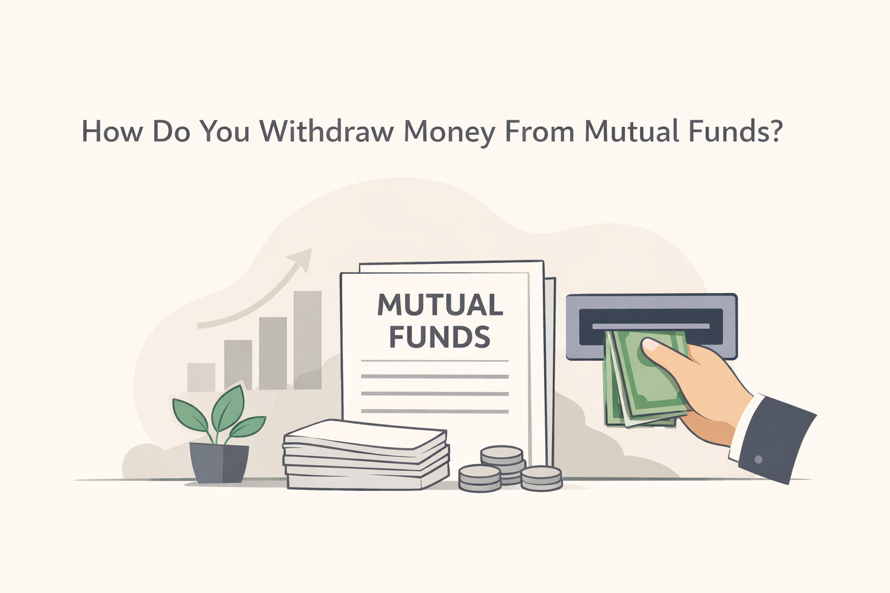
Introduction to Mutual Fund Withdrawals
Money moves constantly, investments rise, fall, shift, and realign, but the moment you start thinking about how to actually withdraw money from mutual funds, everything becomes surprisingly technical. It looks simple on the surface: press a button, get your money. Yet behind that single redemption lies timing, taxation, exit loads, settlement cycles, and tiny decisions that can either support your long-term plan or chip away at your gains.
Withdrawing money from a mutual fund isn’t about defeating the system or rushing out at the first sign of volatility. It’s about understanding how the redemption process works, why it works that way, and how to make each move thoughtfully. That clarity makes the entire idea of withdrawing money from mutual funds feel less intimidating and more like a controlled financial step rather than a reaction.
What Does Withdrawing Money from a Mutual Fund Mean?
When you withdraw money from mutual funds, you’re essentially redeeming units you hold. Each unit has a NAV (Net Asset Value). When you redeem, the fund sells that proportion of the scheme’s assets on your behalf, and the proceeds are credited to your bank account. It’s not a sale on the stock market; it’s a transaction initiated within your mutual fund account, triggered by your redemption request.
“Start investing with confidence! Explore the best
mutual funds
and grow your wealth.”
When Should You Consider Redeeming Mutual Fund Units?
People redeem for many reasons: a goal achieved, portfolio rebalancing, a crisis, or a planned expense. Some moments are strategic; others are emotional. The crucial thing is to ensure that your decision to withdraw money from mutual funds aligns with a purpose, not panic. Goals, timelines, and tax implications should guide this moment.
Types of Mutual Fund Withdrawals
Not all redemptions work the same way. Some offer full liquidity; some create a steady income; some remove only a slice of your investment while the rest continues to grow. Choosing the right withdrawal method shapes how you preserve gains.
Lump Sum Withdrawal
A lump sum is the classic “I need the entire amount now” option. You redeem all units or a large chunk at once. Investors typically use this when they need to make a big payment: buying a home, paying for education, or rebalancing. It’s the most straightforward way to withdraw money from mutual funds.
Systematic Withdrawal Plan (SWP)
An SWP works like a scheduled payout, monthly, quarterly, or annually. It’s structured, predictable, and incredibly useful for retirees or anyone seeking cash flow. Instead of redeeming everything at once, you slowly withdraw money from mutual funds while the remaining balance stays invested.
Partial Redemption
Partial redemption gives flexibility. You redeem only what you need and keep the rest. Many investors use this when they need quick liquidity for a short-term need, ensuring they do not disturb long-term compounding.
Full Redemption
Full redemption closes out your investment in the scheme. Investors do this when the fund no longer fits their strategy or when a financial goal has been reached. It is the cleanest way to withdraw money from mutual funds entirely.
Step-by-Step Process to Withdraw Money from Mutual Funds
Whether you’re using an app, an AMC’s portal, or a distributor, the steps follow the same process: choose the units, confirm the redemption, wait for settlement, and receive the payout. Each route has its own level of convenience.
Withdrawing Through AMC Website or App
Going directly through the fund house ensures accuracy and cuts out intermediaries. You log in, select the scheme, decide the withdrawal type (partial, full, or SWP), and submit. This is one of the cleanest pathways to withdraw your money.
Using Online Platforms
Platforms make redemption fast.
Search the scheme → tap “Redeem” → choose amount → confirm.
This flow is why millions use these apps to withdraw funds.
Withdrawing Through Mutual Fund Distributor or Agent
If you invested through an advisor, they can initiate redemption. It’s useful for people unfamiliar with login portals or for those who prefer guided support.
Offline Withdrawal via Physical Form Submission
Some investors still use forms, especially in rural areas or for old folios. Fill the redemption form, attach folio details, submit to the AMC office, and wait for payout. Slow but reliable.
How Long Does It Take to Receive the Withdrawn Amount?
Redemption isn’t instant because funds must calculate the NAV, process units, send instructions to the bank, and settle the payout. Different fund types move at different speeds.
Redemption Timelines for Equity Funds, Debt Funds, and Liquid Funds
- Equity Funds: Usually T+2 (2 business days).
- Debt Funds: Often T+1.
- Liquid Funds: Many settle the same day or the next morning.
Bank Credit Process and Settlement Duration
After the AMC releases the amount, the bank must credit it. This takes anywhere from a few minutes (IMPS/RTGS) to a full business day. Weekends and holidays can push credit time slightly.
Tax Implications on Mutual Fund Withdrawals
Taxation deeply affects redemption value. Two investors might withdraw money from mutual funds with identical NAVs yet receive different payouts due to tax slabs and holding periods.
Short-Term vs. Long-Term Capital Gains Tax
- Equity funds:
- STCG applies if held < 1 year.
- LTCG applies if held ≥ 1 year.
- Debt funds:
- April 1, 2023, is a crucial cutoff date for debt fund taxation. For debt fund investments made before this date, STCG applies to investments held for 24 months, and profits are taxed as per the investor’s tax slab rate. For investments held for more than 24 months, LTCG at 12.5% will apply without indexation benefits.
- For investments made after April 1, 2023, all gains are treated as short-term capital gains regardless of the holding period.
Taxation for Equity and Debt Mutual Funds
Equity enjoys favorable tax treatment. Debt funds follow a simpler, slab-based model. This makes planning crucial, especially before a major redemption.
Exit Load and Its Impact on Redemption Value
Some schemes impose exit load for early redemptions (0.5–1%). Always check this before you withdraw money from mutual funds. Otherwise, the redemption amount may be reduced.
Factors to Consider Before Withdrawing Money
Withdrawals aren’t simply transactions; they’re decisions that influence long-term wealth. A thoughtful pause can sometimes save years of compounding.
Assessing Financial Goals and Market Conditions
Always align withdrawal with a goal. If the market is turbulent, consider whether you really need to withdraw money or whether waiting makes more sense.
Checking Lock-In Periods (ELSS Funds)
ELSS has a strict 3-year lock-in. You simply cannot redeem early. Plan accordingly.
Avoiding Emotional Withdrawals During Market Volatility
Fear-driven exits destroy long-term returns. Redeeming at the bottom and re-entering at the top is the fastest path to regret.
Common Mistakes to Avoid During Mutual Fund Withdrawals
Even seasoned investors slip up. Mistakes usually arise from haste, incomplete information, or the failure to consider the tax impact.
Redeeming Without Understanding Tax Liability
Redemption value after tax may be lower than expected. Always compute the final post-tax payout before you withdraw money from mutual funds.
Withdrawing Too Early and Losing Compounding Benefits
Compounding thrives on time. Premature redemption breaks the growth engine.
Not Maintaining an Emergency Fund Before Redemption
Emergency funds protect investments from emotional withdrawals. Without them, people end up redeeming at poor times.
How to Plan Withdrawals Smartly
Skillfully managing redemptions can preserve gains, reduce taxes, and improve liquidity management.
Using SWP for Regular Income
SWP creates a predictable flow while maintaining investment continuity. It’s a disciplined way to withdraw money from mutual funds without emptying your corpus.
Timing Redemptions for Tax Efficiency
Sometimes waiting a few months can turn STCG into LTCG or eliminate exit loads. Timing makes the difference.
Partial Withdrawals to Stay Invested Long-Term
Instead of pulling out everything, redeem what you need. This maintains exposure to long-term compounding and cushions the impact of market timing.
Conclusion
Key Takeaways on Mutual Fund Withdrawal Process
To withdraw money from mutual funds effectively, understand timelines, taxation, exit loads, and withdrawal types. Each decision affects long-term outcomes.
When and How to Redeem for Maximum Benefits
Strategic withdrawals, not reactionary ones, create better financial stability. Partial redemptions, SWPs, tax planning, and goal-based decisions consistently outperform emotional exits.
FAQs on Withdrawing Money from Mutual Funds
Q1: How long does it take to get money after redeeming mutual fund units?
Equity funds: 2 days.
Debt funds: 1 day (Usually)
Liquid funds: same day or next day.
Q2: Can I withdraw from mutual funds at any time?
Yes, except schemes with lock-ins (like ELSS).
Q3: Is there any penalty or charge for withdrawing money early?
Exit loads may apply depending on scheme rules.
Q4: How is tax calculated on mutual fund withdrawals?
Based on holding period (equity) or slab rate (debt). For debt funds, April 1, 2023, is a crucial cutoff date for determining tax.
Q5: Can I withdraw mutual funds partially or only fully?
You can redeem any amount, partial or full.
Q6: Is it possible to set up automatic withdrawals from mutual funds?
Yes. Use an SWP to automate payouts.
Disclaimer
The stocks mentioned in this article are not recommendations. Please conduct your own research and due diligence before investing. Investment in securities market are subject to market risks, read all the related documents carefully before investing. Please read the Risk Disclosure documents carefully before investing in Equity Shares, Derivatives, Mutual fund, and/or other instruments traded on the Stock Exchanges. As investments are subject to market risks and price fluctuation risk, there is no assurance or guarantee that the investment objectives shall be achieved. Lemonn (Formerly known as NU Investors Technologies Pvt. Ltd) do not guarantee any assured returns on any investments. Past performance of securities/instruments is not indicative of their future performance.
Related Posts

Download Lemonn
Download my mutual fund app - your mutual funds, stock, invest in ipo, mf, trade invest hub with demat account features.