How Debt Mutual Funds React to Interest Rate Changes
Why Repo Rate Matters For Debt Mutual Funds
Interest rates do not scream. They shift. Quietly. A quarter percent here. A subtle policy signal there. Yet that quiet shift travels fast through the financial system. Bond yields adjust. Liquidity tightens or expands. Borrowing costs recalibrate. And in the middle of this chain reaction sit debt mutual funds.
The repo rate is the rate at which commercial banks borrow short-term funds from the Reserve Bank of India (RBI), the central bank. It anchors short-term liquidity. It influences overnight rates. It shapes expectations across the entire yield curve. When the repo rate rises, the cost of capital increases. When it falls, liquidity becomes cheaper and more abundant.
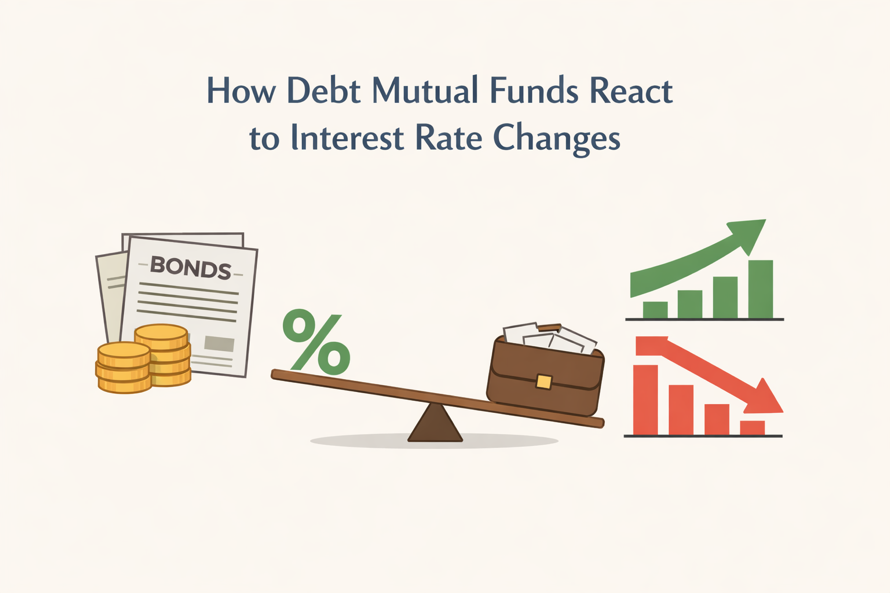
Debt mutual funds invest in fixed-income instruments. Government securities. Corporate bonds. Treasury bills. Commercial papers. These instruments carry interest rate sensitivity. And here lies the core principle: bond prices move inversely to interest rates.
When interest rates rise, new bonds offer higher yields. Existing bonds with lower coupons become less attractive. Their prices fall. When rates decline, older bonds with higher coupons gain demand. Their prices rise. This pricing adjustment directly impacts the net asset value of debt mutual funds.
Duration determines the magnitude of this impact. Duration measures a bond portfolio’s sensitivity to changes in interest rates. A higher duration implies greater price movement for a given change in yield. A lower duration implies stability.
A 1 percent rise in yields may cause a long-duration fund to fall sharply in the short term. The same move may barely register in a liquid fund.
But it is not only the current repo rate that matters. Expectations matter. Forward guidance matters. Inflation outlook matters. Markets price in anticipated rate moves even before official announcements. Bond yields move ahead of policy shifts.
That is why debt mutual funds often react before the headline flashes on television screens. The market anticipates. The NAV reflects that anticipation.
The repo rate is not just a number. It is a signal. A signal that echoes across the bond market and shapes the behavior of every debt-oriented portfolio.
Impact On Different Debt Fund Categories
Not all debt mutual funds react the same way. Some barely flinch. Others swing sharply. The category defines the reaction.
Liquid funds operate at the shortest end of the maturity spectrum. They invest in instruments maturing in days or weeks. When interest rates rise, these funds do not experience steep NAV declines. Their securities mature quickly and get reinvested at higher yields. The adjustment is gradual. Stability remains intact.
Ultra-short duration funds carry slightly longer exposure but remain relatively insulated. Volatility exists, but it remains controlled.
Short-duration and corporate bond funds enter the middle ground. Their portfolios include bonds with moderate maturities. Here, interest rate movements become visible. NAVs may fluctuate more meaningfully during rate cycles. Credit spreads may widen or compress based on economic outlook, adding another dimension to returns.
Dynamic bond funds behave differently. They actively adjust portfolio duration depending on rate expectations. If the manager expects rates to rise, duration may be reduced. If rate cuts appear likely, duration may extend. The outcome depends heavily on strategy execution.
Then come gilt funds and long-duration funds. These carry high sensitivity. A small change in yields can translate into a pronounced price movement. During falling rate cycles, they may deliver strong capital appreciation. During rising rate cycles, short-term volatility may appear sharp.
Credit risk funds add another variable. Interest rates matter, but credit quality matters more. Economic tightening may elevate credit spreads, influencing performance even if repo rates remain stable.
Here’s a table that can give you a clear summary of this difference:
| Fund Category | Duration Exposure | Reaction to Rate Hike | Reaction to Rate Cut |
|---|---|---|---|
| Liquid Funds | Very Low | Minimal NAV Impact | Gradual Yield Uptick |
| Ultra-Short Funds | Low | Mild Impact | Moderate Benefit |
| Short Duration Funds | Moderate | Noticeable Impact | Visible Gain |
| Corporate Bond Funds | Moderate | Spread + Rate Effect | Dual Benefit |
| Dynamic Bond Funds | Flexible | Depends on Positioning | Depends on Positioning |
| Gilt / Long Duration | High | Sharp Short-Term Decline | Strong Capital Gain |
The same repo rate announcement can produce very different NAV movements across categories. Context defines reaction.
“Start investing with confidence! Explore the best
mutual funds
and grow your wealth.”
Should You Change Your Debt Fund Strategy?
Every rate cycle sparks the same question. Should the allocation change?
When rates rise, long-duration funds may show temporary declines. Investors feel uneasy. When rates fall, long-duration funds rally sharply. Investors feel excited. Emotional reactions begin to shape decisions.
But strategy should precede emotion.
Debt mutual funds serve a specific role within a portfolio. Some preserve liquidity. Some stabilize volatility. Some aim for tactical capital appreciation during easing cycles. Each category has a defined purpose.
If the investment goal is short-term and capital protection is central, short-duration funds often align better regardless of rate forecasts. If the horizon extends over several years and volatility tolerance exists, duration exposure may provide an opportunity during falling rate cycles.
Frequent switching based on policy announcements can create timing mismatches. Bond markets often anticipate rate moves months in advance. By the time a rate cut materializes, yields may have already adjusted lower.
Strategic clarity reduces reactionary behavior. Align duration exposure with the time horizon. Align volatility tolerance with category choice. Rate cycles are temporary. Portfolio discipline endures.
When Should You Rebalance Your Mutual Fund Portfolio?
Asset allocation rarely stays static. Market movements shift proportions. Falling yields may push long-duration funds higher. Rising yields may compress their weight within the portfolio.
Rebalancing restores structure.
Rebalancing is not about predicting rates. It is about maintaining alignment with financial objectives. If debt allocation grows disproportionately large due to capital gains, trimming may restore balance. If duration exposure becomes excessive relative to goal timelines, adjustment may enhance stability.
Consider rebalancing when:
- Allocation drifts significantly from target percentages
- Financial goals approach maturity
- Risk tolerance changes due to life stage transitions
- Liquidity needs evolve
- Interest rate cycles shift structurally over multi-year horizons
A conservative investor nearing a short-term goal may gradually reduce duration risk. A long-term investor may maintain balanced exposure through cycles.
Rebalancing enforces discipline. It protects the structure. It prevents unintended risk accumulation.
Smart Tips For Debt Fund Investors
Interest rate cycles generate headlines. Headlines generate noise. Clarity requires structure.
Keep these principles in mind:
- Match duration with goal horizon. Short goals favor lower duration. Longer goals can tolerate higher sensitivity.
- Evaluate credit quality alongside duration. Yield alone does not define safety.
- Understand that temporary NAV declines during rising rate cycles reflect mark-to-market adjustment, not necessarily permanent capital loss.
- Avoid frequent category switching driven by short-term rate speculation.
- Diversify across debt categories to balance liquidity and yield.
- Monitor inflation trends and central bank commentary for broader context.
Debt investing rewards alignment and patience. Rate cycles rise and fall. Yield curves steepen and flatten. Markets anticipate and recalibrate. Structured allocation sustains stability through those shifts.
Conclusion
Interest rate changes ripple through the bond market and directly influence debt mutual funds. The repo rate acts as a central pivot. Rising rates pressure bond prices. Falling rates lift them. Duration determines sensitivity. Category defines volatility.
Liquid funds remain steady. Long-duration funds swing wider. Dynamic funds adapt. Credit-focused funds respond to both rate and spread movements.
Understanding these mechanics transforms perception. A short-term NAV dip during a tightening cycle appears less alarming when viewed through the lens of duration sensitivity. A sharp rally during easing cycles appears contextual rather than surprising.
Debt mutual funds do not operate in isolation. They reflect liquidity conditions, inflation expectations, and macroeconomic signals. Investors who grasp these relationships approach rate cycles with informed composure.
Interest rates will continue to shift. Bond yields will adjust. NAVs will respond. Structured allocation and duration awareness remain the anchors within that movement.
Debt mutual funds are slowly becoming an integral part of investor’s portfolio. Given their resilience in the tough times, they might offer a good investment opportunity and protect capital at the same time.
FAQs:
Q. How do interest rates affect debt mutual funds?
Interest rates directly influence bond prices inside debt mutual funds. When rates fall, bond prices rise, and the NAV may increase. When rates rise, bond prices adjust downward, especially in longer-duration funds.
Q. What is the relationship between debt and interest rates?
Debt instruments and interest rates share an inverse relationship. As interest rates increase, existing bond prices decline. As interest rates decrease, existing bond prices appreciate.
Q. What happens to debt when interest rates rise?
When interest rates rise, bond prices typically fall. Longer-maturity debt securities react more sharply, while short-duration instruments experience a milder impact.
Disclaimer
The stocks mentioned in this article are not recommendations. Please conduct your own research and due diligence before investing. Investment in securities market are subject to market risks, read all the related documents carefully before investing. Please read the Risk Disclosure documents carefully before investing in Equity Shares, Derivatives, Mutual fund, and/or other instruments traded on the Stock Exchanges. As investments are subject to market risks and price fluctuation risk, there is no assurance or guarantee that the investment objectives shall be achieved. Lemonn (Formerly known as NU Investors Technologies Pvt. Ltd) do not guarantee any assured returns on any investments. Past performance of securities/instruments is not indicative of their future performance.
Related Posts



Download Lemonn
Download my mutual fund app - your mutual funds, stock, invest in ipo, mf, trade invest hub with demat account features.