What is CUSIP?
Overview of CUSIP
Financial markets around the world move at a scorching pace. A single trading day sends millions of transactions through exchanges, custodians, clearing houses, portfolio systems, and regulators. For this massive machine to run smoothly, every security needs a clear identity—a code that speaks the same language across all systems. This is where CUSIP steps in. Anyone curious about what is CUSIP begins by understanding that it is far more than a random code on a document. It is the backbone of security identification across the United States and Canada.
CUSIP gives structure to a market that deals with countless bonds, shares, and funds. It offers uniformity, accuracy, and confidence. When traders settle deals or institutions audit positions, CUSIP becomes the quiet force guiding that efficiency. Before exploring the mechanics behind the number itself, it helps to know what it represents and why the system became essential.
Definition and Purpose
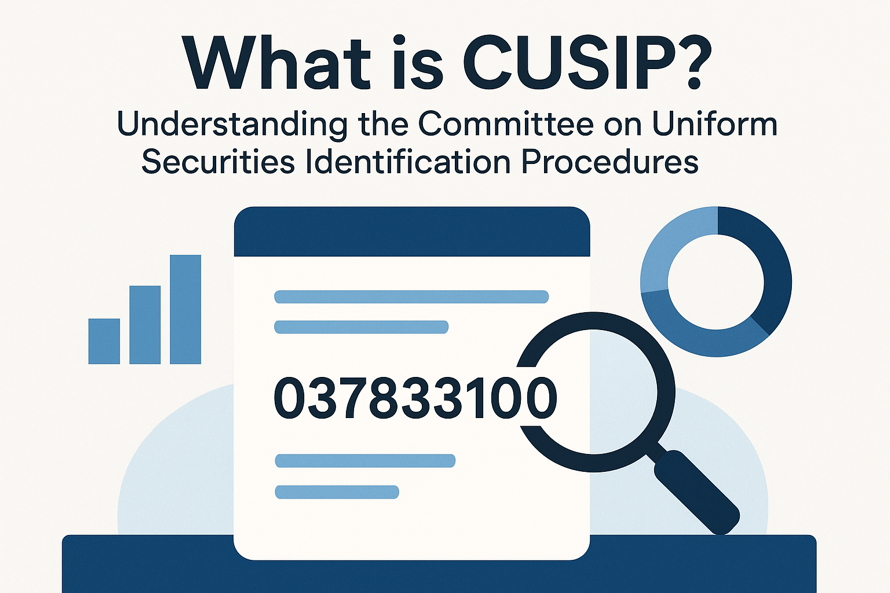
If you are wondering what is CUSIP, it stands for Committee on Uniform Securities Identification Procedures. It delivers a unique nine-character code for financial instruments across North America. The purpose is simple: reduce confusion by giving every security a clean identity. Brokerage firms use CUSIPs to record ownership, custodians use them for settlement, and regulators use them to track activity. The presence of a CUSIP ensures that a bond or share can move across systems without errors and without misunderstandings created by similar names or multiple share classes.
“Start investing with confidence! Explore
0 demat account
and grow your wealth.”
History and Formation of the Committee
During the 1960s, US markets grew rapidly. Companies issued more securities, investors traded more actively, and back-office clerks struggled with mountains of paperwork. Manual processes created delays, mismatched trades, and tremendous settlement pressure. To solve this crisis, the American Bankers Association created a committee to craft a uniform identification method. This effort led to the CUSIP system. The system improved transparency, reduced operational risks, and supported the growth of modern electronic trading.
How CUSIP Numbers Work
CUSIP numbers look simple on paper, yet their structure has remarkable depth. Each number carries information about the issuer and the security. Once you understand the components, the code becomes far easier to interpret.
The goal behind the design was clarity. A short, compact format works well for printed documents, electronic systems, and global data feeds. It helps institutions identify instruments instantly without long descriptive names.
Structure of a CUSIP Number
A standard CUSIP has nine characters.
- First six characters identify the issuer.
- Next two characters identify the individual issue or security.
- Final character acts as a check digit to ensure accuracy.
This design gives the system the ability to efficiently categorize thousands of issuers and an even larger number of securities. Even when companies issue bonds of multiple maturities or restructure share classes, each variation gains its own CUSIP.
Types of Securities Covered
CUSIPs appear across a wide range of financial instruments. Equity shares, corporate bonds, municipal bonds, US government securities, ETFs, mutual funds, and commercial paper all have CUSIPs. Private placements filed under regulatory frameworks also fall within the system. Through this approach, the market gains uniformity across the entire lifecycle of a security—from issuance and trading to settlement and redemption.
Example of a CUSIP Number Breakdown
Consider the CUSIP 037833100.
• Issuer: First six characters identify Apple Inc.
• Issue: Two characters identify the common equity class.
• Check digit: The final digit provides verification.
This simple example shows how a nine-character sequence accurately represents a globally traded company with countless shareholders.
Importance of CUSIP in Financial Markets
After understanding what is CUSIP, let’s understand what it offers. It offers a foundation that supports trading, reporting, settlement, and compliance. Without it, back-office teams would struggle with duplicate names, multiple share classes, and inconsistent identification across brokers.
In modern markets, accuracy and speed matter. CUSIP provides both. Every part of a financial transaction—from front-office trading to regulatory reporting—benefits from this uniform identification system.
Role in Security Identification
CUSIPs serve as fingerprints. Two securities may share similar names, yet their CUSIP separate them perfectly. For example, a company may issue preferred shares, common shares, and several bond series. CUSIP codes keep these instruments distinct.
Usage by Investors, Issuers, and Regulators
Investors see CUSIPs in account statements and contract notes. Issuers include them in bond documents, prospectuses, and corporate filings. Regulators rely on CUSIPs for risk monitoring, trade reporting, and capital-market analytics.
CUSIP vs. ISIN vs. SEDOL
Worldwide markets use different identification standards. ISIN covers global securities, SEDOL represents UK-based identification, and CUSIP serves the North American ecosystem. Some securities appear in all three formats, depending on where they trade. CUSIP remains central for the US and Canadian markets.
Who Manages CUSIP Numbers?
A system this large needs a reliable management body. Millions of securities across decades of issuance require careful organization, updates, and administration.
To maintain accuracy and industry trust, CUSIP management sits with two major institutions that bring governance and operational expertise.
Role of CUSIP Global Services (CGS)
CUSIP Global Services assigns and maintains CUSIP numbers. It provides comprehensive datasets to banks, brokers, data vendors, regulators, and institutional investors. CGS updates the database whenever securities mature, convert, split, merge, or enter the market for the first time. Through this work, CGS preserves continuity across systems.
Oversight by the American Bankers Association (ABA)
The American Bankers Association oversees the standard and supervises policy decisions related to CUSIP. With decades of expertise in financial governance, the ABA ensures that the system remains consistent, credible, and aligned with market needs.
How to Look Up a CUSIP Number
Investors, analysts, and institutions frequently search for CUSIP numbers. The lookup method depends on access level, data needs, and the type of security.
Large institutions use premium research tools, while retail investors rely on documents and free sources.
Accessing CUSIP Databases
The official CUSIP database sits with CGS. Professional platforms such as Bloomberg Terminal, Refinitiv Eikon, S&P Capital IQ, and Morningstar feed CUSIP data directly through licensed agreements. Investment banks, trading desks, mutual funds, and custodians use these tools extensively.
Free vs. Paid Lookup Options
Retail investors find CUSIPs in fund fact sheets, prospectuses, annual reports, brokerage statements, and regulatory filings. The SEC EDGAR website lists CUSIPs in many corporate filings, such as bond registration documents. Free tools offer limited coverage, while paid platforms carry complete datasets.
CUSIP in the Context of Compliance and Regulation
Compliance frameworks across US markets integrate deeply with CUSIP. Regulators include the code in reporting rules, market surveillance systems, and risk analytics frameworks. Institutions use CUSIPs for due diligence checks, anti-money laundering controls, and capital markets monitoring.
Integration with SEC Filings
Corporate issuers often include CUSIP numbers in SEC registration statements, offering circulars, and annual reports. This enhances transparency and gives regulators a uniform way to categorize instruments across filings.
Anti-Money Laundering (AML) and Trade Monitoring
Banks and broker-dealers use CUSIPs in trade surveillance systems to track unusual patterns. The code helps identify securities involved in flagged transactions and supports detailed audits during regulatory examinations.
Challenges and Criticism of the CUSIP System
Apart from understanding what is CUSIP, it’s important to understand the challenges related to it. A system as influential as CUSIP attracts debate regarding access and cost. Since CUSIP data is licensed, some industry participants question its open access.
Large institutions view licensing as routine, while smaller players occasionally seek broader availability.
Licensing and Cost Issues
CUSIP data sits behind a managed structure. Vendors and firms subscribe for access. This approach supports system maintenance and data accuracy. Some firms discuss the cost structure, especially smaller data providers building financial-technology products.
Calls for Open-Source Alternatives
Certain industry voices explore ideas around open-source identification. They highlight the benefits of free access and broader innovation. These discussions reflect healthy debate about how security identification systems evolve with market maturity.
FAQs about CUSIP
What does CUSIP stand for?
It stands for Committee on Uniform Securities Identification Procedures, a standardized coding system for securities.
How do I find the CUSIP number of a stock or bond?
You can view the number in brokerage statements, prospectuses, regulatory filings, or databases like Bloomberg and CGS.
Why are CUSIP numbers important in trading?
The numbers help identify securities with precision, enabling smooth settlement, reporting, and compliance.
Is a CUSIP number the same as a ticker symbol?
A ticker identifies how a stock trades on an exchange, while a CUSIP provides its formal identity across systems.
Can two securities have the same CUSIP number?
Each security receives a unique CUSIP that separates it from all others.
How are CUSIP numbers assigned?
CUSIP Global Services assigns them based on issuer details, instrument structure, and regulatory filings.
Are CUSIP numbers used internationally?
CUSIP serves the US and Canadian markets, while global markets use systems such as ISIN and SEDOL.
Disclaimer
The stocks mentioned in this article are not recommendations. Please conduct your own research and due diligence before investing. Investment in securities market are subject to market risks, read all the related documents carefully before investing. Please read the Risk Disclosure documents carefully before investing in Equity Shares, Derivatives, Mutual fund, and/or other instruments traded on the Stock Exchanges. As investments are subject to market risks and price fluctuation risk, there is no assurance or guarantee that the investment objectives shall be achieved. Lemonn (Formerly known as NU Investors Technologies Pvt. Ltd) do not guarantee any assured returns on any investments. Past performance of securities/instruments is not indicative of their future performance.
Related Posts



Download Lemonn
Download my app for share market trading, ipo investment, trading account, and all your investment needs.