
What Are Unlisted Shares? A Complete Beginner’s Guide
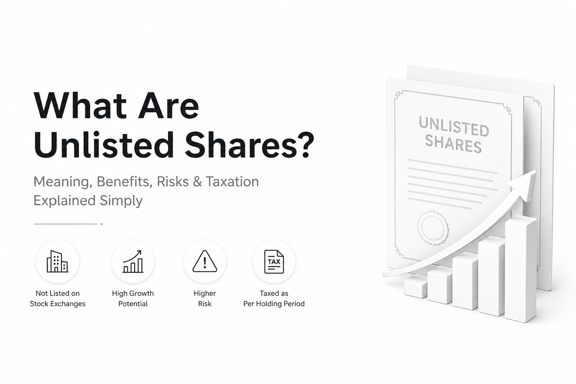
If you’re exploring investment opportunities beyond the stock market, you’ve probably come across the term unlisted shares. These shares have become increasingly popular among investors looking to invest in promising companies before they go public.
But what exactly are unlisted shares? How do they work? Are they safe to invest in?
This guide explains everything you need to know, including the meaning of unlisted shares, how they are bought and sold, their benefits, risks, taxation, and whether they deserve a place in your investment portfolio.
What Are Unlisted Shares?
Unlisted shares are shares of a company that are not listed or traded on recognized stock exchanges like the National Stock Exchange (NSE) or Bombay Stock Exchange (BSE).
Unlike listed stocks, you cannot buy or sell unlisted shares through your regular trading account. Instead, these transactions happen privately between buyers and sellers.
In simple terms, investing in unlisted shares means becoming a shareholder in a company before it becomes publicly traded or while it chooses to remain private.
Quick Overview of Unlisted Shares
| Feature | Unlisted Shares |
|---|---|
| Listed on Stock Exchange | No |
| Trading Platform | Private transactions |
| Liquidity | Low |
| Price Discovery | Negotiated between buyer and seller |
| Regulatory Disclosure | Limited compared to listed companies |
| Risk Level | Moderate to High |
| Return Potential | High, depending on company growth |
“Start investing with confidence! Explore
0 demat account
and grow your wealth.”
How Do Unlisted Shares Work?
Companies issue shares to raise capital. If those shares are not listed on a public stock exchange, they are considered unlisted shares.
Investors buy these shares through private transactions. The ownership is legally transferred and recorded, but there is no public marketplace where prices change every second.
The value of unlisted shares is generally determined based on factors such as:
- Company’s financial performance
- Revenue growth
- Profitability
- Industry outlook
- Demand among investors
- Expected IPO valuation
Because there is no public exchange, prices are usually negotiated between buyers and sellers.
Who Issues Unlisted Shares?
Several types of companies have unlisted shares, including:
- Private limited companies
- Public companies that have not yet listed
- Companies preparing for an Initial Public Offering (IPO)
- Startups backed by venture capital
- Delisted public companies in certain cases
Many successful companies have had active unlisted markets before listing on stock exchanges.
How Can You Buy Unlisted Shares?
Unlike listed stocks, unlisted shares cannot be purchased through regular stock exchanges.
Investors typically buy them through:
- Registered unlisted share brokers
- Wealth management firms
- Private equity networks
- Employee Stock Ownership Plan (ESOP) sales
- Existing shareholders selling their stake
- Specialized investment platforms dealing in unlisted securities
Before investing, it is important to verify the authenticity of the seller and ensure that the share transfer process follows applicable regulations.
Benefits of Investing in Unlisted Shares
1. Opportunity to Invest Before an IPO
One of the biggest attractions is getting exposure to companies before they become publicly listed.
If the company performs well after listing, early investors may benefit from significant appreciation.
2. High Growth Potential
Many fast-growing companies remain private for several years before listing.
Investing early allows investors to participate in their growth journey.
3. Portfolio Diversification
Adding unlisted shares can diversify your investment portfolio beyond traditional listed stocks and mutual funds.
4. Long-Term Wealth Creation
Some investors use unlisted shares as long-term investments with the expectation of future listing or business expansion.
Risks of Investing in Unlisted Shares
While the potential returns are attractive, unlisted shares also carry higher risks.
Low Liquidity
Selling unlisted shares may take time because buyers are limited.
Unlike listed stocks, there is no active exchange where trades happen instantly.
Limited Financial Information
Private companies are generally not required to disclose as much information as listed companies.
This makes it more challenging to evaluate their financial health.
Valuation Risk
Determining the fair value of unlisted shares is difficult because prices are privately negotiated rather than discovered through market trading.
Business Risk
Some companies may never launch an IPO or achieve expected growth.
Investors should be prepared for long holding periods and the possibility of losses.
Unlisted Shares vs Listed Shares
| Feature | Unlisted Shares | Listed Shares |
| Trading | Private deals | NSE/BSE |
| Liquidity | Low | High |
| Price Transparency | Limited | High |
| Regulatory Oversight | Lower | Higher |
| Information Availability | Limited | Extensive |
| Investment Risk | Higher | Comparatively Lower |
Taxation of Unlisted Shares in India
Tax treatment depends on how long the shares are held.
Short-Term Capital Gains (STCG)
If unlisted shares are sold within 24 months, gains are generally treated as short-term capital gains and taxed according to the investor’s applicable income tax slab.
Long-Term Capital Gains (LTCG)
If held for more than 24 months, gains are generally treated as long-term capital gains and taxed at 12.5% (plus applicable surcharge and cess) without indexation, subject to prevailing tax laws.
Since tax regulations may change, investors should consult a qualified tax advisor before making investment decisions.
Who Should Invest in Unlisted Shares?
Unlisted shares may be suitable for investors who:
- Have a long-term investment horizon
- Can tolerate higher risk
- Understand private company valuation
- Want exposure before a potential IPO
- Have a diversified investment portfolio
They may not be suitable for investors seeking regular liquidity or stable short-term returns.
Tips Before Buying Unlisted Shares
Before investing, consider the following:
- Research the company’s financial performance.
- Understand the business model.
- Check promoter credibility.
- Verify share ownership documents.
- Compare valuation with industry peers.
- Understand exit opportunities.
- Invest only a portion of your overall portfolio.
Proper due diligence is essential because private companies have fewer disclosure requirements than listed companies.
Frequently Asked Questions (FAQs)
Q. Are unlisted shares legal in India?
Yes. Buying and selling unlisted shares is legal in India, provided the transaction complies with applicable laws and regulations.
Q. Can I buy unlisted shares online?
Yes. Several registered brokers and investment platforms facilitate transactions in unlisted shares.
Q. Are unlisted shares risky?
Yes. They generally carry higher risks than listed shares because of lower liquidity, limited information, and uncertain valuations.
Q. Can unlisted shares become listed?
Yes. If a company launches an IPO and lists on a recognized stock exchange, its unlisted shares become listed shares.
Q. Do unlisted shares pay dividends?
Some companies distribute dividends, while others reinvest profits for business growth. Dividend policies vary from company to company.
Key Takeaways
- Unlisted shares are shares of companies that are not traded on public stock exchanges.
- They offer an opportunity to invest before a company goes public.
- Potential returns can be significant, but risks are also higher.
- Liquidity is limited compared to listed stocks.
- Thorough research and due diligence are essential before investing.
Conclusion
Unlisted shares can be an attractive investment for those looking to diversify their portfolios and gain early exposure to high-growth companies. However, these opportunities come with challenges such as limited liquidity, reduced transparency, and valuation uncertainty.
Before investing, carefully assess the company’s fundamentals, growth prospects, and your own financial goals. A disciplined approach and proper due diligence can help you make informed decisions and manage risk effectively.
Disclaimer
The stocks mentioned in this article are not recommendations. Please conduct your own research and due diligence before investing. Investment in securities market are subject to market risks, read all the related documents carefully before investing. Please read the Risk Disclosure documents carefully before investing in Equity Shares, Derivatives, Mutual fund, and/or other instruments traded on the Stock Exchanges. As investments are subject to market risks and price fluctuation risk, there is no assurance or guarantee that the investment objectives shall be achieved. Lemonn (Formerly known as NU Investors Technologies Pvt. Ltd) do not guarantee any assured returns on any investments. Past performance of securities/instruments is not indicative of their future performance.
Related Posts

Download Lemonn
Download my app for share market trading, ipo investment, trading account, and all your investment needs.



