Union Budget Expectations 2026: What India Wants From Taxes, Growth & Reforms
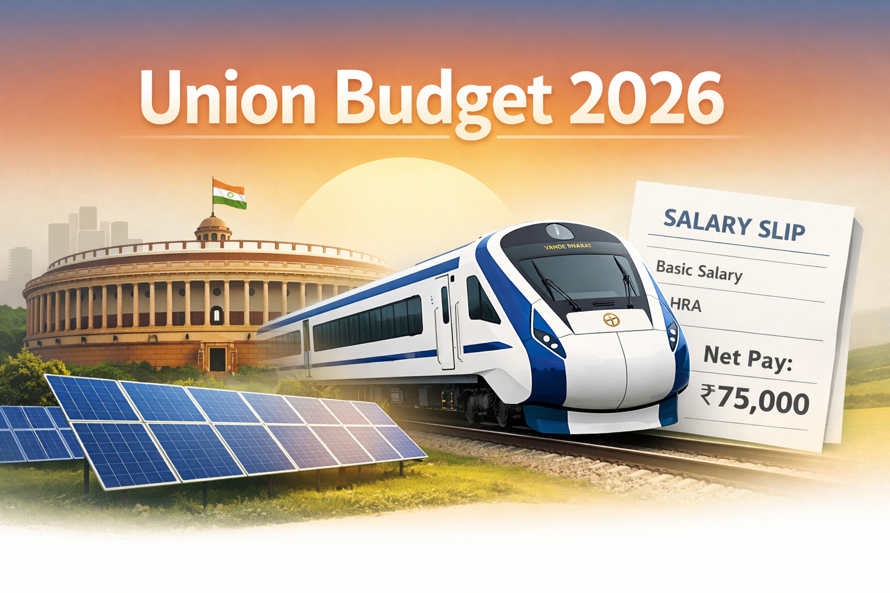
The Union Budget 2026 is one of the most anticipated financial events in India this year. With Finance Minister Nirmala Sitharaman set to present the Budget on 1 February 2026, expectations are running high across taxpayers, businesses, economists, and industry leaders alike.
This year’s pre‑Budget discussions focus not just on tax changes, but on economic growth, fiscal stability, and strategic reforms that can support India’s vision of sustainable development. Let’s break down the major Union Budget expectations for 2026 and what they could mean for you.
Why Expectations Are High in 2026
Ahead of the Budget, economists and research firms are flagging key themes that could shape government policy:
- A continued focus on fiscal discipline even amid global uncertainties.
- Public calls for increased government spending in health, education, and infrastructure.
- Calls from experts to embed long‑term vision and resilience into fiscal policy.
Now, let’s look at what different groups – taxpayers, businesses, and economists – specifically expect from the Union Budget.
Income Tax Expectations: Middle-Class Relief in Focus
The biggest buzz around Budget 2026? Income tax relief — especially for the salaried middle class and small business owners.
People want more take-home pay, simpler filing, and fewer grey areas in choosing between the old and new tax regimes.
“Start investing with confidence! Explore
0 demat account
and grow your wealth.”
Key Income Tax Expectations
| Expectation | Details |
|---|---|
| Increase in basic exemption limit | From ₹2.5 lakh to ₹5 lakh under the old regime |
| Higher standard deduction | From ₹50,000 to ₹75,000 for salaried individuals |
| New regime improvements | Inclusion of deductions like 80C, 80D to attract more users |
Why this matters: With inflation and living costs rising, taxpayers are looking for meaningful relief – not just symbolic gestures.
Fiscal Strategy: Can the Government Spend Without Overspending?
The government is expected to stay committed to fiscal discipline while supporting long-term growth through capital spending.
India’s fiscal deficit has steadily declined post-COVID. Now, the market expects a further reduction – without cuts to key infrastructure or welfare programs.
Fiscal Outlook Summary
| Indicator | Expectation |
|---|---|
| Fiscal Deficit | Around 5% of GDP (down from 5.9%) |
| Capital Expenditure (Capex) | Strong allocation for infrastructure and job creation |
| Revenue Growth | Focused on direct taxes and improved GST collection |
🧠 Analysts expect a “steady hand” approach – investing in growth without derailing fiscal consolidation targets.
Sectoral Expectations: Who’s Hoping for What?
Budget expectations go far beyond taxes. Several key sectors are looking for bold reforms and targeted support:
- MSMEs: Credit support, tax simplification, better digital infrastructure
- Healthcare: More allocation for rural health systems and infrastructure
- Education & Skilling: Budget for AI training, digital classrooms, tech-led learning
- Green Energy: Tax incentives for solar, EVs, and clean energy startups
- Tech & AI: Access to anonymized data, cloud credits, and regulatory clarity
📌 These sectors fuel employment and innovation – expect the budget to acknowledge that.
Old vs New Tax Regime: Will Budget 2026 End the Confusion?
The dual-tax regime system has left many taxpayers wondering which is better. Experts hope Budget 2026 makes it easier to choose – or offers a single, smarter alternative.
Old vs New Regime: A Snapshot
| Feature | Old Regime | New Regime |
|---|---|---|
| Slab Rates | Higher, progressive | Lower, flat |
| Deductions Allowed | Yes (80C, HRA, etc.) | Mostly no |
| Ease of Use | Complex | Simpler |
| Budget Expectation | Retain but improve | Add key deductions like 80C/80D |
🔍 The government may gradually phase out the old system, but not before making the new one more appealing.
What Different Stakeholders Expect
Everyone’s watching Budget 2026, but for different reasons.
| Group | Key Expectation |
|---|---|
| Salaried Taxpayers | Tax relief, higher deductions, clarity between regimes |
| Startups & MSMEs | Easier compliance, R&D incentives |
| Investors | No new capital gains taxes, stable policies |
| Senior Citizens & Women | Additional tax benefits or savings schemes |
| Economists | Fiscal discipline without cutting growth drivers |
Final Thoughts
The Union Budget 2026 isn’t just about tax rates or fiscal targets – it’s about trust, direction, and making India future-ready.
As we wait for February 1, expectations are clear:
- Give the middle class breathing room
- Keep investing in infrastructure, tech, and people
- Support businesses, especially MSMEs
- Deliver a balanced, inclusive vision of growth
Whether these expectations turn into reality – we’ll know soon.
FAQs: Union Budget Expectations 2026
Q: Will the basic income tax exemption limit increase?
A: It’s one of the most anticipated changes – potentially increasing from ₹2.5 lakh to ₹5 lakh.
Q: Will the old tax regime be scrapped?
A: Not immediately. But the new regime could get more attractive with added deductions.
Q: What sectors are likely to benefit from Budget 2026?
A: MSMEs, AI/tech startups, renewable energy, healthcare, and education are top contenders.
Q: Is fiscal deficit control still a goal?
A: Yes. The government is expected to bring it below 5% while maintaining growth spending.
Key Takeaways
- Middle-class taxpayers are expecting genuine income tax relief
- Fiscal strategy will aim to reduce deficit while boosting capital expenditure
- MSMEs and future-focused sectors may see targeted support
- Budget 2026 could lay the foundation for the Income Tax Act 2025 rollout
Disclaimer
The stocks mentioned in this article are not recommendations. Please conduct your own research and due diligence before investing. Investment in securities market are subject to market risks, read all the related documents carefully before investing. Please read the Risk Disclosure documents carefully before investing in Equity Shares, Derivatives, Mutual fund, and/or other instruments traded on the Stock Exchanges. As investments are subject to market risks and price fluctuation risk, there is no assurance or guarantee that the investment objectives shall be achieved. Lemonn (Formerly known as NU Investors Technologies Pvt. Ltd) do not guarantee any assured returns on any investments. Past performance of securities/instruments is not indicative of their future performance.
Related Posts

Download Lemonn
Download my app for share market trading, ipo investment, trading account, and all your investment needs.