
TDS Refund in India: How to Claim It Quickly and Easily
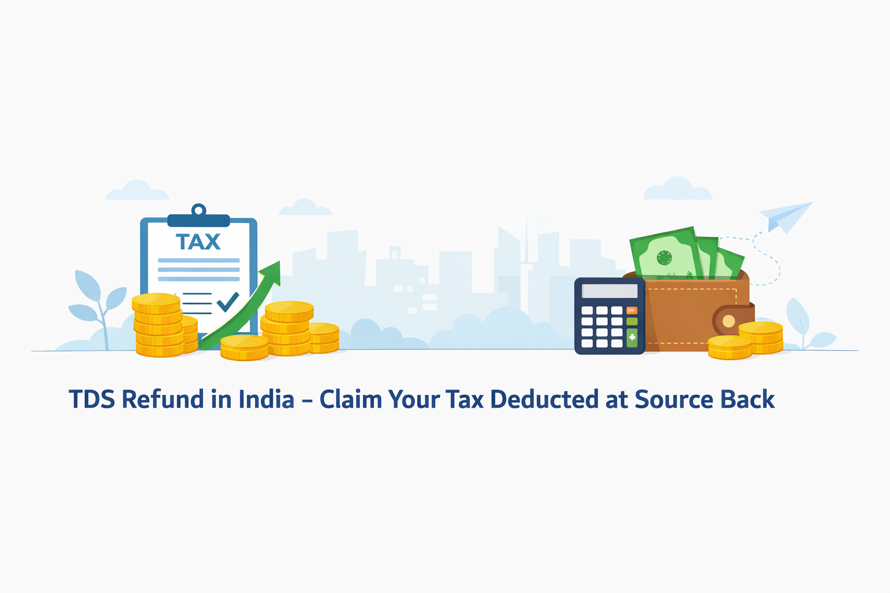
If you’ve paid more tax than required through TDS (Tax Deducted at Source), you can claim the extra amount back as a TDS refund. The process is simple, but many people miss out due to small mistakes.
What is a TDS Refund?
A TDS refund is the excess tax you paid that the government returns to you after you file your Income Tax Return (ITR).
This usually happens when:
- Your employer deducts more tax than needed
- Your bank deducts TDS on interest income
- You qualify for deductions but did not declare them earlier
Once your actual tax liability is calculated, any extra amount is refunded.
Who is Eligible for a TDS Refund?
You can claim a refund if:
- Your total tax liability is lower than the TDS deducted
- Your income is below the taxable limit
- You have tax-saving investments under sections like 80C or 80D
- You earned interest income with TDS deducted
“Start investing with confidence! Explore
0 demat account
and grow your wealth.”
How to Claim TDS Refund (Step-by-Step)
Step 1: Check Form 26AS or AIS
Log in to the Income Tax portal and verify all TDS entries.
Step 2: File Your ITR
Choose the correct ITR form and report:
- Salary income
- Interest income
- TDS details
Step 3: Calculate Your Tax
The system automatically calculates:
- Total tax payable
- Refund amount (if any)
Step 4: Verify Your Return
You must e-verify using:
- Aadhaar OTP
- Net banking
- Bank account verification
Without verification, your refund will not be processed.
How Will You Receive the Refund?
Your TDS refund is credited directly to your bank account.
Make sure:
- Your bank account is pre-validated
- PAN is linked with Aadhaar
- IFSC and account details are correct
TDS Refund Timeline in India
Typically, refunds are processed within:
- 7 to 30 days after ITR processing
Delays may happen if:
- There is a mismatch in details
- Your return is under review
- Bank details are incorrect
How to Check TDS Refund Status
You can track your refund status online:
- Log in to the Income Tax e-filing portal
- Go to “View Filed Returns”
- Click on the relevant assessment year
You can also check through the NSDL refund tracking system.
Common Reasons for TDS Refund Delays
- Incorrect bank account details
- PAN not linked with Aadhaar
- Mismatch between Form 26AS and ITR
- Failure to e-verify ITR
Tips to Get Your TDS Refund Faster
- File your ITR early
- Double-check all TDS entries
- Pre-validate your bank account
- Complete e-verification immediately
Key Takeaways
- A TDS refund is the excess tax returned to you
- Filing your ITR is mandatory to claim it
- Accurate details help avoid delays
- Most refunds are processed within 30 days
FAQs on TDS Refund
1. Can I get a TDS refund without filing ITR?
No, filing an Income Tax Return is mandatory to claim any refund.
2. What if my TDS is not showing in Form 26AS?
Contact the deductor (employer or bank) to update the records.
3. Is TDS refund taxable?
No, the refund itself is not taxable, but interest received on refund may be taxable.
4. Can I revise my return if I missed claiming a refund?
Yes, you can file a revised return within the allowed time.
Disclaimer
The stocks mentioned in this article are not recommendations. Please conduct your own research and due diligence before investing. Investment in securities market are subject to market risks, read all the related documents carefully before investing. Please read the Risk Disclosure documents carefully before investing in Equity Shares, Derivatives, Mutual fund, and/or other instruments traded on the Stock Exchanges. As investments are subject to market risks and price fluctuation risk, there is no assurance or guarantee that the investment objectives shall be achieved. Lemonn (Formerly known as NU Investors Technologies Pvt. Ltd) do not guarantee any assured returns on any investments. Past performance of securities/instruments is not indicative of their future performance.
Related Posts

Download Lemonn
Download my app for share market trading, ipo investment, trading account, and all your investment needs.



