
Revenge Trading: The Most Expensive Mistake Retail Investors Make
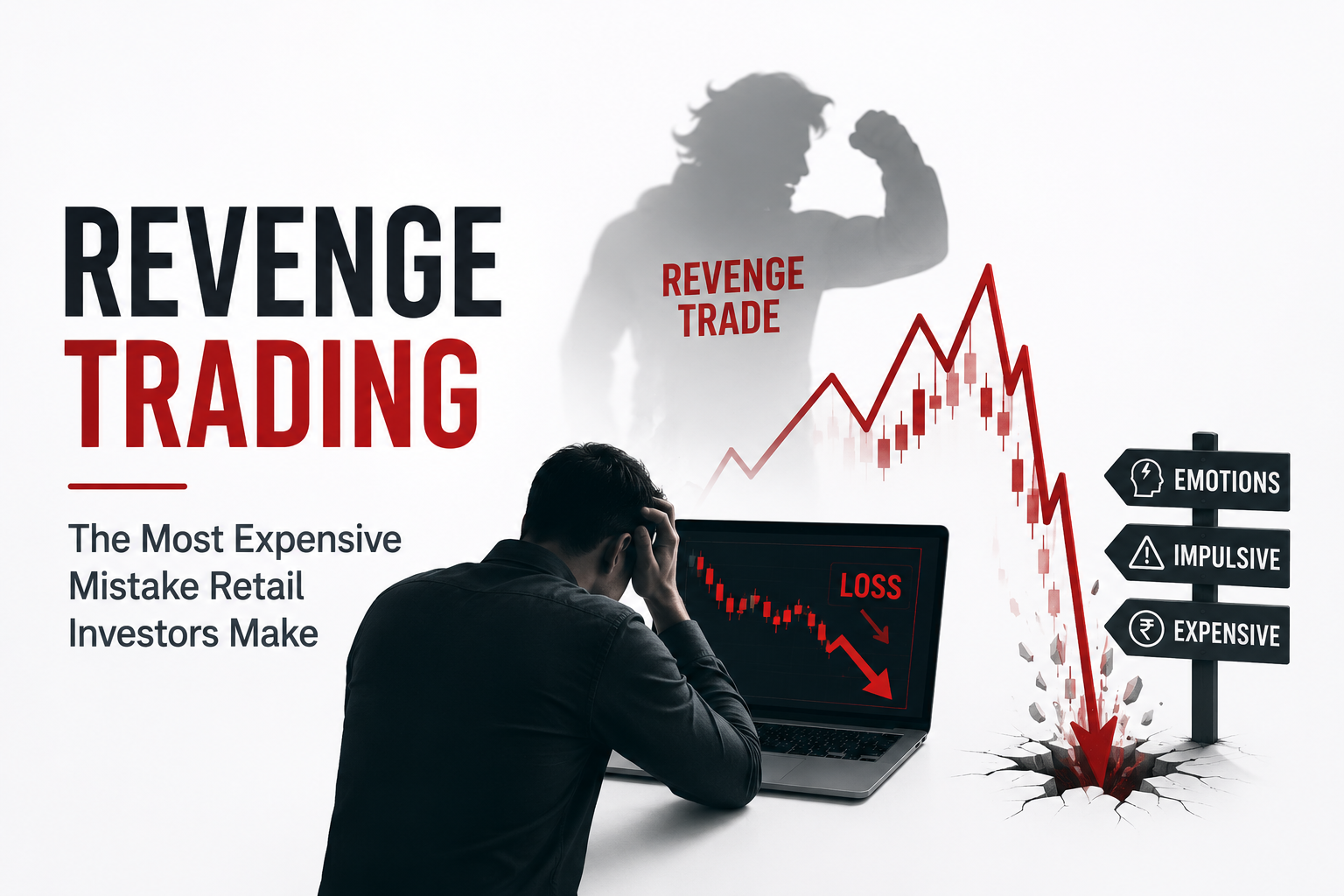
What is Revenge Trading?
Revenge trading occurs when an investor or trader, having suffered a loss, immediately places another trade (often larger or riskier) to ‘get the money back.’ The motivation is not analysis — it is ego, frustration, and the refusal to accept a loss. Revenge trading is one of the leading causes of account blow-ups.
Why Revenge Trading Is Almost Always a Losing Strategy
The market that just made you lose has no obligation to give your money back. Each trade is independent. Entering a new position while emotionally activated means: lower analytical quality, often larger position size (to recover faster), poor stop-loss discipline, and willingness to hold losing positions longer than rational.
| Revenge Trade Characteristics | Result |
|---|---|
| Larger than normal position size | Amplified loss if wrong |
| Entered without analysis | Random outcome, not edge |
| No stop-loss or wider stop | Unlimited downside |
| Same or similar setup that just failed | Doubles down on failing thesis |
| Under time pressure to ‘recover before close’ | Worst possible decision environment |
“Start investing with confidence! Explore
0 demat account
and grow your wealth.”
Warning Signs You Are About to Revenge Trade
- You are angry, frustrated, or feel cheated by the market
- You are thinking ‘I’ll just make one more trade’
- You are considering a position 2–3x your normal size
- You haven’t done your usual pre-trade analysis
- You keep refreshing the screen after a loss
The Recovery Protocol: What to Do After a Loss
- Close your trading terminal immediately after the loss
- Step away for at least 2 hours — physical activity is ideal
- Do not re-open the terminal the same day if the loss was significant
- Write in your trading journal: what happened, what you did right/wrong, what you’ll do differently
- Return the next day with full analysis before any new trade
Structural Prevention: Limits That Save You
- Daily loss limit: If you lose X% of account in one day, done for the day — no exceptions
- Maximum trades per day: If you hit 5 trades, stop — prevents overtrading after losses
- Pre-market planning: Only trade setups identified before market opens
Disclaimer
The stocks mentioned in this article are not recommendations. Please conduct your own research and due diligence before investing. Investment in securities market are subject to market risks, read all the related documents carefully before investing. Please read the Risk Disclosure documents carefully before investing in Equity Shares, Derivatives, Mutual fund, and/or other instruments traded on the Stock Exchanges. As investments are subject to market risks and price fluctuation risk, there is no assurance or guarantee that the investment objectives shall be achieved. Lemonn (Formerly known as NU Investors Technologies Pvt. Ltd) do not guarantee any assured returns on any investments. Past performance of securities/instruments is not indicative of their future performance.
Related Posts

Download Lemonn
Download my app for share market trading, ipo investment, trading account, and all your investment needs.



