What is a Ponzi Scheme: Meaning, Examples, and How It Works
Introduction – Understanding Ponzi Schemes
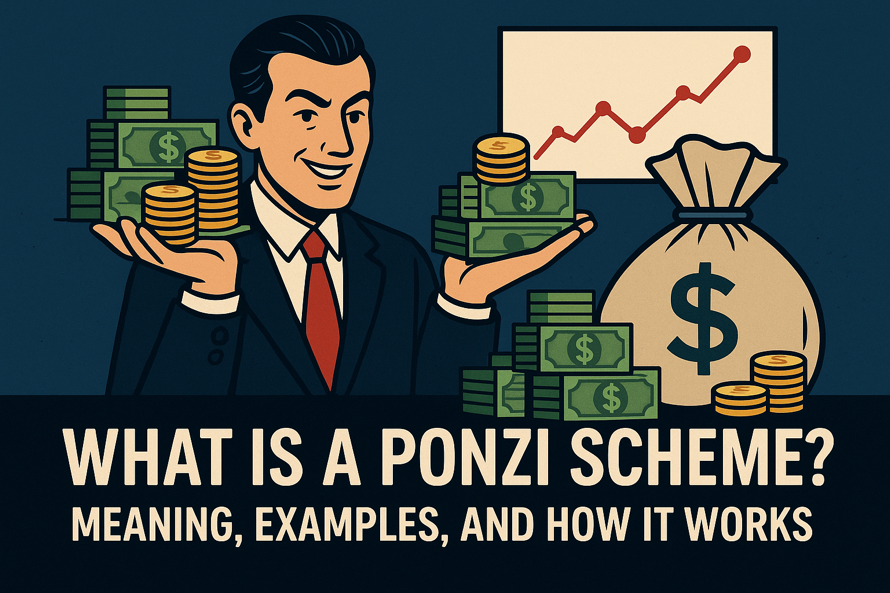
Ponzi schemes are strange animals. They appear harmless in the beginning, almost charming even. Someone talks about “a brilliant opportunity,” investors rush in, early participants brag about their returns, and the entire thing feels like a shortcut that somehow works. But underneath that excitement sits a fragile machine that runs only as long as fresh money keeps pouring in.
This cycle repeats through decades and continents. Despite regulations, awareness drives, and digital-age education, Ponzi schemes thrive because they tap into something deeply human: the dream of becoming rich effortlessly. And the people who design these schemes understand that dream very well.
Origin of the Term “Ponzi Scheme”
It all began in Boston in 1920. Charles Ponzi promised investors 50 percent profits in just a few weeks using international reply coupons. Most people did not even fully understand the product — they only saw the returns. His name eventually became the global shorthand for fraud schemes.
“Start investing with confidence! Explore
0 demat account
and grow your wealth.”
Who Was Charles Ponzi?
Ponzi was a charismatic storyteller who knew how to win trust. His charm was his biggest asset. People believed him, lined up outside his office, and handed over their life savings. For a short period, his scheme created a wave of excitement across the city.
Why Ponzi Schemes Continue to Exist Today
Technology changed. Banking changed. Regulations evolved. But human behavior remained the same. The promise of quick, predictable, high returns still works like a magnet. Whenever greed meets trust, scammers find an opening.
What Is a Ponzi Scheme?
At its core, a Ponzi scheme is a money-circulation trick wrapped inside a shiny sales pitch. There is no real business underneath. No genuine profit engine. Only the movement of money from unsuspecting investors to schemers.
Definition and Key Characteristics
A Ponzi scheme offers high returns with low risk. It creates the illusion of financial performance when, in reality, the only source of payouts is fresh investment. As long as new investors keep entering, the system survives. When they stop, the structure falls apart rapidly.
How Ponzi Schemes Operate
Everything depends on cash flow. The promoter collects deposits, pays back some early investors to build confidence, and uses the rest for personal gain. Once the scheme becomes popular, even more people join, creating a momentum loop. That loop always snaps sooner or later.
Difference Between a Ponzi Scheme and a Pyramid Scheme
A Ponzi scheme does not require active recruitment. A pyramid scheme grows solely by adding new participants at each layer. Both eventually collapse, but a Ponzi scheme hides its structure more cleverly.
How a Ponzi Scheme Works
The brilliance of a Ponzi scheme lies in its simplicity — and its disguise. It mimics a real business without actually being one.
Step-by-Step Process of a Typical Ponzi Operation
Here is how the engine usually runs:
- The promoter invents an investment idea — usually vague but exciting.
- Early investors receive quick payouts, creating an illusion of credibility.
- Word spreads through friends, family, social groups, and communities.
- More people invest; deposits surge.
- The promoter uses the money to fund the lifestyle of a “successful financial guru.”
- Eventually, the system outgrows its inflow.
- When withdrawals spike, the scheme crashes.
Role of Early Investors and New Recruits
Early investors are the fuel of Ponzi schemes. Their testimonials, enthusiasm, and word of mouth help the scam grow. They unknowingly become unpaid ambassadors.
Why the Scheme Eventually Collapses
Ponzi schemes need an infinite supply of new investors. That supply never lasts. When fresh money slows or investors attempt mass withdrawals, the framework collapses instantly.
Common Signs of a Ponzi Scheme
Ponzi schemes rarely advertise themselves as scams. They blend in. They sound polished. But subtle signals always appear if someone looks closely.
Unrealistic or Guaranteed Returns
Whenever someone promises steady double-digit monthly returns or “assured” profits, caution is necessary. Markets rise and fall — nothing stays stable forever.
Lack of Transparency in Investment Strategy
Fraudsters hide behind buzzwords. They use phrases like “proprietary method,” “exclusive access,” “secret model,” or “advanced trading algorithm.” Details remain vague.
Difficulty in Withdrawing Funds
Delays, excuses, and sudden rule changes often indicate liquidity problems.
Pressure to Reinvest Profits or Recruit Others
If withdrawals lead to hesitation or pushback, the scheme may already be struggling.
Famous Ponzi Scheme Examples
Ponzi schemes appear across borders and decades. Each case tells its own version of the same story.
Charles Ponzi’s Original 1920 Scheme
Ponzi convinced investors that he could profit from international reply coupons. Of course, the math never worked. But confidence was so high that people kept joining until the structure collapsed.
Bernie Madoff Investment Scandal
Bernie Madoff’s operation became the largest Ponzi scheme in recorded history. His reputation, connections, and long-running façade allowed the scheme to survive for years before regulators uncovered the truth.
Indian Ponzi Schemes – Sahara, SpeakAsia, and Others
India has faced its share of high-profile scams, including Sahara, Saradha, Rose Valley, and Speak Asia. Each impacted thousands of investors nationwide.
Legal Implications and Penalties
A Ponzi scheme does more than cause financial damage — it triggers legal consequences.
Laws Governing Ponzi Schemes in India (SEBI, RBI, IPC)
India uses a multi-layered regulatory framework. SEBI monitors investment products. RBI oversees deposit-taking activities. The Indian Penal Code handles aspects related to cheating and fraud.
International Regulations Against Financial Frauds
Countries across Europe, North America, and Asia employ financial market regulators, anti-fraud bureaus, and securities commissions to prevent such schemes.
Consequences for Promoters and Participants
Promoters face imprisonment, fines, and asset confiscation. Participants often struggle to recover lost money.
How to Identify and Avoid a Ponzi Scheme
A bit of caution and verification helps avoid massive financial damage, especially in the Indian context.
Verifying Company Registration and Licenses
Checking SEBI registration numbers, MCA filings, and broker licenses is the first step.
Checking for Unrealistic Promises
If the pitch sounds too good to be true, then it probably is.
Researching the Background of Promoters
History matters. Previous ventures, qualifications, and customer feedback create a clear picture.
Seeking Professional Financial Advice
Certified financial advisors can quickly identify inconsistencies or red flags.
Difference Between Ponzi Scheme and Legitimate Investment
Authentic investment opportunities stand on solid foundations — transparency, audits, regulation, and underlying assets.
Transparency and Asset Backing
Genuine businesses disclose revenue models, financial reports, and risk factors.
Regulated vs. Unregulated Investments
Regulated options offer better safety because authorities monitor them.
Examples of Genuine Investment Avenues
Stocks, mutual funds, bonds, real estate, gold ETFs, and government securities represent legitimate avenues for growth.
The Psychology Behind Ponzi Schemes
The most intriguing part of a Ponzi scheme isn’t the money — it’s the human behavior behind it.
Why Investors Fall for Too-Good-To-Be-True Offers
Emotion often outruns logic. When early investors show profits, others lower their guard.
Role of Greed, Trust, and Herd Mentality
People trust people. When groups move together, individuals follow without thoroughly checking the facts.
How Authorities Detect and Shut Down Ponzi Schemes
Modern surveillance tools make it easier to detect abnormal financial activity.
Role of SEBI, RBI, and Enforcement Agencies
These agencies track suspicious transactions, freeze accounts, and arrest operators.
Early Warning Signals for Regulators
Unusual deposit spikes, unverified business models, and repetitive investor complaints trigger deeper scrutiny.
Conclusion – Lessons from Ponzi Scheme Scandals
Ponzi schemes are reminders of the importance of research, patience, and informed decision-making. The promise of quick wealth may feel irresistible, but real growth always comes from transparent, regulated, and sustainable investment avenues.
FAQs
What is a Ponzi scheme in simple words?
A Ponzi scheme is a fraudulent scheme that collects deposits/money from people, promising unrealistic returns.
How does a Ponzi scheme differ from a pyramid scheme?
A Ponzi scheme hides its structure; a pyramid scheme relies on structured recruitment.
Who started the first Ponzi scheme?
Charles Ponzi launched the scheme in Boston in 1920.
What are examples of Ponzi schemes in India?
Schemes like Sahara, Saradha, Rose Valley, and SpeakAsia are considered Ponzi schemes.
How can investors identify a Ponzi scheme?
Unrealistic returns, vague explanations, and withdrawal delays.
Are Ponzi schemes illegal in India?
Yes, they fall under multiple financial regulations.
What happens to investors when a Ponzi scheme collapses?
Most investors lose their capital unless authorities recover assets.
How can I report a suspected Ponzi scheme?
Through SEBI, RBI, MCA, or local law enforcement.
Disclaimer
The stocks mentioned in this article are not recommendations. Please conduct your own research and due diligence before investing. Investment in securities market are subject to market risks, read all the related documents carefully before investing. Please read the Risk Disclosure documents carefully before investing in Equity Shares, Derivatives, Mutual fund, and/or other instruments traded on the Stock Exchanges. As investments are subject to market risks and price fluctuation risk, there is no assurance or guarantee that the investment objectives shall be achieved. Lemonn (Formerly known as NU Investors Technologies Pvt. Ltd) do not guarantee any assured returns on any investments. Past performance of securities/instruments is not indicative of their future performance.
Related Posts

Download Lemonn
Download my app for share market trading, ipo investment, trading account, and all your investment needs.