Index Funds vs. ETFs: Top Differences You Must Know
Introduction to Index Funds and ETFs
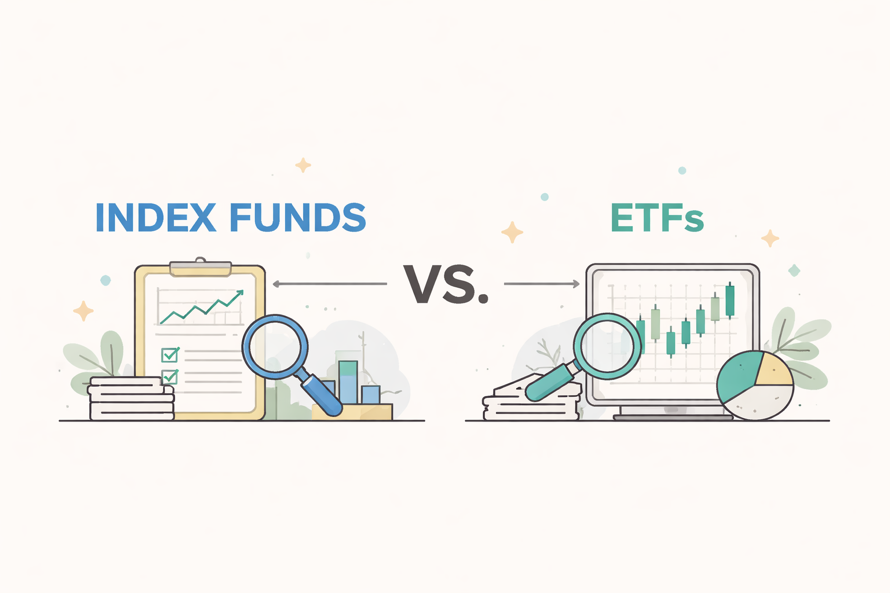
Investors love comparing financial products. Mutual funds, stocks, ETFs: anything that helps them feel more grounded in a world filled with charts and screens that rarely sit still. The discussion around Index Funds vs ETFs is interesting as both appear similar at first glance, yet the moment you dig a little deeper, differences start surfacing. Those differences slowly become reasons for preference, habits, and even long-term strategies. Investors want simplicity. They want cost-effective ways to participate in markets like the Nifty 50 or the S&P 500 without having to pick individual stocks. It’s also important to understand why the Index Funds vs ETFs comparison has become so common in investment conversations.
What Are Index Funds?
An index fund follows a specific market index. Nothing complicated on the surface. It mirrors a benchmark, has the same set of stocks, and tries to behave like the index itself. Investors use it to participate in markets without worrying about stock selection or timing decisions. The whole idea behind index funds revolves around automation, simplicity, and consistency. It offers a predictable investment style.
“Start investing with confidence! Explore
0 demat account
and grow your wealth.”
What Are Exchange Traded Funds (ETFs)?
ETFs replicate indices, too, but they trade differently. An ETF trades on the stock exchange, moving throughout the day as demand rises and falls. Anyone with a demat account can buy it the same way they buy shares. That live pricing feature creates a different user experience. Some investors enjoy watching it move because it gives them more control over timing. Others enjoy the flexibility. The comparison between Index Funds vs ETFs often begins right here, with trading convenience favoring ETFs.
Why Investors Compare Index Funds and ETFs
The comparison grows because both serve similar goals yet offer distinct mechanics. They mirror indexes, aim for low costs, and stay passive. Still, the way a person uses them, holds them, or experiences their price changes matters. Investors want clarity on cost differences, tracking performance, and which one suits their personality more. That curiosity keeps the Index Funds vs ETFs conversation alive.
How Index Funds and ETFs Work
Even though they look similar, the internal wiring behind both shows differences. Understanding that wiring offers clarity, especially for anyone planning to stay invested for many years.
Structure and Functioning of Index Funds
Index funds operate like regular mutual funds. Investments flow in at NAV prices. Purchases and redemptions happen only once during the day. The fund manager ensures the basket remains aligned with the benchmark. It feels calm, steady, and predictable.
Structure and Functioning of ETFs
ETFs operate like stocks. They move minute by minute. Their prices respond to buyers and sellers on the exchange. Liquidity, spreads, and demand shape their final executed prices. Investors who enjoy active timing or flexibility often lean toward ETFs for this reason, making the Index Funds vs ETFs debate tilt depending on the investor’s style.
How Both Replicate Market Indices Like Nifty 50 or S&P 500
Both gather the same stocks in the same proportion. If Nifty 50 constituents change, both adjust. If the S&P 500 welcomes a new addition, both reflect it. That alignment keeps them close cousins even though their trading styles remain different.
Key Differences Between Index Funds and ETFs
Here is where the contrast becomes clear. Each feature shapes investor experience in its own way.
1. Mode of Investment and Trading
Index funds allow investments directly through mutual fund platforms. ETFs require a demat account and work like stocks on exchanges.
2. Expense Ratio and Cost Efficiency
ETFs often show lower expense ratios because they avoid additional administrative layers. Index funds still maintain competitive costs, making Index Funds vs ETFs a close comparison in cost discussions.
3. Liquidity and Market Accessibility
ETFs rely heavily on exchange liquidity. Index funds depend on NAV-based inflows and outflows. Both work smoothly, but their movement styles differ.
4. Minimum Investment Requirements
Index funds allow small SIP amounts. ETFs require buying at least one full unit on the exchange at its market price.
5. Tracking Error and Performance
Tracking error occurs when the fund fails to replicate the index perfectly. ETFs often exhibit lower tracking errors due to real-time pricing. Index funds maintain strong consistency with slight variations.
6. Transparency and Price Discovery
ETFs keep live prices visible all day. Index funds publish a daily NAV. People who enjoy watching markets in motion view ETFs as more dynamic.
7. Taxation Rules and Implications
Both follow similar long-term and short-term capital gain rules based on equity taxation. Holding duration influences taxes more than the choice between Index Funds vs ETFs.
8. Dividends and Reinvestment Options
Index funds automatically reinvest based on the plan type. ETFs trade like shares on an exchange.
9. Fund Management and Brokerage Charges
Index funds may involve small operational expenses. ETFs may involve brokerage fees during buying or selling.
Pros and Cons of Index Funds
Advantages of Investing in Index Funds
Index funds feel simple. They allow automation through SIP. They fit easily into long-term planning because markets tend to settle over time, and the fund continues to closely follow the benchmark.
Limitations of Index Funds
Their NAV or pricing updates only once each evening. Investors wanting tighter control over timing may prefer ETFs.
Pros and Cons of ETFs
Benefits of Investing in ETFs
ETFs offer flexibility. Anyone who wants live execution enjoys the structure. It works well for large, strategic allocations because the price responds instantly.
Drawbacks of ETFs for Retail Investors
ETFs depend on exchange liquidity. Without enough demand, spreads may widen slightly.
Which Is Better – Index Funds or ETFs?
This depends entirely on the person holding the investment. Long-term planners, SIP users, and hands-off investors appreciate index funds. People who watch markets daily or want more control over their investments prefer ETFs.
For Long-Term Passive Investors
Index funds offer calmness and regularity.
For Active Traders and Experienced Investors
ETFs work well because they match trading habits.
For SIP (Systematic Investment Plan) Investors
Index funds remain the easier choice for SIP flow.
For Low-Cost, Tax-Efficient Portfolios
Both options shine equally because taxation across Index Funds Vs ETFs remains similar.
How to Invest in Index Funds and ETFs
Steps to Invest in Index Funds via AMC or Apps
Choose a fund, complete KYC, and invest through the AMC website or apps.
How to Buy and Sell ETFs on Stock Exchanges
Place buy or sell orders during market hours using a demat-enabled broker.
Platforms and Brokers Offering Both Options
Almost every broker supports the full range of Index Funds Vs ETFs, giving investors the freedom to mix both.
Performance Comparison: Index Funds vs ETFs
Historical Returns and Volatility
Both follow the index closely. Over long durations, differences remain minimal.
Impact of Expense Ratios on Long-Term Gains
Lower costs compound well over decades, turning small savings into large benefits.
Case Study: Nifty 50 Index Fund vs Nifty BeES ETF
Both show strong alignment with the Nifty 50 chart. Small variations come from execution style, costs, and spreads.
Common Myths About Index Funds and ETFs
ETFs Are Always Better Than Index Funds
Both solve different needs. Convenience shapes the decision.
Index Funds Have Lower Risk Than ETFs
Not necessarily. Both are low-risk products because they typically track an index. But ETFs can have slightly higher trading risk due to intraday price swings.
You Need a Demat Account for Both
Demat is essential only for ETFs. Index funds work without it.
Conclusion
Key Takeaways on Index Funds vs ETFs
The comparison lies in investor behaviour rather than numbers. One fits automated investing. The other fits live trading. Both bring passive investing into everyday portfolios.
Which Option Should You Choose Based on Your Investment Goals
Choose based on convenience, cost preferences, and investing habits. Both continue to shape modern portfolios, and the discussion around Index Funds vs. ETFs keeps gaining traction as markets evolve.
FAQs on Index Funds vs ETFs
Q1: Which gives better returns – Index Funds or ETFs?
Returns stay close because both follow the same index.
Q2: Do I need a Demat account to invest in Index Funds?
No. Only ETFs require one.
Q3: Are ETFs safer than Index Funds?
Both mirror the same underlying index and hence carry low-level risks.
Q4: Which has a lower expense ratio – Index Funds or ETFs?
ETFs usually have slightly lower expense ratios than traditional index mutual funds.
Q5: How are ETFs and Index Funds taxed in India?
Both follow similar equity taxation rules.
Q7: Which is better for beginners – ETFs or Index Funds?
Index funds often feel easier to start with, especially for SIP users.
Disclaimer
The stocks mentioned in this article are not recommendations. Please conduct your own research and due diligence before investing. Investment in securities market are subject to market risks, read all the related documents carefully before investing. Please read the Risk Disclosure documents carefully before investing in Equity Shares, Derivatives, Mutual fund, and/or other instruments traded on the Stock Exchanges. As investments are subject to market risks and price fluctuation risk, there is no assurance or guarantee that the investment objectives shall be achieved. Lemonn (Formerly known as NU Investors Technologies Pvt. Ltd) do not guarantee any assured returns on any investments. Past performance of securities/instruments is not indicative of their future performance.
Related Posts
Download Lemonn
Download my app for share market trading, ipo investment, trading account, and all your investment needs.