Impersonation & Investment Fraud: Don’t Let Scammers Trade on Your Trust
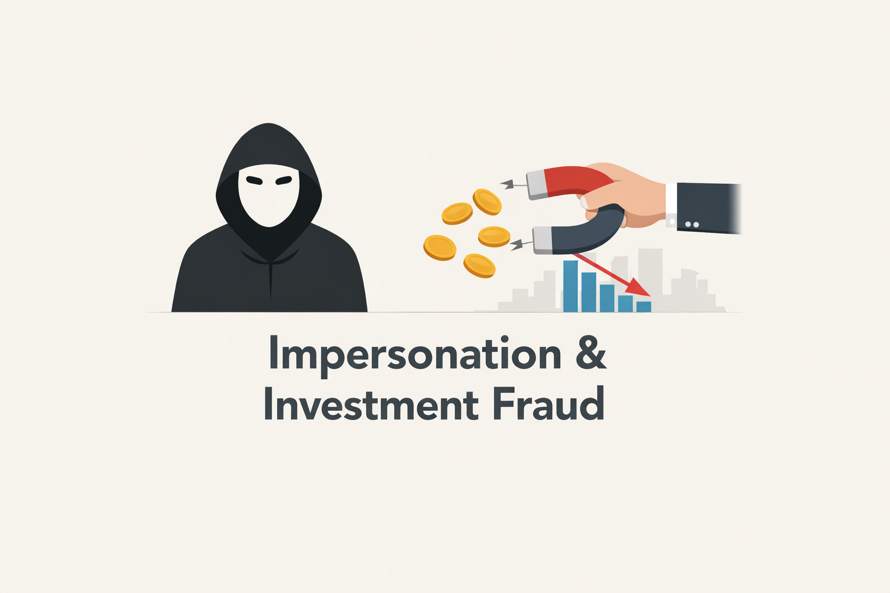
Impersonation and investment fraud scams are growing fast – and they work because they look real.
Scammers pretend to be trusted people or companies. Then they pressure you into sending money, sharing personal details, or investing in fake opportunities. By the time victims realize what happened, the money is often gone.
This guide explains how impersonation and investment scams work, the warning signs to watch for, and the practical steps you can take to protect yourself.
What Is Impersonation Fraud?
Impersonation fraud happens when someone pretends to be a trusted person or organization to trick you into sending money or sharing sensitive information.
Scammers often pose as:
- Bank representatives
- Government officials
- Tech support agents
- Company executives
- Family members in distress
- Investment advisors or brokers
They use phone calls, emails, text messages, social media, and even video calls to make the interaction feel legitimate.
Why It Works
Impersonation scams succeed because they exploit trust and urgency.
Common tactics include:
- Claiming your account is “locked” or “compromised”
- Threatening legal action or fines
- Offering an exclusive investment opportunity
- Pretending a loved one is in trouble
- Using official-looking logos, websites, or email addresses
The goal is simple: get you to act fast before you think carefully.
“Start investing with confidence! Explore
0 demat account
and grow your wealth.”
What Is Investment Fraud?
Investment fraud involves fake or misleading investment opportunities designed to steal your money.
These scams often promise:
- Guaranteed returns
- “Risk-free” investments
- Insider or exclusive opportunities
- Fast profits with little effort
Legitimate investments always carry risk. When someone guarantees high returns with no downside, that’s a major red flag.
How Impersonation and Investment Scams Overlap
Many modern scams combine both tactics.
For example:
- A scammer impersonates a financial advisor and offers a fake crypto investment.
- Someone pretends to represent a well-known company and invites you to invest in a new “private opportunity.”
- A fake celebrity account promotes a “limited-time” trading platform.
Because the scammer appears trustworthy, victims are more likely to invest.
Common Warning Signs of Investment Scams
Watch for these red flags:
1. Pressure to Act Quickly
Scammers create urgency:
- “Offer expires today”
- “You must act now”
- “Spots are limited”
Real professionals give you time to review information and ask questions.
2. Guaranteed or Unrealistic Returns
If someone promises high returns with no risk, walk away.
Markets fluctuate. No legitimate investment guarantees profits.
3. Requests for Unusual Payment Methods
Be cautious if you’re asked to pay using:
- Cryptocurrency transfers
- Gift cards
- Wire transfers
- Payment apps to personal accounts
These are difficult to trace or reverse.
4. Unsolicited Contact
If you didn’t seek them out, be skeptical.
Cold calls, random DMs, or unexpected emails about investments are major warning signs.
5. Limited or Verifiable Information
Check:
- Is the advisor registered?
- Does the company have a legitimate track record?
- Are there independent reviews or regulatory filings?
If you can’t verify them, don’t invest.
How to Protect Yourself From Impersonation & Investment Fraud
Here are practical steps you can take today:
Verify Before You Trust
- Contact companies using official websites or phone numbers.
- Do not rely on contact details provided in the message you received.
- Look up regulatory registration where applicable.
Slow Down
Scammers rely on speed.
If someone pressures you, pause. Discuss the opportunity with a trusted friend, advisor, or family member.
Guard Personal Information
Never share:
- Account passwords
- One-time security codes
- Social Security numbers
- Banking login details
Legitimate organizations won’t ask for this information unexpectedly.
Research the Investment
Before investing:
- Search the company name + “scam” or “complaints”
- Check regulatory databases
- Review official disclosures
If details are vague or overly complex, that’s a warning sign.
Trust Your Instincts
If something feels off, it probably is.
What to Do If You’ve Been Targeted
If you suspect a scam:
- Stop communication immediately.
- Contact your bank or financial institution.
- Change passwords on affected accounts.
- Report the incident to appropriate consumer protection authorities.
- Monitor your credit and accounts closely.
Quick action can sometimes limit losses.
Why Trust Is the Scammer’s Strongest Tool
Scammers don’t just hack systems – they manipulate emotions.
They build rapport.
They use authority.
They create urgency.
Understanding that emotional manipulation is part of the strategy makes you far less likely to fall for it.
Key Takeaways
- Impersonation fraud involves pretending to be a trusted source.
- Investment fraud promises unrealistic or guaranteed returns.
- Pressure, urgency, and secrecy are major red flags.
- Always verify identities and research investments independently.
- Slow decisions are safer decisions.
Frequently Asked Questions
Q. How can I verify if an investment advisor is legitimate?
Check official regulatory databases in your country. Registered advisors will have a public record.
Q. Are cryptocurrency investments more likely to be scams?
Crypto itself isn’t a scam, but fraudsters frequently use it because transactions are harder to reverse.
Q. Can banks recover money lost to investment scams?
Sometimes – but not always. The faster you report it, the better your chances.
Disclaimer
The stocks mentioned in this article are not recommendations. Please conduct your own research and due diligence before investing. Investment in securities market are subject to market risks, read all the related documents carefully before investing. Please read the Risk Disclosure documents carefully before investing in Equity Shares, Derivatives, Mutual fund, and/or other instruments traded on the Stock Exchanges. As investments are subject to market risks and price fluctuation risk, there is no assurance or guarantee that the investment objectives shall be achieved. Lemonn (Formerly known as NU Investors Technologies Pvt. Ltd) do not guarantee any assured returns on any investments. Past performance of securities/instruments is not indicative of their future performance.
Related Posts



Download Lemonn
Download my app for share market trading, ipo investment, trading account, and all your investment needs.