
How to Analyse Q4 FY26 Results: Framework for Post-Earnings Investment Decisions
Why Post-Earnings Analysis Matters
Quarterly results create the highest information asymmetry in equity markets. A company that ‘beats’ analyst estimates by 5% may see its stock rise 10%; one that ‘misses’ by 5% may fall 15%. But the market’s reaction is often overdone — creating buying opportunities after sell-offs and selling opportunities after euphoric pops.
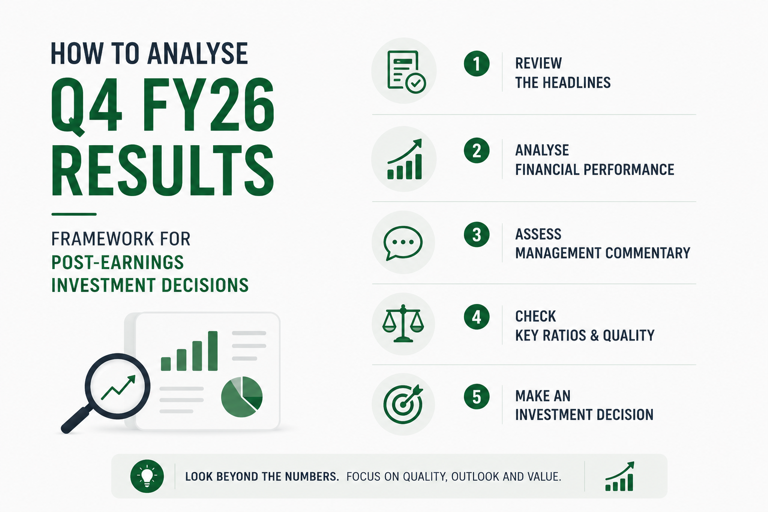
The Earnings Analysis Framework
“Start investing with confidence! Explore
0 demat account
and grow your wealth.”
Step 1: Actual vs Estimate
Compare Revenue, EBITDA, and PAT (net profit) against analyst consensus estimates. A beat or miss is defined relative to the consensus, not absolute numbers. Sources for consensus estimates: Trendlyne, Bloomberg, Refinitiv.
Step 2: Sequential and YoY Comparison
| Comparison | What It Shows | When It Matters Most |
|---|---|---|
| Year-over-Year (Q4FY26 vs Q4FY25) | Base business growth, seasonality-adjusted | Most important for cyclical sectors |
| Quarter-over-Quarter (Q4FY26 vs Q3FY26) | Momentum — is business accelerating or slowing? | Important for fast-moving consumer/tech stocks |
| Full Year vs Guidance | Management credibility | For companies that provide annual guidance |
Step 3: Margin Trend Analysis
Margins matter more than absolute profit. A company growing revenue 20% but compressing margins by 300 bps annually may be in trouble. Gross margin tells you pricing power. EBITDA margin tells you operational efficiency. PAT margin tells you the full picture including interest and tax.
Step 4: Balance Sheet Changes
- Inventory build: Positive if demand-led; negative if unsold goods piling up
- Receivables growth: If growing faster than revenue — channel stuffing or collection weakness
- Debt: Increased debt in a results quarter may fund growth or may be stress financing
When to Buy After an Earnings Sell-Off
Post-results sell-offs of 10-15% on ‘miss’ create opportunities if: (1) The miss was driven by one-time factors clearly explained, (2) Long-term growth thesis remains intact, (3) Management guidance for the next quarter is stable. The worst time to buy after a miss: when management guidance was also cut.
Disclaimer
The stocks mentioned in this article are not recommendations. Please conduct your own research and due diligence before investing. Investment in securities market are subject to market risks, read all the related documents carefully before investing. Please read the Risk Disclosure documents carefully before investing in Equity Shares, Derivatives, Mutual fund, and/or other instruments traded on the Stock Exchanges. As investments are subject to market risks and price fluctuation risk, there is no assurance or guarantee that the investment objectives shall be achieved. Lemonn (Formerly known as NU Investors Technologies Pvt. Ltd) do not guarantee any assured returns on any investments. Past performance of securities/instruments is not indicative of their future performance.
Related Posts



Download Lemonn
Download my app for share market trading, ipo investment, trading account, and all your investment needs.



