Gold vs Silver: Which Is Better as an Investment?
Introduction to Gold and Silver Investments
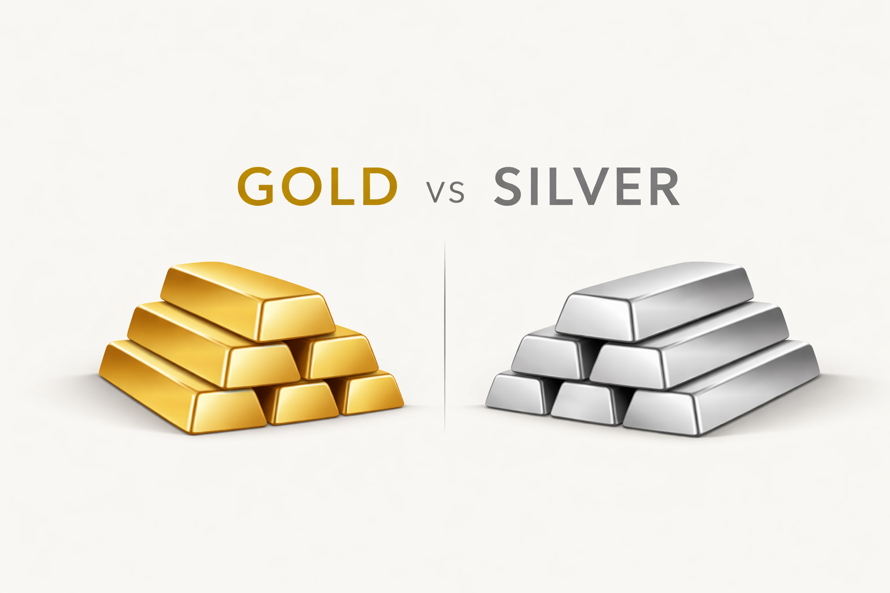
Every generation rediscovers precious metals. It happens quietly at first, a market wobble, a currency scare, an inflation headline, and suddenly the old debate resurfaces: Gold vs Silver. Two metals, centuries old, yet somehow timeless. They rise and fall with global investor mood, they respond to crises with a certain dignity, and sit in portfolios like old guardians. Gold, steady and elegant, moves with a slow pulse that comforts cautious investors. Silver, more electric, more restless, jumps when industries expand and trembles when demand tightens.
Why Precious Metals Are Considered Safe-Haven Assets
Safe-haven assets hold their value when everything else loses balance. Gold and silver do that because they rely on scarcity, utility, and trust, not on corporate earnings or political decisions. When portfolios shake, these metals act as a stable ground.
“Start investing with confidence! Explore
0 demat account
and grow your wealth.”
Historical Importance of Gold and Silver in Portfolios
Civilizations stored wealth in metals long before banks existed. Rulers minted coins from them. Traders carried them across continents. Families passed them down as heirlooms. That continuity has built a psychological anchor, which is why Gold vs Silver remains a debate even in the age of digital assets.
The Role of Gold and Silver During Economic Uncertainty
Whenever uncertainty rises, gold gets a boost. It absorbs fear better than almost any other asset class. Silver joins in the action, but with more drama, rising swiftly at times, dipping sharply at others. This dual behaviour makes studying their price movements almost as interesting as investing in them.
Key Differences Between Gold and Silver
Composition and Industrial Demand
Gold is primarily decorative, financial, and symbolic. Silver lives a double life, part precious metal, part industrial necessity. Solar panels, electronics, batteries, sensors, medical technology… silver quietly supports these industries. The industrial angle makes its price much more sensitive to global growth trends.
Market Size and Liquidity
Gold dominates the global metals market. It trades with unmatched liquidity. Silver trades well, too, but on a smaller stage, and smaller stages mean louder reactions. Price swings in silver feel sharper, sometimes thrilling, sometimes uncomfortable.
Price Volatility and Stability
Gold behaves like a calm river most days. Silver? More like a spirited stream, unpredictable bends, fast currents, sudden rises. Both serve investors differently, and that difference defines much of the Gold vs Silver conversation.
Long-Term Performance Comparison
Across decades, gold has delivered consistency. Silver has delivered moments of brilliance, huge rallies during industrial booms, followed by long, cooling periods. Long-term results depend heavily on entry timing and economic cycles.
Gold as an Investment
Reasons Investors Prefer Gold
Gold carries emotional appeal, financial credibility, and historical endorsement. Investors lean on it during inflation, recession, currency devaluation, or geopolitical tension. When the world feels unsteady, gold steps forward like a familiar guide.
Types of Gold Investments (Physical, ETFs, Mutual Funds, Sovereign Bonds)
Investors choose between bars, coins, digital gold, ETFs, mutual funds, and sovereign gold bonds. Each one solves a different problem: storage, liquidity, taxation, or convenience.
Pros and Cons of Investing in Gold
Pros include stability and global acceptance. Cons include slower short-term movement and storage considerations for physical gold. But gold’s charm lies in its reliability, not its speed.
Silver as an Investment
Why Silver Appeals to Emerging Investors
Silver feels accessible. Newer investors gravitate toward it because it offers the thrill of volatility without a high entry cost. Its industrial demand adds a futuristic angle.
Different Ways to Invest in Silver (Physical, ETFs, Futures, Funds)
Silver investors navigate coins, bars, ETFs, futures contracts, and dedicated silver funds. Each offers a unique way to capture the metal’s price movements.
Pros and Cons of Investing in Silver
Pros: Affordability, industrial growth tailwinds, and sharp rallies during demand spikes.
Cons: Higher volatility, unpredictable cycles, deeper corrections.
In the larger Gold vs Silver comparison, silver plays the role of the risk-taker.
Gold vs Silver: Performance Comparison
Historical Price Trends and Returns
Gold trends upward slowly but steadily. Silver behaves in bursts, calm periods interrupted by explosive rallies. Sometimes silver outperforms gold dramatically, but only during specific macro cycles.
Correlation with Inflation and Market Crises
Gold responds quickly when inflation rises. Silver often joins later but with stronger momentum once industrial demand aligns.
Industrial Usage Impact on Silver Prices
Silver’s price is increasingly tied to renewable energy growth, electric vehicles, and electronics. This makes silver part commodity, part technology ingredient, altering its rhythm compared to gold.
Gold-Silver Ratio and Its Investment Significance
A high gold-silver ratio historically indicates silver is undervalued relative to gold. Investors use this ratio as a guide during accumulation phases.
Volatility and Risk Analysis
Which Metal Is More Stable in Market Fluctuations
Gold is clearly steadier. Silver moves faster. Investors pick the one that matches their emotional tolerance for swings.
How Volatility Affects Returns and Entry Timing
Volatile assets punish bad timing but reward disciplined accumulation. Silver fits that description perfectly. Gold supports long-term consistency with fewer surprises.
Portfolio Diversification Using Gold and Silver
Precious metals act independently of equities and bonds. Adding them to a portfolio strengthens resilience during uncertain cycles.
Gold vs Silver in the Indian Investment Context
Cultural and Traditional Demand for Gold
India’s relationship with gold is deeper than investment. It’s a symbol of security, celebration, blessing, and status. Demand for gold remains steady even during market downturns.
Industrial and Export Demand for Silver
India’s manufacturing and export sectors drive silver demand higher. Solar energy installations, electronics production, and jewellery exports shape price cycles.
Taxation Rules for Gold and Silver Investments in India
Capital gains taxation applies to both metals, though formats like sovereign gold bonds offer unique benefits. ETFs and mutual funds follow standard long-term and short-term capital gains rules.
Which Is Better for Long-Term Investment?
Comparing Returns Over 5, 10, and 20 Years
Over long horizons, gold has outperformed during crisis-heavy periods. Silver has outperformed during industrial expansion cycles. Picking one depends on predicting which cycle dominates the coming decade, not an easy guess.
Ideal Allocation Between Gold and Silver
Many investors adopt a 70–30 or 80–20 allocation, favoring gold because of its stability. Silver offers spice, but gold builds a foundation.
When to Choose Gold Over Silver (and Vice Versa)
Choose gold during uncertainty, recessions, inflation spikes, and global shocks.
Choose silver during technology booms, economic expansions, and strong industrial outlooks.
The heartbeat of Gold vs Silver shifts depending on the phase the economy is in.
How to Invest in Gold and Silver Effectively
Physical vs. Digital Investment Options
Physical metals suit traditional investors, but digital options are gaining momentum. ETFs remove the friction of storage and purity concerns.
Investing Through ETFs and Mutual Funds
ETFs create liquidity and flexibility. Mutual funds provide professional management. Both simplify entry for new investors.
SIPs in Gold and Silver Funds for Regular Investors
SIPs smooth the volatility curve, especially for silver. They help investors accumulate metals without having to guess price cycles.
Expert Opinions and Market Outlook
Forecast for Gold and Silver Prices in 2025 and Beyond
Analysts expect gold to remain strong amid inflationary trends and global risk cycles. Silver may outperform gold if industrial growth accelerates, especially as renewable energy adoption increases.
Analyst Recommendations for Precious Metal Portfolios
Experts typically recommend a blended approach. Gold stabilizes the portfolio. Silver adds upside potential.
Conclusion
Summary of Key Differences Between Gold and Silver
Gold is a stable asset with global acceptance. Silver is a growth-linked metal with a volatile charm. Their movements differ, their cycles differ, their investors differ, but together they create a complete precious metal strategy.
Which Metal Should You Choose Based on Your Financial Goals
Investors focused on security lean toward gold. Investors seeking cyclic opportunities lean toward silver. Long-term wealth strategies often include both, because Gold vs Silver is not a competition; it’s a balancing act.
FAQs on Gold vs Silver Investments
Q1: Which gives better returns, gold or silver?
Performance varies by cycle. Gold wins for stability; silver wins during growth phases.
Q2: Is silver riskier than gold for investment?
Yes, silver shows sharper volatility.
Q3: What is the gold-silver ratio, and why does it matter?
It tracks relative value and helps identify accumulation opportunities.
Q4: Can I invest in both gold and silver through mutual funds?
Yes, several mutual funds offer diversified exposure to metals.
Q5: How are gold and silver taxed in India?
Capital gains rules apply; specifics depend on investment format.
Q6: Which is better for short-term trading, gold or silver?
Silver suits short-term traders due to strong swings.
Q7: Should I hold gold or silver for long-term wealth preservation?
Gold supports stability; silver supports growth phases.
Disclaimer
The stocks mentioned in this article are not recommendations. Please conduct your own research and due diligence before investing. Investment in securities market are subject to market risks, read all the related documents carefully before investing. Please read the Risk Disclosure documents carefully before investing in Equity Shares, Derivatives, Mutual fund, and/or other instruments traded on the Stock Exchanges. As investments are subject to market risks and price fluctuation risk, there is no assurance or guarantee that the investment objectives shall be achieved. Lemonn (Formerly known as NU Investors Technologies Pvt. Ltd) do not guarantee any assured returns on any investments. Past performance of securities/instruments is not indicative of their future performance.
Related Posts

Download Lemonn
Download my app for share market trading, ipo investment, trading account, and all your investment needs.