
EPFO 3.0: Faster PF Withdrawals Through UPI and ATM Access
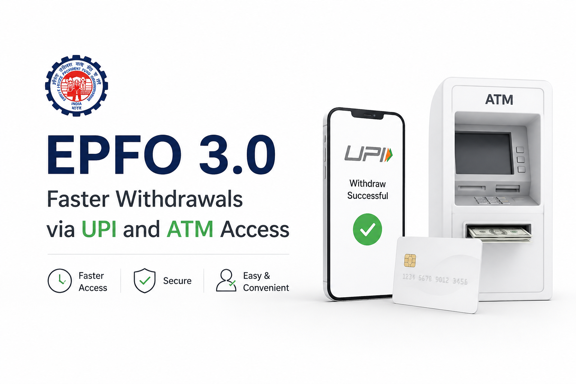
India’s retirement savings system is set for a major digital transformation. EPFO 3.0 is expected to revolutionize how Employees’ Provident Fund (EPF) members access their money by introducing faster withdrawals through UPI and ATM-based services.
For millions of salaried employees across India, PF withdrawals have traditionally involved multiple verification steps and waiting periods. With EPFO 3.0, the government aims to create a seamless, digital-first experience that allows eligible members to access funds quickly during emergencies.
If implemented as planned, EPFO 3.0 could become one of the biggest upgrades in EPFO’s history, making provident fund services as convenient as modern banking apps.
What Is EPFO 3.0?
EPFO 3.0 is the next-generation digital framework being developed by the Employees’ Provident Fund Organisation (EPFO) to modernize member services.
The initiative focuses on:
- Faster claim processing
- Reduced paperwork
- Greater automation
- Improved member experience
- Real-time digital transactions
- Enhanced self-service options
The vision behind EPFO 3.0 is simple: make accessing provident fund services as easy as using a bank account or UPI application.
Instead of navigating lengthy claim procedures, members may be able to receive approved withdrawals directly through digital payment channels.
Why EPFO 3.0 Matters for Employees
India has over 7 crore active EPF subscribers.
Many employees depend on their PF savings during:
- Medical emergencies
- Home purchases
- Higher education expenses
- Marriage expenses
- Unemployment periods
- Natural disasters
Although EPFO has significantly improved claim settlement times over the years, users still face delays caused by:
- KYC mismatches
- Bank verification issues
- Documentation requirements
- Manual processing in certain cases
EPFO 3.0 aims to address these challenges by creating a faster and more integrated digital ecosystem.
“Start investing with confidence! Explore
0 demat account
and grow your wealth.”
EPFO 3.0 UPI Withdrawals: What Will Change?
One of the most talked-about features of EPFO 3.0 is UPI-enabled withdrawals.
Under the proposed system, eligible members could receive approved PF withdrawals directly into their linked bank accounts using UPI infrastructure.
Expected Benefits of UPI Withdrawals
1. Faster Fund Transfers
Current claim settlements can take several days depending on the claim type.
UPI integration may significantly reduce the time required to receive funds.
2. 24/7 Accessibility
UPI operates around the clock.
Members may no longer need to depend on banking hours for receiving approved withdrawals.
3. Improved Convenience
Most Indians already use:
- Google Pay
- PhonePe
- Paytm
- BHIM UPI
EPFO integration with UPI could make withdrawals far simpler.
4. Reduced Paperwork
A fully digital process could eliminate many manual verification steps.
EPFO ATM Withdrawal Facility: How Will It Work?
Another major feature under discussion is ATM-based PF withdrawals.
The government has previously indicated plans to provide EPFO members with ATM-style access to approved PF funds.
While detailed operational guidelines are still awaited, the concept could work similarly to traditional ATM withdrawals.
Potential Features
- Secure member authentication
- Linked EPFO withdrawal card or digital authentication
- Instant cash access
- Withdrawal limits
- Real-time balance verification
This would provide members with immediate access to emergency funds without lengthy processing times.
Key Benefits of EPFO 3.0
Faster Withdrawals
The biggest advantage is reduced waiting time.
Employees facing urgent financial needs could receive money much faster than current processes allow.
Better User Experience
The entire process is expected to become:
- Simpler
- Faster
- More transparent
Reduced Dependency on Employers
EPFO has already introduced reforms that reduce employer involvement in certain verification processes.
This helps members receive payments more quickly.
Greater Digital Accessibility
Users can manage services directly from:
- Mobile devices
- EPFO portal
- UPI applications
- Future ATM interfaces
Increased Transparency
Members may be able to track withdrawal status in real time.
EPFO 3.0 Features Beyond UPI and ATM Withdrawals
The transformation is expected to include several additional improvements.
Digital Member Services
Enhanced self-service functionality for:
- Profile updates
- KYC management
- Claim tracking
- Nomination management
Improved Claim Automation
AI-driven processing could reduce manual intervention and speed up approvals.
Better Data Integration
Integration between:
- Aadhaar
- PAN
- Banking systems
- Employer databases
This can reduce errors and improve verification accuracy.
Faster Grievance Resolution
Digital workflows may help resolve member complaints more efficiently.
Who Will Be Eligible for EPFO 3.0 Withdrawals?
Although final eligibility criteria are still awaited, members will likely need:
Active Universal Account Number (UAN)
Your UAN should be activated.
Aadhaar Verification
Aadhaar must be linked with EPFO records.
Verified Bank Account
Bank account details must be updated and verified.
Correct KYC Information
Ensure consistency across:
- Aadhaar
- PAN
- EPFO records
- Bank account details
Mobile Number Registration
The registered mobile number will likely be required for OTP authentication.
Will You Be Able to Withdraw Your Entire PF Balance?
Probably not.
EPFO withdrawal rules are designed to protect retirement savings.
Historically, EPF members could only withdraw funds under specific circumstances such as:
| Purpose | Partial Withdrawal Allowed |
|---|---|
| Medical Emergency | Yes |
| Home Purchase | Yes |
| Marriage | Yes |
| Education | Yes |
| Unemployment | Subject to rules |
| Retirement | Full withdrawal |
Reports suggest that EPFO 3.0 may continue following similar withdrawal principles while improving the speed of fund access.
Members should wait for official guidelines regarding withdrawal limits and conditions.
How to Prepare for EPFO 3.0
To avoid future delays, members should update their accounts now.
Checklist
✅ Activate UAN
✅ Link Aadhaar
✅ Verify bank account
✅ Update PAN details
✅ Complete e-Nomination
✅ Update mobile number
✅ Check KYC status regularly
Keeping these details current can help ensure smooth processing when new services become available.
Security Measures Members Should Follow
As digital services expand, fraud risks also increase.
Never share:
- UAN password
- OTP
- Aadhaar number copies with unknown parties
- Bank credentials
- PAN details with unauthorized agents
Always use:
- Official EPFO portal
- UMANG App
- Authorized government platforms
Beware of:
- Fake websites
- Fraud calls
- WhatsApp scams
- Social media impersonators
EPFO 3.0 vs Current PF Withdrawal Process
| Feature | Current System | EPFO 3.0 |
|---|---|---|
| Withdrawal Request | Online Claim | Digital Instant Access |
| Processing Time | Several Days | Expected Faster Processing |
| UPI Integration | No | Expected |
| ATM Access | No | Expected |
| Member Convenience | Moderate | High |
| Digital Experience | Limited | Advanced |
Challenges EPFO 3.0 May Face
Despite its potential, implementation will require addressing several challenges.
Data Security
Protecting member information remains critical.
System Scalability
EPFO serves millions of members.
The infrastructure must support high transaction volumes.
Fraud Prevention
Strong authentication mechanisms will be necessary.
User Awareness
Members must understand eligibility requirements and security practices.
What EPFO Members Can Expect Next
EPFO continues to digitize services at a rapid pace.
Future announcements are expected to provide clarity on:
- Launch dates
- Withdrawal limits
- Eligibility requirements
- ATM access mechanisms
- UPI integration process
Until official implementation begins, members should treat reports as indicative rather than final policy.
Key Takeaways
- EPFO 3.0 aims to modernize provident fund services.
- UPI-based withdrawals could significantly reduce waiting times.
- ATM access may allow quicker access to approved PF funds.
- KYC verification will likely remain mandatory.
- Members should update Aadhaar, PAN, bank details, and UAN information.
- Security awareness will remain essential.
- Official EPFO notifications should be considered the final authority on rollout details.
Frequently Asked Questions (FAQs)
Q. What is EPFO 3.0?
EPFO 3.0 is a digital modernization initiative aimed at improving provident fund services through automation, faster claims, and enhanced member convenience.
Q. Can I withdraw PF through UPI?
The feature is expected under EPFO 3.0, subject to official rollout and eligibility requirements.
Q. Will EPFO provide ATM cards?
Final implementation details are yet to be announced. Reports suggest ATM-style access to eligible PF withdrawals may be introduced.
Q. Is EPFO 3.0 available now?
The digital transformation is underway, but specific UPI and ATM withdrawal features are still awaiting full implementation.
Q. What documents should I update?
You should ensure that your UAN, Aadhaar, PAN, bank account details, mobile number, and e-Nomination records are updated.
Q. Will PF withdrawals become instant?
The goal is to significantly reduce processing time, though exact timelines will depend on EPFO’s final implementation framework.
Q. Is EPFO 3.0 safe?
The system is expected to use secure authentication, KYC verification, and banking-grade digital infrastructure to protect member funds.
Disclaimer
The stocks mentioned in this article are not recommendations. Please conduct your own research and due diligence before investing. Investment in securities market are subject to market risks, read all the related documents carefully before investing. Please read the Risk Disclosure documents carefully before investing in Equity Shares, Derivatives, Mutual fund, and/or other instruments traded on the Stock Exchanges. As investments are subject to market risks and price fluctuation risk, there is no assurance or guarantee that the investment objectives shall be achieved. Lemonn (Formerly known as NU Investors Technologies Pvt. Ltd) do not guarantee any assured returns on any investments. Past performance of securities/instruments is not indicative of their future performance.
Related Posts

Download Lemonn
Download my app for share market trading, ipo investment, trading account, and all your investment needs.



