
How to Earn Money from the Stock Market Daily Safely
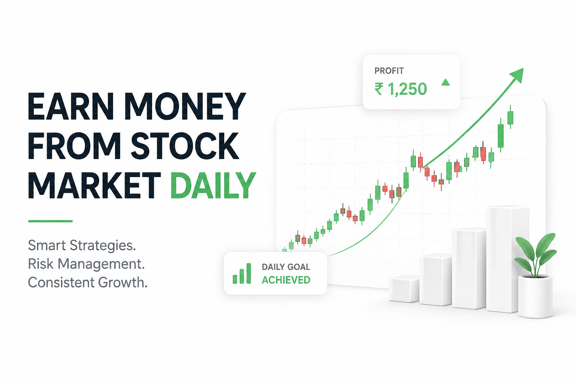
Many people search for ways to earn money from the stock market daily, hoping to generate a consistent income through trading. The truth is, it is possible to make money regularly, but there is no guaranteed daily profit. Success depends on having the right strategy, disciplined risk management, and realistic expectations.
Whether you are a beginner or someone looking to improve your trading skills, this guide explains the most effective ways to earn money from the stock market while minimizing unnecessary risks.
Can You Earn Money from the Stock Market Every Day?
Yes, but not consistently every single day.
Professional traders often have profitable days, break-even days, and losing days. The goal should not be to make money every trading session. Instead, focus on becoming profitable over weeks and months.
Daily earnings depend on several factors, including:
- Market volatility
- Trading strategy
- Capital size
- Experience
- Risk management
The stock market rewards consistency, not luck.
Best Ways to Earn Money from the Stock Market Daily
“Start investing with confidence! Explore
0 demat account
and grow your wealth.”
1. Intraday Trading
Intraday trading involves buying and selling stocks within the same trading session. Positions are closed before the market closes, reducing overnight risk.
Advantages
- Opportunity to profit from short-term price movements
- No overnight market exposure
- Multiple trading opportunities each day
Challenges
- Requires constant market monitoring
- Higher emotional pressure
- Brokerage and transaction costs can reduce profits
Example
You buy 100 shares at ₹500 and sell them at ₹505.
Profit = ₹500 before brokerage, taxes, and other charges.
2. Scalping
Scalping is a fast-paced trading style where traders make multiple small trades throughout the day.
The objective is to earn small profits repeatedly rather than waiting for large price movements.
Scalping is generally recommended for experienced traders because it demands:
- Quick decision-making
- Excellent execution
- Strong discipline
3. Swing Trading
Swing trading involves holding stocks for several days or weeks.
Although it does not generate daily income, many traders find it less stressful than intraday trading and often achieve better long-term consistency.
It is suitable for people who cannot monitor the market throughout the day.
4. Options Trading
Options trading allows traders to profit from price movements with relatively small capital.
However, options are complex financial instruments and carry higher risks.
Beginners should first understand:
- Option premiums
- Time decay
- Volatility
- Risk-reward ratios
Essential Skills for Daily Stock Market Income
Successful traders continuously improve their knowledge.
Some of the most valuable skills include:
Technical Analysis
Learn how to read:
- Candlestick patterns
- Support and resistance levels
- Trend lines
- Moving averages
- Volume analysis
Risk Management
Professional traders focus on protecting capital first.
Follow these rules:
- Risk only 1 to 2 percent of your capital per trade.
- Always place a stop-loss.
- Avoid revenge trading.
- Never risk your entire trading capital on one trade.
Trading Psychology
Emotional control is often more important than strategy.
Avoid:
- Fear of missing out (FOMO)
- Overtrading
- Panic selling
- Greed during winning trades
How Much Capital Do You Need?
There is no fixed amount required to begin trading.
Here is a realistic comparison.
| Trading Capital | Possible Daily Target* |
|---|---|
| ₹20,000 | ₹100 to ₹300 |
| ₹50,000 | ₹250 to ₹750 |
| ₹1,00,000 | ₹500 to ₹1,500 |
*These figures are examples only. Actual profits and losses vary depending on market conditions and individual performance.
Common Mistakes That Prevent Daily Profits
Many beginners lose money because they repeat avoidable mistakes.
These include:
- Trading without a plan
- Ignoring stop-loss orders
- Using excessive leverage
- Following random social media tips
- Trading too frequently
- Increasing position size after losses
Avoiding these mistakes can significantly improve long-term results.
Step-by-Step Guide to Start Earning from the Stock Market
Step 1: Learn the Basics
Understand how stock exchanges, brokers, and trading platforms work.
Step 2: Choose a Reliable Broker
Select a broker with:
- Low brokerage charges
- Fast execution
- Good charting tools
- Reliable customer support
Step 3: Practice Before Investing Real Money
Use paper trading or a demo account to test strategies without risking capital.
Step 4: Start Small
Trade with money you can afford to lose.
Small position sizes help you gain experience while limiting losses.
Step 5: Maintain a Trading Journal
Record every trade, including:
- Entry price
- Exit price
- Reason for entering
- Mistakes
- Lessons learned
Reviewing your journal helps improve future decisions.
Is Intraday Trading Better Than Investing?
| Feature | Intraday Trading | Long-Term Investing |
|---|---|---|
| Holding Period | Same day | Years |
| Risk Level | High | Moderate |
| Time Required | High | Low |
| Potential Returns | Variable | Long-term wealth creation |
| Suitable For | Active traders | Most investors |
If your goal is regular income, intraday trading may be appropriate after gaining sufficient knowledge.
If your goal is wealth creation, long-term investing is generally the better choice.
Tips to Increase Your Chances of Success
- Follow one proven trading strategy.
- Trade only high-quality setups.
- Use stop-losses on every trade.
- Focus on risk management before profits.
- Avoid emotional decisions.
- Continue learning from experienced traders.
- Stay updated with market news and economic events.
Final Thoughts
Learning how to earn money from the stock market daily requires patience, discipline, and continuous improvement. While daily profits are possible, there will also be losing days. Successful traders focus on consistent execution rather than chasing quick money.
Start with education, practice your strategy, manage your risk carefully, and increase your trading capital only after demonstrating consistent results.
Over time, these habits can help you build a sustainable trading career.
Frequently Asked Questions
Can beginners earn money from the stock market daily?
Yes, but beginners should first learn trading basics, practice with paper trading, and start with small amounts of capital.
How much money do I need to start intraday trading?
Many brokers allow you to begin with a few thousand rupees, but having at least ₹20,000 to ₹50,000 provides better flexibility for risk management.
Which trading style is best for daily income?
Intraday trading is the most common approach for daily income. However, it requires experience, discipline, and effective risk management.
Is daily trading risky?
Yes. Daily trading carries significant risk because prices can move quickly. Using stop-loss orders and proper position sizing is essential.
Can I make ₹1,000 every day from trading?
There is no guarantee of earning ₹1,000 every day. Your results depend on market conditions, trading capital, skill level, and risk management.
Key Takeaways
- Daily income from the stock market is possible but never guaranteed.
- Intraday trading is the primary strategy for seeking daily profits.
- Risk management is more important than chasing high returns.
- Beginners should practice before trading with real money.
- Consistency and discipline matter more than making money every day.
Disclaimer
The stocks mentioned in this article are not recommendations. Please conduct your own research and due diligence before investing. Investment in securities market are subject to market risks, read all the related documents carefully before investing. Please read the Risk Disclosure documents carefully before investing in Equity Shares, Derivatives, Mutual fund, and/or other instruments traded on the Stock Exchanges. As investments are subject to market risks and price fluctuation risk, there is no assurance or guarantee that the investment objectives shall be achieved. Lemonn (Formerly known as NU Investors Technologies Pvt. Ltd) do not guarantee any assured returns on any investments. Past performance of securities/instruments is not indicative of their future performance.
Related Posts

Download Lemonn
Download my app for share market trading, ipo investment, trading account, and all your investment needs.



