Understanding Compounding In Investments: A Guide
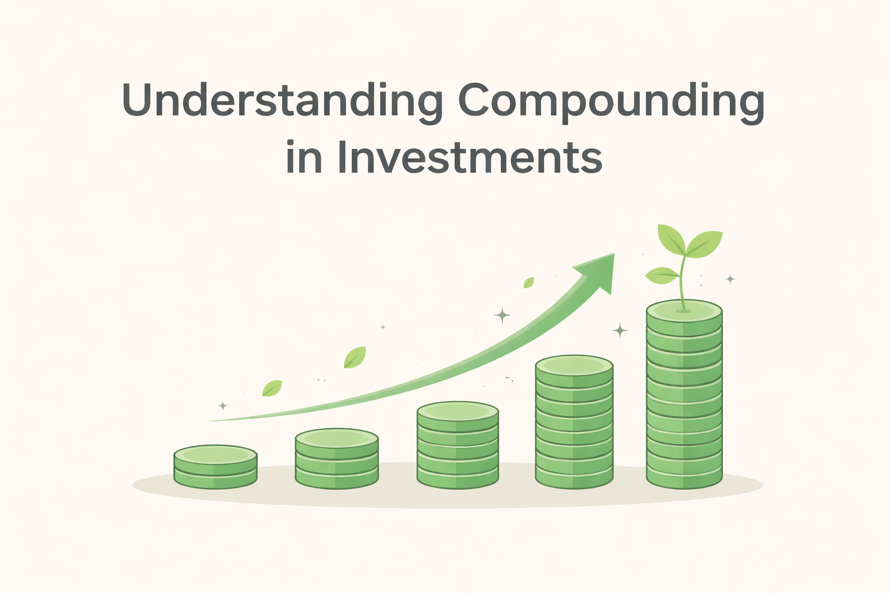
Understanding compounding in investments shapes wealth journeys across India in ways that feel subtle at first and incredibly powerful over time. Every saver, every disciplined investor, and every professional pursuing long-term financial goals feels the influence of compounding even before fully recognizing it. The idea appears simple, yet its impact spans decades, touching retirement funds, children’s education plans, corporate growth strategies, and personal dreams that demand steady capital growth. As India moves deeper into a formal financial culture, this idea grows even more vital. Understanding compounding in investments offers clarity, direction, and a sense of long-term control.
Understanding Compounding In Investments
Understanding compounding in investments means a process in which money generates returns, and those returns generate additional returns in the next cycle. It transforms ordinary savings into a long-term growth engine that builds momentum as each round of earnings reinvests into the core capital.
For Indian households, this idea holds special meaning. Families across cities and smaller towns rely on systematic savings, recurring deposits, provident fund contributions, and SIPs. When people explore understanding compounding in investments with deeper attention, they discover that steady contributions often matter more than large sums. A small monthly amount grows into a sizeable value because time expands its influence.
Businesses also harness this idea. Every reinvested profit cycle supports future expansion. Real estate investors experience compounding through rental yield and property appreciation. Equity investors feel it through dividends, reinvested gains, and long holding periods. Mutual fund SIPs operate almost entirely on compounding principles.
The longer the time span, the more powerful the curve becomes. Understanding compounding in investments helps investors appreciate this quiet upward push, making them more patient, more structured, and more intentional about financial choices.
Key Benefits of Understanding Compounding In Investments
The benefits of understanding compounding in investments unfold layer by layer.
The most visible benefit is accelerated wealth creation. Each cycle of reinvested returns multiplies the previous one, creating a rising growth arc. This shifts the experience of investing from a slow crawl to a steady climb.
Another benefit is behavioural strength. Once investors develop an understanding of compounding in investments, they commit to disciplined monthly contributions. Consistency becomes a habit rather than a struggle. This encourages long-term financial planning across an entire lifetime.
Tax efficiency often enhances compounding results. Schemes like PPF, NPS, and ELSS reward long holding periods, which allows compounding to function at full strength. Fewer withdrawals enhance this process.
Inflation protection also emerges as a key advantage. Compounding supports growth that keeps pace with rising living costs. When returns expand year after year, purchasing power remains strong, supporting large goals such as home buying, retirement income, and education funds.
Indian market opportunities amplify these benefits. The economy grows steadily, and financial inclusion brings millions into formal investing. As participation expands, understanding compounding in investments becomes a central tool for achieving financial stability across diverse income groups.
“Start investing with confidence! Explore
0 demat account
and grow your wealth.”
A Step-by-Step Guide
Step 1: Getting started
Begin with a clear goal: Retirement, wealth creation, education goals, business expansion, or long-term capital appreciation. Each demands a slightly different investment mix. Once the purpose feels clear, explore products where compounding thrives. Equity mutual funds, index funds, PPFs, EPFs, and recurring investment plans create long-term growth structures.
SIP investors experience one of the most consistent compounding effects. Even a small monthly amount contributes to long-term wealth through the recurring cycle of reinvestment. Understanding compounding in investments becomes easier once investors watch these cycles unfold across multiple years.
Step 2: Required documents
Most investment options require simple KYC compliance. Aadhaar, PAN, a bank account, and address proof complete the essentials. Mutual funds require KYC verification. Equity investments require a demat account. Government schemes require account linking. Once the setup is established, understanding compounding in investments becomes much smoother because administrative obstacles fade.
Step 3: How to execute or invest
Executing an investment rooted in compounding revolves around reinvestment. Every return cycle must feed the next one. For mutual funds, choose growth options. For PPF or EPF, maintain continuous contributions. For stocks, avoid premature withdrawals and let dividends and market appreciation compound earlier gains.
Digital platforms simplify the entire experience. Investors can track SIPs, automate contributions, and maintain regularity without effort. Execution does not demand expertise; it demands consistency. Understanding compounding in investments grows stronger when investors commit to this steady rhythm.
Step 4: Monitoring and exit strategy
Monitoring focuses on alignment rather than frequent changes. Annual reviews help investors ensure that goals and investments move together. If a goal moves closer, asset allocation may shift from aggressive to stable instruments.
Exit timing depends on the investment’s purpose. A retirement corpus might remain invested for decades, while a home-purchase goal might require withdrawals during a specific window. Compounding thrives when interruptions are kept to a minimum, and every contribution strengthens the long-term arc of returns.
Understanding compounding in investments encourages investors to treat the journey as a marathon. The curve grows steeper with time, creating a sense of financial progression that feels both steady and deeply rewarding.
Risks and Challenges
Understanding compounding in investments offers immense value, yet certain risks and challenges influence outcomes.
Market fluctuations impact equity-linked compounding cycles. Savings instruments with lower growth potential may deliver modest compounding results during inflationary cycles. Choosing the right balance between stability and growth becomes essential.
Behavioural patterns also shape compounding outcomes. Delayed investing reduces total growth potential. Frequent withdrawals interrupt the compounding cycle. Irregular contributions slow progress. Investors who refine their understanding of compounding in investments appreciate the importance of uninterrupted continuity.
Regulatory shifts influence taxes, interest rates, and investment rules. Each change influences compounding speed.
Process-related challenges arise when investors jump between schemes due to fear or market swings. Compounding rewards patience; emotional decisions dilute its power.
Understanding compounding in investments demands not only knowledge but also discipline, long-term thinking, and consistent financial habits.
Expert Tips for Indians
Below is a set of insights crafted for Indian investors refining their understanding of compounding in investments:
• Begin contributions early to build a long runway for growth.
• Use SIPs to maintain rhythm through every market cycle.
• Pair equity mutual funds with long-term safe havens like PPF for balanced growth.
• Increase SIP value annually to match rising income.
• Allow dividends and interest to flow back into the investment consistently.
• Review tax-efficient instruments like ELSS to strengthen compounding.
• Track long-term goals visually using dashboards or apps.
• Build a financial buffer so emergencies don’t interrupt investments.
• Maintain a diversified portfolio to reduce concentration risk.
• Keep a long-term outlook to support compounding across decades.
These tips help strengthen discipline, structure, and clarity, all essential for understanding compounding in investments.
Conclusion
Understanding compounding in investments helps individuals achieve their long-term financial goals. It influences wealth creation, shapes discipline, and supports stability during different market cycles. Indian investors benefit from compounding in mutual funds, provident fund schemes, recurring deposits, and long-term equity strategies. The more deeply individuals explore this idea, the more empowered they feel in directing their future.
Compounding rewards patience, consistency, and thoughtful planning. Every contribution builds the strength of the next contribution. Every reinvested return shapes the next wave of growth. Once investors absorb the true meaning of understanding compounding in investments, their financial journey gains direction, momentum, and lifelong confidence.
FAQs
What is understanding compounding in investments?
It refers to the process in which invested money generates returns, which then generate additional returns in each new cycle.
How does compounding in investments work in India?
It works through reinvested gains in products such as mutual funds, provident funds, equity markets, gold schemes, and recurring investment plans.
How does understanding compounding in investments help?
Benefits include sustained wealth creation, inflation protection, disciplined financial behaviour, and long-term portfolio expansion.
Who should consider understanding compounding in investments?
Any saver or investor planning long-term goals such as retirement, education, wealth creation, or property purchase.
How can I get started with understanding compounding in investments?
Complete KYC, select suitable instruments, automate contributions, reinvest returns, and monitor progress annually.
Disclaimer
The stocks mentioned in this article are not recommendations. Please conduct your own research and due diligence before investing. Investment in securities market are subject to market risks, read all the related documents carefully before investing. Please read the Risk Disclosure documents carefully before investing in Equity Shares, Derivatives, Mutual fund, and/or other instruments traded on the Stock Exchanges. As investments are subject to market risks and price fluctuation risk, there is no assurance or guarantee that the investment objectives shall be achieved. Lemonn (Formerly known as NU Investors Technologies Pvt. Ltd) do not guarantee any assured returns on any investments. Past performance of securities/instruments is not indicative of their future performance.
Related Posts

Download Lemonn
Download my app for share market trading, ipo investment, trading account, and all your investment needs.