How the Iran-Israel Conflict Is Impacting the Indian Stock Market
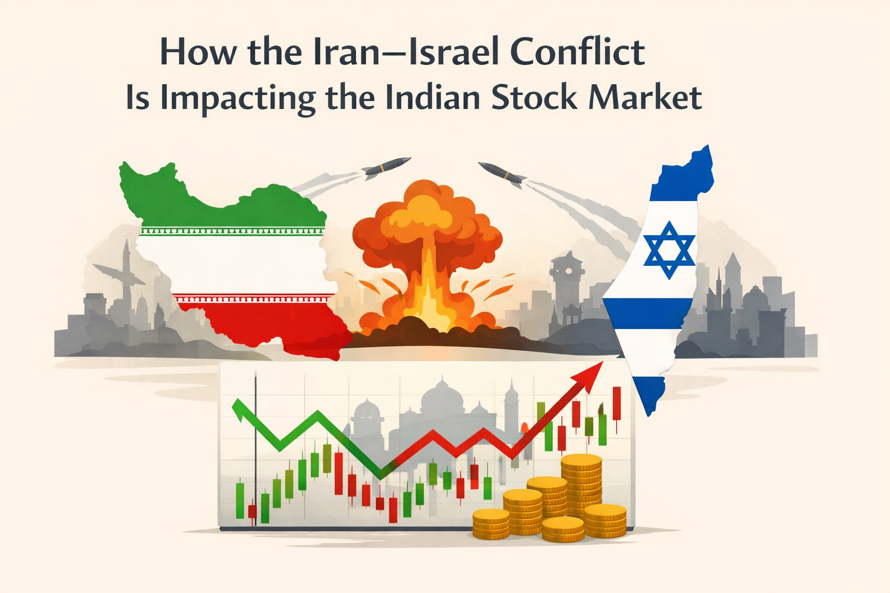
The escalating Iran–Israel conflict is creating uncertainty across global markets, and the Indian stock market is already feeling the impact. Rising oil prices, disrupted shipping routes, and geopolitical risks are increasing volatility in sectors such as aviation, chemicals, textiles, and logistics.
For investors, the key question is: Which sectors are most at risk-and which could benefit?
Let’s break down how this conflict could influence Nifty, Sensex, and sectoral stocks.
Why the Iran–Israel Conflict Matters for India
India is highly dependent on the Middle East for energy and trade. In fact, over 85% of India’s crude oil is imported, much of it passing through the Strait of Hormuz, a key global shipping route.
If tensions escalate and disrupt this route:
- Oil prices could spike
- Shipping costs may rise
- Inflation could increase
- Global investor sentiment may turn risk-averse
This combination can lead to market corrections and sector-specific pressure on Dalal Street.
Recent market reactions already show volatility, with Indian indices dropping amid rising crude prices and global uncertainty.
Sectors Most at Risk in the Indian Stock Market
1. Aviation Sector
The aviation industry is extremely sensitive to oil prices.
Why this sector is vulnerable:
- Aviation fuel costs rise when crude oil prices increase
- Flight routes may become longer due to closed airspace
- Operating costs increase sharply
Airspace disruptions in the Gulf region have already caused flight rerouting and higher costs for airlines.
Stocks to watch:
- IndiGo (InterGlobe Aviation)
- SpiceJet
2. Oil Marketing Companies (OMCs)
Companies that sell petrol and diesel may face pressure if crude oil prices surge.
Reasons:
- Higher crude oil prices increase import costs
- Retail fuel prices may not increase immediately due to government controls
- Profit margins can shrink
Stocks at risk:
- IOC
- BPCL
- HPCL
3. Chemical and Fertilizer Companies
Many chemicals and fertilizers depend on natural gas and crude derivatives.
If supply chains from the Middle East are disrupted:
- Raw material costs increase
- Profit margins shrink
- Production costs rise
India imports significant volumes of fertilizers and chemicals from the region, making the sector sensitive to geopolitical disruptions.
4. Textile Industry
The textile sector depends heavily on petroleum-based raw materials like polyester and synthetic fibers.
If crude prices rise:
- Yarn costs increase
- Manufacturing costs rise
- Export competitiveness drops
Industry leaders warn that textile raw material costs could rise by 15–20% if oil prices surge.
5. Shipping and Logistics
Global shipping routes are already under stress.
For example:
- Attacks and tensions near the Strait of Hormuz are disrupting shipping
- Insurance and freight costs are rising sharply
- Ships are rerouting around Africa, increasing costs and delivery time
These disruptions could impact logistics companies and exporters.
Stocks to watch:
- Shipping Corporation of India
- Adani Ports
Export-Oriented Sectors Facing Risk
The conflict may also affect India’s export industries due to logistics disruptions and global demand uncertainty.
Key sectors exposed:
- Gems and jewellery
- Electronics
- IT services
- Garments and textiles
Shipping delays and rising freight costs are already affecting exports across these industries.
Sectors That May Benefit
Not all sectors are negatively affected.
Some industries may actually gain.
1. Oil Exploration Companies
Higher crude oil prices can boost revenues for companies that produce oil.
Potential beneficiaries:
- ONGC
- Oil India
2. Defence Sector
Geopolitical tensions often increase defence spending globally.
Indian defence companies could see stronger demand for:
- Missiles
- Radar systems
- Military equipment
Stocks that may benefit:
- HAL
- Bharat Electronics
- Bharat Dynamics
3. Gold and Precious Metals
During geopolitical crises, investors often shift money to safe-haven assets like gold.
This can support stocks in the jewellery and gold financing sectors.
What Investors Should Watch
If you are investing in the Indian stock market, keep an eye on these key indicators:
- Crude oil prices (Brent crude)
- Strait of Hormuz shipping activity
- FII inflows or outflows
- Global market sentiment
- Government fuel price policy
These factors will largely determine how long the market volatility lasts.
Key Takeaways
- The Iran–Israel conflict is increasing volatility in the Indian stock market.
- Rising oil prices and supply chain disruptions are the biggest risks.
- Aviation, chemicals, textiles, and logistics sectors are most vulnerable.
- Oil producers, defence companies, and gold-related stocks may benefit.
- Investors should monitor crude prices and geopolitical developments closely.
FAQs
Q. Does the Iran–Israel war affect the Indian stock market?
Yes. Rising oil prices, global uncertainty, and trade disruptions can cause volatility in the Indian stock market.
Q. Which sector is most affected by the Iran–Israel conflict?
Aviation, oil marketing companies, chemicals, and textiles are among the sectors most exposed to rising oil prices and supply chain disruptions.
Q. Which stocks may benefit from the conflict?
Oil exploration companies, defence stocks, and gold-related companies may see gains during geopolitical tensions.
Disclaimer
The stocks mentioned in this article are not recommendations. Please conduct your own research and due diligence before investing. Investment in securities market are subject to market risks, read all the related documents carefully before investing. Please read the Risk Disclosure documents carefully before investing in Equity Shares, Derivatives, Mutual fund, and/or other instruments traded on the Stock Exchanges. As investments are subject to market risks and price fluctuation risk, there is no assurance or guarantee that the investment objectives shall be achieved. Lemonn (Formerly known as NU Investors Technologies Pvt. Ltd) do not guarantee any assured returns on any investments. Past performance of securities/instruments is not indicative of their future performance.