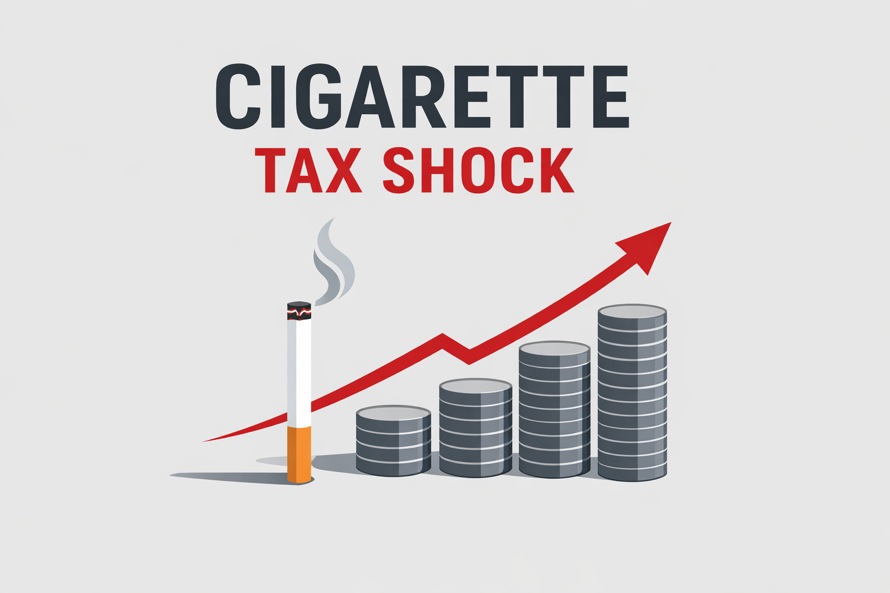
Cigarette Tax Shock: Why Tobacco Stocks Crashed After the Finance Ministry’s Surprise Hike
A Shocking Blow to Tobacco Stocks
On February 1, the Finance Ministry dropped a bombshell on the tobacco industry: a steep increase in excise duty on cigarettes, ranging from ₹2,050 to ₹8,500 per 1,000 sticks. This move, effective immediately, sent shockwaves through the Indian stock market.
Within hours, major tobacco companies like ITC and Godfrey Phillips saw a combined market capitalisation wipeout of nearly ₹1 trillion. The FMCG index took a hit too, dragging down gains in the broader market.
But what exactly happened, and why did investors react so strongly?
Breaking Down the Tax Hike
The excise duty on cigarettes is a tax imposed by the government to discourage smoking and boost revenue. This time, the hike was steeper and broader than expected, covering various lengths and types of cigarettes.
New Excise Rates (per 1,000 cigarettes):
- Short cigarettes: ₹2,050
- Regular/King size: up to ₹8,500
The policy shift is part of the government’s ongoing public health push, but the market wasn’t prepared for the size or timing of the change.
Why the Stock Market Reacted So Sharply
Tobacco stocks are highly sensitive to regulatory changes—especially tax hikes. Here’s why:
1. Higher Taxes = Lower Profits
Companies like ITC and Godfrey Phillips will now have to either absorb the tax hit (cutting into profits) or pass it on to consumers (risking lower demand).
2. Investor Panic
The sudden announcement gave no room for companies—or investors—to adjust. This led to knee-jerk selling, especially among institutional investors and mutual funds holding large stakes in FMCG heavyweights.
3. Wider Market Impact
Since ITC is one of the largest stocks on the Nifty and Sensex, its sharp fall pulled down broader indices. The FMCG sector, which often acts as a safe haven, lost ground fast.
What This Means for Investors
If you hold tobacco stocks, this isn’t the first time the sector has faced regulatory headwinds—and it won’t be the last. Here’s what to consider:
- Short-term pain is likely as companies reprice products or adjust margins.
- Long-term impact depends on how consumer demand reacts to price hikes.
- Diversified FMCG players like ITC may recover faster thanks to their non-tobacco revenue streams.
Looking Ahead: More Regulation Coming?
This move signals a tougher stance from the government on tobacco. Don’t be surprised if future budgets include similar sin tax increases—on not just cigarettes, but also alcohol, sugary drinks, and vapes.
Key Takeaways
- The Finance Ministry hiked excise duty on cigarettes to ₹2,050–₹8,500 per 1,000 sticks, effective Feb 1.
- Tobacco giants ITC and Godfrey Phillips saw ₹1 trillion in market cap wiped out in a day.
- The broader FMCG index fell, capping gains in the stock market.
- Investors should brace for volatility and focus on long-term fundamentals.
How Much Will Cigarette Prices Rise?
With the new excise duty ranging from ₹2,050 to ₹8,500 per 1,000 cigarettes, consumers are wondering: How much more will a single cigarette cost?
Let’s break it down.
Per-Cigarette Tax Increase:
- ₹2,050 per 1,000 = ₹2.05 per cigarette (for shorter or low-end cigarettes)
- ₹8,500 per 1,000 = ₹8.50 per cigarette (for king-size or premium brands)
Estimated New Prices
Assuming a cigarette currently costs ₹18, here’s how the price could change:
| Scenario | Estimated Price Increase | New Price (per cigarette) |
|---|---|---|
| Lower range (₹2.05 duty) | ₹2.05 | ₹20.05 |
| Upper range (₹8.50 duty) | ₹8.50 | ₹26.50 |
🔍 Most king-size cigarettes could now cost around ₹25–27, depending on the brand and region.
Will Tobacco Companies Pass the Entire Cost to Consumers?
Not always. Companies may:
- Absorb some of the tax to stay competitive
- Increase prices gradually
- Reduce pack sizes instead of increasing unit price
Still, a price hike at the consumer level is almost certain.
FAQs
Q: Will cigarette prices go up for consumers?
Yes, either companies will raise retail prices to cover the tax hike or absorb the cost, which is unlikely long-term.
Q: Is this a good time to buy tobacco stocks at lower prices?
Only if you believe the companies can weather the tax hike and maintain demand. Look at fundamentals, not just price dips.
Q: Does ITC rely heavily on cigarette revenue?
While ITC has diversified into hotels, FMCG, and paper, a significant portion of its profit still comes from cigarettes.
Disclaimer
The stocks mentioned in this article are not recommendations. Please conduct your own research and due diligence before investing. Investment in securities market are subject to market risks, read all the related documents carefully before investing. Please read the Risk Disclosure documents carefully before investing in Equity Shares, Derivatives, Mutual fund, and/or other instruments traded on the Stock Exchanges. As investments are subject to market risks and price fluctuation risk, there is no assurance or guarantee that the investment objectives shall be achieved. Lemonn (Formerly known as NU Investors Technologies Pvt. Ltd) do not guarantee any assured returns on any investments. Past performance of securities/instruments is not indicative of their future performance.