
Supratim Choudhury writes about IPOs for the Lemonn Blog. His articles cover upcoming and recently listed IPOs in India, explaining the business behind each issue, the price band, lot size, issue size, key dates, subscription status and listing performance in plain language.
He also writes beginner guides on how IPOs work, from applying through UPI and ASBA to share allotment and listing day, so that first-time investors know what to expect before they apply.
Supratim is an IIM Ahmedabad MBA with more than 15 years of experience in business leadership, strategy consulting and retail, including P&L ownership and co-leading a brand launch in India. That background helps him look closely at the business model, growth plans and financials behind every IPO he covers.
Editorial standards: Articles on the Lemonn Blog are reviewed for accuracy by Gaurav Garg, Senior Manager – Equity Research at Lemonn. Content is for educational purposes only and is not investment advice. Investments in the securities market are subject to market risks.
Is Colour Trading Legal in India? Laws and Risks in 2026

No, typical real-money colour trading is not legal in India. Platforms that require users to stake money on colour predictions for the chance to win cash or other financial gains are likely to fall into India’s prohibited category of online…
ITR Refund Status: How to Track Your Tax Refund Online
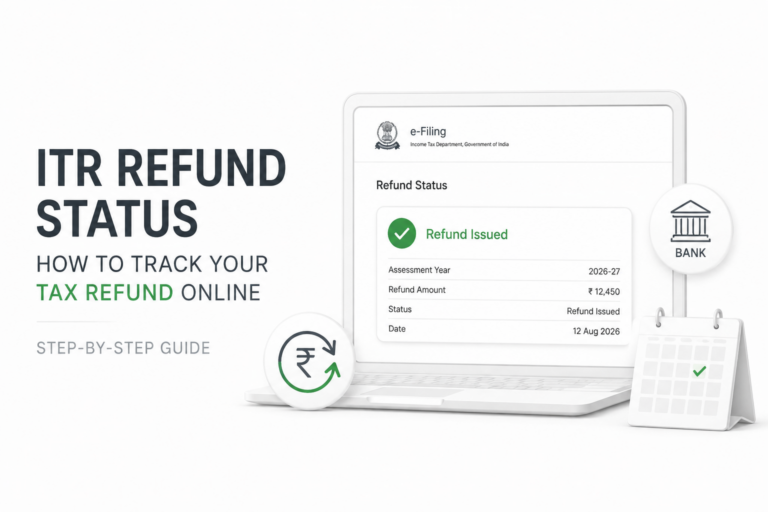
If you have filed your Income Tax Return (ITR) and are expecting a refund, you can track your ITR refund status online through the Income Tax Department’s e-Filing portal. The process takes only a few minutes. Log in to your…
India’s Top States by GST Collections in FY26

India’s gross Goods and Services Tax (GST) collections crossed ₹22.27 lakh crore in the financial year (FY) 2025-26, up 8.3% from the previous financial year. Among states, Maharashtra ranked first with about ₹3.62 lakh crore, followed by Karnataka, Gujarat, Tamil…
Closing Auction Session (CAS): What Investors Should Know

Waiting until 3:29 p.m. to exit a stock? For shares covered by the Closing Auction Session, continuous trading has already ended. This change can catch traders off guard: an order placed near the close now enters an auction, where execution…
Minimum Capital Required to Start F&O Trading in India: A Practical Framework for Beginners

If you are searching for the minimum capital required to start futures and options (F&O) trading in India, the short answer is this: This distinction matters because many new traders confuse eligibility capital with workable trading capital. In practice, the…
Future Multibagger Stocks in India 2026: 7 Small Caps to Watch

One of the most common questions investors ask is: What are the future multibagger stocks in India? There is no reliable way to know in advance. While many of India’s biggest wealth creators were once relatively unknown small-cap companies, many…
How to Start Trading with ₹100 or ₹500 in India: A Beginner’s Step-by-Step Guide

“Do I need lakhs of rupees to start trading in India?” No. You can enter the market with ₹100 or ₹500. However, with such a small amount, long-term investing is usually more practical than active trading because transaction costs, spreads,…
Best Time to Trade Stocks in India: Hourly Breakdown of NSE/BSE Hours (2026)

A common myth among new Indian traders is that “you can trade any time between 9:15 AM and 3:30 PM equally well.” In reality, the Indian stock market behaves very differently across the day, and choosing the right hour can…
F&O vs. Intraday vs. Swing Trading in India: Pros, Cons & How to Choose (2026)

If you have just opened a demat account in India and are wondering whether to trade Futures & Options (F&O), do intraday trades, or hold swing positions for a few days, you are not alone. Each style has different risk,…