
Union Budget 2026: What It Means for You, the Economy, and India’s Future
Why the 2026 Budget Matters More Than Ever
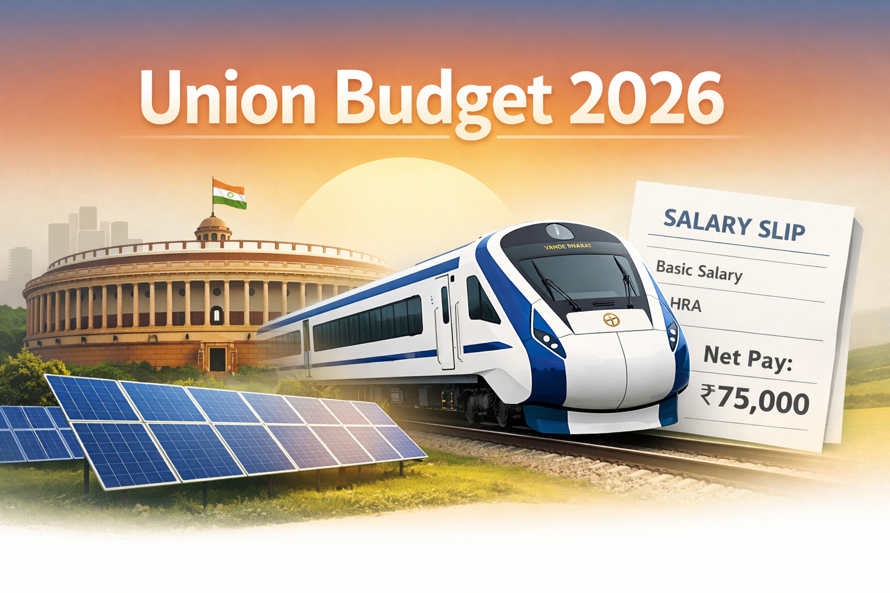
The Union Budget for FY 2026–27, set to be presented on Sunday, February 1, is shaping up to be one of the most consequential in India’s history. It’s not just about numbers-it’s about new rules, new responsibilities, and a renewed vision for India’s growth.
Here’s what makes this budget special:
- It launches the New Income Tax Act, 2025, replacing a 60-year-old law.
- It must account for the financial impact of the 8th Central Pay Commission.
- It’s the first budget to implement the recommendations of the 16th Finance Commission.
Let’s break it down in simple terms.
Personal Income Tax: Relief, Reform, and What to Expect
Indian taxpayers-especially the middle class-are watching this budget closely. After years of inflation and rising expenses, there’s strong demand for tax relief.
“Start investing with confidence! Explore
0 demat account
and grow your wealth.”
What’s on the table?
- Standard deduction might increase from ₹75,000 to ₹1,00,000.
- Taxpayers earning up to ₹12 lakh annually already pay zero tax under the new regime.
- Experts suggest expanding the 5% and 10% tax slabs to boost disposable income.
Will the old tax regime go away?
Not just yet. But the government is nudging taxpayers toward the New Tax Regime, which is simpler and now the default. There’s a growing call to add basic deductions like health insurance under this regime, especially from bodies like the ICAI.
What’s Changing Under the New Income Tax Act?
Effective April 1, 2026, the ITA 2025 modernizes India’s tax system:
| Feature | Old Law (1961) | New Law (2025) |
|---|---|---|
| Sections | 800+ | 536 |
| Year System | Previous & Assessment | Unified Tax Year |
| TDS Rules | Scattered | Consolidated |
| Assessment | Some Digital | Fully Faceless & Digital-First |
A major benefit? Less paperwork and fewer disputes, thanks to tech-driven assessments and a streamlined dispute resolution process.
8th Pay Commission: A Big Salary Boost-and a Big Budget Challenge
Central government employees and pensioners are set for a major pay hike in 2026, with a fitment factor likely ranging from 1.83 to 2.46.
- Entry-level salary may rise from ₹18,000 to over ₹32,000.
- Higher-level officers could see salaries exceed ₹6 lakh/month.
- Arrears may be due for 16 months, adding pressure to the fiscal budget-but also boosting consumption.
Infrastructure & Safety: Railways, Roads, and Green Goals
The government is allocating a massive ₹13.1 trillion for capital expenditure-a 14% jump. Key areas include:
Rail Safety: Kavach 4.0
- India’s homegrown train protection system will expand to 18,000 km of rail routes.
- Focus on accident prevention, faster trains, and modern signaling.
Renewable Energy Push
- Support for Battery Energy Storage Systems (BESS) with GST rationalization and subsidies.
- Boost to green hydrogen and rooftop solar through the PM Surya Ghar program.
Rural Development: Job Guarantees and Seed Security
The old MGNREGA program has been rebranded as VB-G RAM G with:
- 125 guaranteed workdays (up from 100)
- Norm-based funding (not just demand-based)
- Strategic pauses during crop seasons to protect farm labor
Also on the agenda: a new Seeds Bill to crack down on fake seeds and protect farmers’ income.
Health, MedTech, and Innovation
The healthcare sector is eyeing:
- A reworked PLI scheme for medical devices
- Lower GST on diagnostics and raw materials
- Incentives for R&D and AI in diagnostics
The goal: reduce import dependence and move toward a preventive, innovation-led health system.
Fiscal Targets: Staying on Course Amid Complexity
Despite all this spending, the government is sticking to its fiscal plan:
- Fiscal deficit goal: 4.0% – 4.3% of GDP
- Higher-than-expected dividends from RBI and cesses will help balance the books
- Nominal GDP growth is projected at 9.5%–10.5%, offering some revenue breathing room
Center vs States: Tensions and Transitions
The 16th Finance Commission could reduce states’ share of central taxes from 41% to 40%, impacting state budgets by ₹3.5 lakh crore annually.
States are also pushing for:
- Inclusion of cesses and surcharges in revenue sharing
- Performance-linked grants, especially for smaller states with fewer resources
Key Takeaways
- Middle-class taxpayers may see relief, but expect more nudges toward the New Tax Regime.
- Government employees can expect a major pay hike-but also a delay in arrears.
- Infrastructure and renewable energy continue to drive long-term investment.
- States may face tighter budgets, increasing reliance on central grants.
- Fiscal discipline remains a priority despite major new spending.
FAQs
When is Budget 2026 being presented?
Sunday, February 1, 2026, at 11:00 AM-the first-ever Sunday budget in India.
Is the old income tax regime being scrapped?
Not yet, but it’s being gradually phased out in favor of the simpler New Regime.
Will I pay less tax in 2026?
Possibly. Expect higher standard deductions and wider tax slabs, especially if you earn ₹12–20 lakh.
What’s the 8th Pay Commission’s impact?
It could raise salaries by 20–35%, especially for lower-level employees.
How will rail safety improve?
With a ₹1.3 trillion allocation, the Kavach 4.0 safety system will cover more of India’s rail network.
Disclaimer
The stocks mentioned in this article are not recommendations. Please conduct your own research and due diligence before investing. Investment in securities market are subject to market risks, read all the related documents carefully before investing. Please read the Risk Disclosure documents carefully before investing in Equity Shares, Derivatives, Mutual fund, and/or other instruments traded on the Stock Exchanges. As investments are subject to market risks and price fluctuation risk, there is no assurance or guarantee that the investment objectives shall be achieved. Lemonn (Formerly known as NU Investors Technologies Pvt. Ltd) do not guarantee any assured returns on any investments. Past performance of securities/instruments is not indicative of their future performance.
Related Posts

Download Lemonn
Download my app for share market trading, ipo investment, trading account, and all your investment needs.



