Types Of Mutual Funds Explained
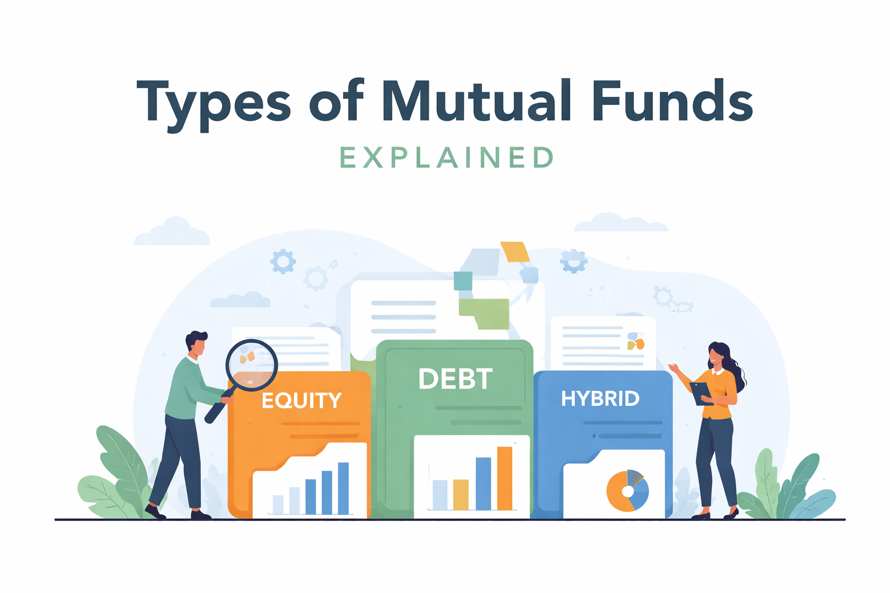
When people search for explanations of the types of mutual funds, they are often at a crossroads — curious, slightly overwhelmed, and eager to decode a space that promises growth but demands clarity. India’s investment landscape has opened its doors wider than ever. New investors join every month. Salaried professionals, freelancers, young families, and business owners now treat mutual funds as essential financial companions, not optional experiments.
Types Of Mutual Funds Explained: All You Need to Know
When people look for types of mutual funds explained, they want clarity — real categories, real behaviour, and real examples that show how each fund operates in the Indian market. Mutual funds come in distinct buckets, each serving a specific purpose. Some build long-term wealth, some stabilize portfolios, and some focus on defined life goals. Understanding these categories with actual fund examples helps investors make confident, informed choices.
Here is a clear, example-driven breakdown:
1. Equity Mutual Funds
These invest in listed Indian companies. They focus on growth and suit investors seeking to build long-term wealth.
“Start investing with confidence! Explore the best
mutual funds
and grow your wealth.”
Large-Cap Funds
They invest in India’s top 100 companies. These funds feel steadier because they track mature businesses with strong balance sheets.
Example: HDFC Large Cap Fund (Formerly HDFC Top 100 Fund)
Known for its disciplined large-cap allocation, this fund invests in large-cap stocks like Reliance, HDFC Bank, and Infosys. It aims for consistent compounding through market cycles rather than chasing momentum.
Example: ICICI Prudential Bluechip Fund
Focuses on quality and scale, holding companies with stable earnings and long competitive histories. The Fund’s constituent stocks include HDFC Bank, L&T, Bharti Airtel, and Maruti Suzuki.
Mid-Cap Funds
Mid-caps sit between stability and growth. They expand faster than large-caps but swing more during market shifts.
Example: Franklin India Midcap Fund
One of India’s oldest mid-cap funds, recognized for its stock-picking approach across manufacturing, engineering, and consumption-driven companies.
Example: Kotak Emerging Equity Fund
Builds exposure to rising companies that benefit from domestic growth cycles.
Small-Cap Funds
These aim for aggressive wealth creation by investing in young or niche companies. Returns can spike during bull runs and drop sharply during corrections.
Example: Nippon India Small Cap Fund
Famous for its high-growth stock selection across specialty chemicals, industrials, and niche tech companies.
Example: SBI Small Cap Fund
Maintains a diversified basket of high-potential small businesses with long-term expansion prospects.
Sectoral/Thematic Funds
These concentrate on sectors such as pharmaceuticals, technology, banking, or manufacturing. They require conviction and patience.
Example: ICICI Prudential Technology Fund
Focuses on India’s growing IT and digital ecosystem, holding companies involved in software, cloud, and digital transformation.
Example: Nippon India Pharma Fund
Targets large and mid-sized pharma companies benefiting from global and domestic healthcare demand.
Tax-Saving ELSS Funds
These funds qualify for Section 80C deductions, with a 3-year lock-in.
Example: SBI ELSS Tax Saver Fund
Balances large and mid-cap exposure to deliver both stability and growth.
Example: HDFC ELSS Tax Saver Fund
A long-running ELSS option with diversified exposure to power, finance, and industrial companies.
2. Debt Mutual Funds
Debt funds prioritize predictability and stability. They suit short- and medium-term goals by investing in government bonds, corporate bonds, and money-market instruments.
Liquid Funds
Used for parking money for a few weeks or months.
Example: HDFC Liquid Fund
Maintains very short-term instruments to ensure quick access and controlled volatility.
Short-Duration Funds
Ideal for goals one to three years away.
Example: ICICI Prudential Short Term Fund
Invests in high-quality government and corporate debt to balance yield and stability.
Corporate Bond Funds
These hold bonds issued by top-rated corporates.
Example: Aditya Birla Sun Life Corporate Bond Fund
Known for prioritizing high-grade issuers with strong repayment capacity.
Gilt Funds
Invest only in government securities — ideal for those who want sovereign-backed stability.
Example: SBI Magnum Gilt Fund
Provides exposure to long-term government securities that react to interest rate cycles.
3. Hybrid Mutual Funds
Hybrid funds blend equity and debt to create a smooth long-term experience for investors.
Aggressive Hybrid Funds
Hold more equity than debt.
Example: ICICI Prudential Equity & Debt Fund
Uses equity for growth while maintaining debt exposure for stability.
Conservative Hybrid Funds
Hold more debt than equity.
Example: HDFC Hybrid Debt Fund
Designed for those who want mild growth with controlled fluctuations.
Balanced Advantage Funds
Shift dynamically between equity and debt based on market conditions.
Example: HDFC Balanced Advantage Fund
Known for reducing equity exposure in overheated markets and increasing it during corrections.
4. Solution-Oriented Funds
These work toward defined goals such as retirement or a child’s future.
Retirement Funds
Example: HDFC Retirement Savings Fund Equity Plan
The scheme comes with a lock-in period of five years or till retirement age. The fund invests at least 80% of its portfolio in equity and equity-related instruments. This is a notified Tax Savings Cum Pension Scheme.
Children’s Funds
Example: ICICI Prudential Child Care Fund
Designed to support education and future milestones, with built-in discipline.
5. Index Funds and ETFs
These mimic an index rather than active stock selection.
Index Funds
Example: UTI Nifty 50 Index Fund
Tracks the Nifty 50 and mirrors the performance of India’s largest companies.
ETFs
Example: Nippon India ETF Nifty 50 BeES
Provides exposure to the entire index in a single tradable unit at low expense.
Key Benefits of Types Of Mutual Funds Explained
- Professional management handles the market research and decision-making.
- Diversification spreads risk across dozens of securities in a single fund.
- Tax-efficient structures support smoother long-term wealth growth.
- Low minimums make mutual fund investing accessible to beginners.
- Different fund categories map naturally to short-, medium-, and long-term goals.
- Structured investing reduces emotional reactions during market swings.
- Consistent compounding builds long-term wealth with organized discipline.
A Step-by-Step Guide
Step 1: Getting Started
Identify your goal and timeline. Long-term suits equity funds, medium-term fits hybrid funds, and short-term aligns with debt funds.
Step 2: Required Documents
Keep PAN, Aadhaar (for e-KYC), bank details, phone, and email ready. Digital onboarding completes quickly.
Step 3: How to Execute or Invest
Pick direct plans for lower costs or regular plans for guidance. Use SIPs for consistency or a lump sum when liquidity allows.
Step 4: Monitoring and Exit Strategy
Review quarterly. Exit based on goals, tax planning, or changes in the fund’s approach.
Risks and Challenges
- Equity funds can swing sharply during global events, elections, or interest rate shifts.
- Sudden market movements may create short-term discomfort for equity investors.
- Debt funds can dip temporarily when interest rates rise.
- Hybrid funds reduce volatility but still experience moderate fluctuations.
- Panic selling during market dips weakens long-term returns.
- Switching funds too often disrupts compounding and overall growth.
- Chasing last month’s top-performing fund leads to poor entry decisions.
- Emotional reactions generally cause more damage than market volatility.
- Lack of a clear plan increases the risk of inconsistent investment outcomes.
- Staying mentally prepared helps investors navigate market noise confidently.
Expert Tips for Indians
Here are some useful tips for Indians:
- Start with a purpose before you choose a scheme. Money grows faster when it knows where it is headed.
- Treat equity funds as long-term companions, not weekend trades. Give them time to breathe and bloom.
- For stability lovers, short-duration debt funds offer a comfortable middle ground.
- Hybrid funds are excellent teachers for beginners — they reveal how markets behave without overwhelming the investor.
- SIPs are emotional anchors. They keep your money invested when your mind tries to talk you out of it.
- Keep a tidy emergency fund so your mutual fund investments stay untouched when life throws curveballs.
- Study the fund manager’s philosophy. Not all strategies match all personalities.
- Track expense ratios. A small number today can make a significant dent in your portfolio over 10 years.
- Avoid comparing your returns with others — portfolios reflect personal stories, not competitions.
- Stay patient. Markets fluctuate, but time filters noise and rewards discipline.
Conclusion
Understanding the types of mutual funds explained brings structure to financial decisions that often feel overwhelming. Equity funds ignite long-term growth. Debt funds offer balance and stability. Hybrid funds stretch across both worlds, protecting investors from emotional extremes. When goals, timelines, and risks are aligned carefully, mutual funds become more than an investment vehicle — they become a roadmap for life’s aspirations.
FAQs
How do mutual funds work in India?
Mutual funds pool investor money and allocate it in accordance with a defined strategy. Each category follows a different risk-return pattern based on its underlying assets.
What are the benefits of investing in mutual funds?
Key benefits include diversification, tax advantages, professional fund management, and flexibility across investment goals.
Are there any risks involved in mutual fund investing?
Yes. Market volatility, interest-rate changes, credit risks, and emotional decision-making can all influence returns.
Who should consider learning about types of mutual funds?
Anyone planning long-term wealth, retirement savings, or structured financial goals benefits from this understanding.
How can I get started with investing in mutual funds?
Complete KYC, choose the right fund category for your goals, begin SIP or lump sum investments, and review your portfolio periodically.
Disclaimer
The stocks mentioned in this article are not recommendations. Please conduct your own research and due diligence before investing. Investment in securities market are subject to market risks, read all the related documents carefully before investing. Please read the Risk Disclosure documents carefully before investing in Equity Shares, Derivatives, Mutual fund, and/or other instruments traded on the Stock Exchanges. As investments are subject to market risks and price fluctuation risk, there is no assurance or guarantee that the investment objectives shall be achieved. Lemonn (Formerly known as NU Investors Technologies Pvt. Ltd) do not guarantee any assured returns on any investments. Past performance of securities/instruments is not indicative of their future performance.
Related Posts


Download Lemonn
Download my mutual fund app - your mutual funds, stock, invest in ipo, mf, trade invest hub with demat account features.