How To Choose A Good Stockbroker In India: A Guide
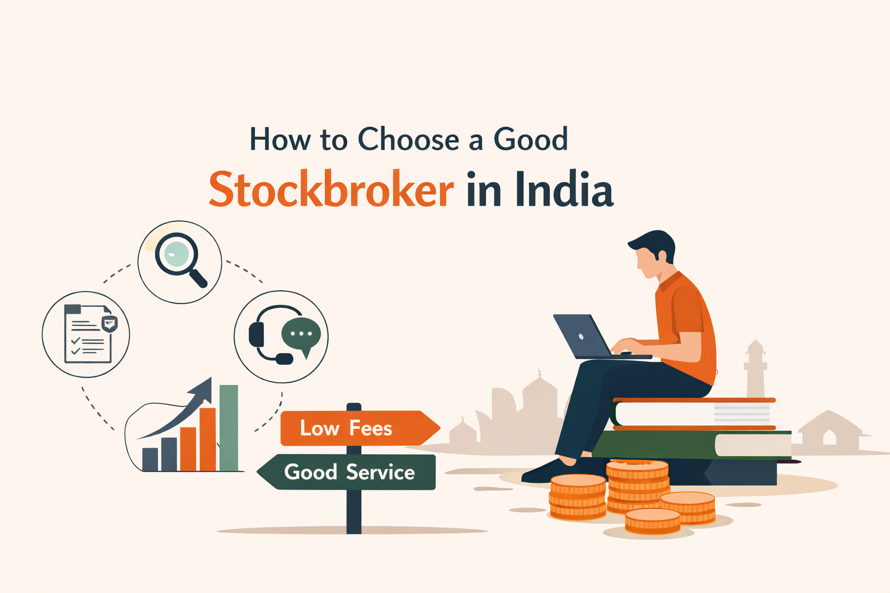
Indian markets continue to expand across equities, derivatives, ETFs, sovereign securities, and global investing routes. As retail investor participation grows, one question shapes most investment journeys: how to choose a good stockbroker in India. Brokerage platforms influence trading experience, order execution, safety of funds, and the overall confidence with which investors approach the market. Choosing the right partner is not a formality. It is a foundational financial decision that defines clarity, convenience, and long-term investment discipline in a market where transparency and speed matter every single day.
Understanding How To Choose A Good Stockbroker In India
Understanding how to choose a good stockbroker in India begins with recognizing what a broker actually does. A stockbroker connects investors with the exchanges. Every buy or sell order, every settlement, every fund transfer, and every demat movement flows through this channel. For many first-time investors, the broker becomes the primary gateway to all financial markets.
In India, brokers operate under SEBI, the National Stock Exchange (NSE), the Bombay Stock Exchange (BSE), and depositories like CDSL and NSDL. The quality of a broker determines transaction reliability, system uptime, platform trust, data privacy, and user experience. When investors evaluate how to choose a good stockbroker in India, they examine both regulatory compliance and the broker’s ability to support long-term wealth building.
Understanding this decision also means acknowledging how diverse Indian investors are. Some prefer active intraday trading. Others focus on SIPs, long-term compounding, and asset allocation. A good stockbroker serves multiple needs without overwhelming users. The choice shapes comfort, consistency, and the quality of financial decisions made over time.
Key Benefits of Choosing A Good Stockbroker In India
Evaluating how to choose a good stockbroker in India unlocks several benefits that directly influence investment confidence.
A well-chosen broker enables smooth onboarding, effortless KYC, and instant account activation. Reliable platforms allow investors to place orders with minimal lag and steady support during peak market hours. Strong research tools simplify understanding charts, fundamentals, news catalysts, and global cues. In a country where digital investing is becoming mainstream, these advantages allow investors to act with clarity rather than guesswork.
Cost efficiency is another criterion for how to choose a good stockbroker in India. India’s discount broking revolution reshaped fee structures. Zero-commission equity delivery, transparent brokerage slabs, and low intraday charges together help investors retain more gains. Long-term investors benefit from low-cost participation, while active traders use competitive pricing to optimize frequent trades.
Portfolio tracking becomes easier with brokers offering visual dashboards, automated insights, and secure storage of transaction history. Better platforms reduce confusion and encourage disciplined wealth building. Investors also gain access to multiple account types, from basic trading and Demat accounts to margin facilities, global investing access, and research-backed advisory features. For instance, stock broking platforms such as Lemonn offer features such as zero account opening fees, in addition to margin trading facility (MTF), Power SIP, and ScalpPro for options trading.
When investors learn how to choose a good stockbroker in India, they also learn how to protect their financial footprint. Reputed brokers maintain strict compliance, segregate client funds, offer 2FA security, and use encryption standards that safeguard identity and capital. These safeguards build trust and provide stability, especially during volatile markets. Lemonn is a SEBI-registered platform and is ISO/IEC 27001:2022 certified.
“Start investing with confidence! Explore
0 demat account
and grow your wealth.”
A Step-by-Step Guide
Step 1: Getting Started
The first step in how to choose a good stockbroker in India is identifying your investing style. Long-term compounding requires simple interfaces and intuitive dashboards. Active traders need advanced charting tools, quick order execution, and stable mobile apps. Investors planning diversified portfolios require access to equities, ETFs, bonds, derivatives, and sometimes even global markets.
Shortlist brokers based on features that match your approach. Look at proposed brokerage plans, trading platforms, research tools, reliability history, and user reviews. Many investors evaluate platform uptime during budget announcements, major market rallies, and high-volume days because these periods test real system strength.
Step 2: Required Documents
Most brokers require a set of standard documents for account creation. Understanding this step helps streamline the process of how to choose a good stockbroker in India.
Commonly required documents include:
- Aadhaar card
- PAN card
- Bank account proof (passbook or cancelled cheque)
- Recent photograph
- Signature upload
- Income proof (only for derivatives)
Digital KYC ensures a smoother onboarding journey. A well-chosen broker simplifies these steps with automated verification, reducing delays and frustration.
Step 3: How to Execute or Invest
Once investors finalize how to choose a good stockbroker in India, they begin exploring the platform. Execution quality becomes crucial at this stage. A good broker offers:
- Simple and advanced order types
- Clean charting tools
- Real-time price feeds
- News integrations
- Options chain data
- Sectoral heatmaps
This is where user experience plays a major role. A dependable broker ensures that funds can be added instantly, orders go through without lag, and holdings update accurately. Smooth execution builds confidence and reduces errors.
Step 4: Monitoring and Exit Strategy
Monitoring investments is central to long-term financial discipline. Brokers with automated alerts, visual reports, and goal trackers help investors stay aligned with their strategies. The journey of how to choose a good stockbroker in India continues beyond onboarding because ongoing support transforms casual investors into consistent participants.
Exit strategy tools also matter. Most brokers offer stop-loss features, advisory insights, trailing mechanisms, and capital gain summaries that allow investors to make informed decisions. For long-term compounding, predictable reporting and clear tax statements become essential components of a reliable brokerage ecosystem.
Risks and Challenges
Finding clarity on how to choose a good stockbroker in India is not always straightforward. India’s brokerage landscape is competitive, with many platforms offering similar claims. Investors sometimes feel overwhelmed by marketing features, leading to choices that do not match their actual needs.
Technical glitches are a real concern. Occasional downtime, delayed charts, or transaction lags can disrupt trading, especially for derivatives traders. Evaluating a broker’s historical reliability is essential.
Hidden charges can mislead new investors. While some brokers advertise zero brokerage for equity delivery, other segments may include platform fees, call-and-trade charges, or withdrawal fees. Transparent pricing is a core part of choosing a good stockbroker in India.
Customer support quality varies across platforms. Quick resolution mechanisms help reduce stress during critical moments. Investors benefit when brokers offer in-app support, email helpdesks, chat assistants, and escalation channels.
Security is another factor. Choosing brokers with strong data protection systems shields investors from risks associated with phishing attempts, unauthorized login attempts, and fraudulent activities. Learning how to choose a good stockbroker in India also means prioritizing safety.
Expert Tips for Indians
Experts across the financial community emphasize practical steps when guiding others on how to choose a good stockbroker in India.
- Prioritize platforms with strong SEBI compliance and transparent ownership.
- Review historical uptime and reliability during major market events.
- Evaluate mobile and web performance before committing.
- Compare brokerage costs section by section—delivery, intraday, derivatives, currency, commodities.
- Check whether the broker offers CDSL/NSDL e-DIS for the secure selling of shares.
- Choose brokers that simplify tax filing by offering capital gains reports.
- Look for AI-driven insights, smart alerts, and charting indicators if you prefer active trading.
- Avoid brokers with frequent complaints on online forums.
- Prefer platforms offering 2FA, biometric login, and secure fund transfer options.
- Test the speed of fund withdrawal—it indicates financial discipline and operational strength.
- Study the broker’s research desk quality. Good insights help long-term investors navigate market cycles.
- Ensure the broker offers multiple investment avenues like ETFs, bonds, and gold products.
- Check if customer care responds quickly during market hours.
- Evaluate user interface simplicity; complexity increases mistakes for beginners.
- Explore referral benefits, loyalty programs, and margin facilities only after gaining experience.
These insights provide a clear, grounded approach while learning how to choose a good stockbroker in India, ensuring investors make decisions aligned with both safety and long-term financial comfort.
Conclusion
The modern Indian investor faces a vibrant marketplace filled with opportunity. Yet the first step toward confident participation begins with understanding how to choose a good stockbroker in India. A reliable broker offers trust, transparency, stability, and a smooth digital experience. Investors benefit from clear onboarding, secure transactions, intuitive tools, and well-organized support systems that ease long-term wealth building.Evaluating brokers with a structured approach ensures that decisions align with both personal goals and India’s evolving financial landscape. With stockbrokers like Lemonn, every investor gains a stronger foundation to grow capital with discipline, clarity, and lasting confidence.
Disclaimer
The stocks mentioned in this article are not recommendations. Please conduct your own research and due diligence before investing. Investment in securities market are subject to market risks, read all the related documents carefully before investing. Please read the Risk Disclosure documents carefully before investing in Equity Shares, Derivatives, Mutual fund, and/or other instruments traded on the Stock Exchanges. As investments are subject to market risks and price fluctuation risk, there is no assurance or guarantee that the investment objectives shall be achieved. Lemonn (Formerly known as NU Investors Technologies Pvt. Ltd) do not guarantee any assured returns on any investments. Past performance of securities/instruments is not indicative of their future performance.
Related Posts

Download Lemonn
Download my app for share market trading, ipo investment, trading account, and all your investment needs.