
Best Insurance Policies For Tax Saving In India: A Guide
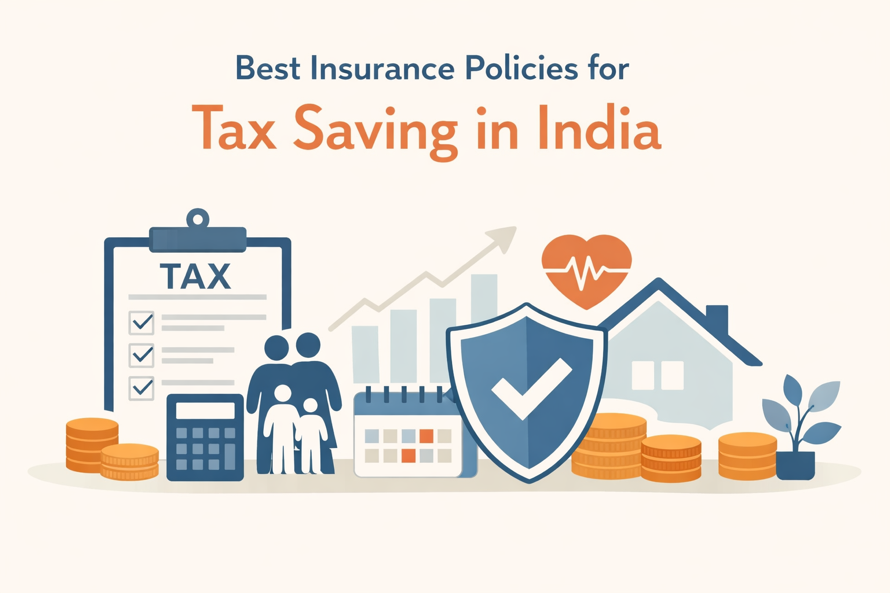
Every tax filing season in India brings a familiar moment of reflection. People look at their earnings, their aspirations, and the rising responsibilities that shape their future. Somewhere in that mix lurks an essential question: which are the best insurance policies for tax saving in India, and how do they fit into the financial scheme of things of an Indian household?
Insurance today is no longer an optional backup plan. It has evolved into a financial anchor that supports families through uncertainty while gently shaping long-term savings behaviour. The combination of protection and tax efficiency has made insurance policies powerful, multipurpose tools across urban metros, semi-urban centres, and fast-growing Tier-II cities. Understanding these policies is a practical step to building stability, financial literacy, and better wealth-building habits.
Understanding Best Insurance Policies For Tax Saving In India
When people refer to the best insurance policies for tax saving in India, they are talking about insurance plans that deliver two clear advantages at the same time:
(1) protection for dependents, and
(2) tax-efficient benefits under India’s legal framework.
These policies simplify the financial journey for millions. In a country where families juggle education planning, healthcare costs, housing aspirations, and retirement goals simultaneously, insurance becomes a steadying force. Sections 80C, 80D, and 10 (10D) of the Income Tax Act support this behaviour by rewarding individuals who channel money into structured protection and savings.
More Indians are adopting these policies each year because they bridge the gap between emotional security and financial responsibility. They help people sleep peacefully at night while also creating a disciplined path toward building long-term wealth.
Below is a table highlighting the types of plans commonly recognized as the best insurance policies for tax saving in India, updated as of 2025.
Best Insurance Policies for Tax Saving in India (Updated as of 2025)
| Insurance Policy Type | Key Benefit Summary | Relevant Tax Sections | Ideal For |
|---|---|---|---|
| Term Insurance | Highest coverage at low cost; payouts are exempt from tax | 80C, 10(10D) | Young earners, families with dependents |
| ULIPs | Long-term market-linked growth + protection with tax advantages | 80C, 10(10D) | Goal-based investors seeking growth |
| Health Insurance | Hospitalization coverage with strong tax benefits | 80D | Individuals, families, and senior citizens |
| Guaranteed Savings Plans | Predictable maturity amount with tax-free benefits | 80C, 10(10D) | Risk-averse investors |
| Children’s Plans | Education and milestone security with tax exemptions | 80C, 10(10D) | Parents planning for their child’s future |
| Pension/Annuity Plans | Retirement income + tax-deductible contributions | 80CCC | Pre-retirement planners |
These categories reflect how insurance has become an essential part of the modern Indian household’s financial toolkit.
“Start investing with confidence! Explore
0 demat account
and grow your wealth.”
Key Benefits of Best Insurance Policies For Tax Saving In India
Choosing the best insurance policies for tax saving in India is more than a compliance exercise before the annual tax filing deadline. It is a forward-looking habit that shapes stability, resilience, and financial maturity.
The benefits extend across multiple layers:
• Tax deductions under Section 80C
Premiums for life insurance reduce taxable income by up to ₹1.5 lakh per year.
• Health protection under Section 80D
Premiums for health plans, including family floaters and senior-parent policies, reduce tax burden further.
• Tax-free maturity benefits under Section 10(10D)
This helps wealth grow without tax erosion, an advantage that compounds powerfully over decades.
• Wealth-building discipline
Long-term insurance commitments encourage savings habits in a country where irregular investments are common.
• Emotional security
Families receive structured protection against unexpected challenges, from health emergencies to income instability.
Together, these layers create a more stable financial landscape for Indian households facing rising costs and fluctuating income cycles.
A Step-by-Step Guide
Below is a practical walkthrough that simplifies how individuals can identify and subscribe to some of the best insurance policies for tax saving in India.
Step 1: Getting Started
• Start by defining personal goals—family safety, retirement, health protection, children’s education, or wealth creation.
• Match each goal with the appropriate policy category.
• Identify the tax sections that apply to the chosen policy so you understand your exact deduction potential.
Step 2: Required Documents
• Aadhaar card and PAN card for verification.
• Recent photographs required.
• Past medical records (for health insurance plans).
• Bank account details for auto-debit mandates.
Step 3: How to Execute or Invest
• Compare policies through IRDAI-registered insurers or verified digital aggregators.
• Check claim settlement ratios, premium affordability, lock-in periods, and exclusions.
• Use online premium calculators to estimate long-term outflow.
• Complete e-KYC and submit income or health declarations if necessary.
Step 4: Monitoring and Exit Strategy
• Review your policy annually as life situations change—marriage, parenthood, income growth.
• Track ULIP fund values and switch allocations if goals shift.
• Keep premium payments timely to preserve benefits and avoid lapses.
• Record maturity dates, tax implications, and reinvestment opportunities to maintain financial continuity.
Risks and Challenges
Even the best insurance policies for tax saving in India come with their share of downsides. Individuals must understand these challenges to make informed decisions.
Market-linked plans like ULIPs can experience unpredictable NAV fluctuations during economic turbulence. Health insurance premiums rise with age, prompting early adoption. Long-term savings plans ask for steady premium payments, which can strain budgets during uncertain income phases.
Regulatory updates may shift the tax landscape over time. Insurance literacy varies widely across India, leading to misunderstandings about exclusions, waiting periods, or claim procedures. Documentation needs to stay accurate and accessible.
None of these challenges diminishes the significance of these policies. They simply highlight the need for awareness, discipline, and clarity while choosing the best insurance policies for tax saving in India.
Expert Tips for Indians
Here are some tips for your ready reference:
- Begin with term insurance—the foundation of a safe, future-ready financial life.
- Add health insurance early, when premiums are still manageable and coverage generous.
- Use ULIPs to combine disciplined equity exposure with long-horizon goals.
- Focus on insurers with consistently high claim settlement ratios.
- In health insurance, go for a family floater plan rather than separate individual policies to optimize premium value.
- Add riders thoughtfully—critical illness, accidental cover, or premium waiver when necessary.
- Use tax benefits under 80C and 80D fully each year.
- Review policies after major life changes—new child, new home, new job.
- Organize all policy documents digitally for quicker claim processing.
- Do not wait until the tax filing deadline—start evaluating options early in the financial year to make better decisions.
- Consider increasing your sum insured every few years to match rising lifestyles and inflation. Stagnant coverage becomes less relevant as medical costs rise.
- Keep an emergency fund separate. Insurance supports major shocks, but day-to-day financial stability still depends on liquidity.
- Explore long-term plans that align with milestones such as marriage, children’s education, home-buying, and retirement. Alignment improves discipline.
- Verify insurer solvency ratios before finalizing a policy. It reflects the company’s long-term fiscal health and its ability to honour claims.
- Teach family members where documents, policy numbers, and claim processes are stored. Shared awareness prevents confusion during urgent moments.
These pointers help Indian households explore the best insurance policies for tax saving in India.
Conclusion
Selecting the best insurance policies for tax saving in India is essentially a journey toward security and long-term financial planning. Term insurance creates a protective shield for families. Health insurance safeguards savings against medical costs. ULIPs blend wealth creation with life cover. Guaranteed and children’s plans support predictable milestones. Retirement policies help people live with dignity in their later years.
Choosing the best insurance policies for tax saving in India becomes easier with careful review, regular monitoring, and clear alignment with personal goals. With time, these policies do more than protect income—they guide families into a structured, resilient, and tax-efficient financial future.
FAQs on Best Insurance Policies for Tax Saving in India
What are the best insurance policies for tax saving in India?
Best is relative. There are insurance plans such as term insurance, health insurance, and pension plans that provide financial protection and offer tax deductions or exemptions under the Income Tax Act.
How do best insurance policies for tax saving in India work?
They allow individuals to pay premiums toward coverage and also receive tax benefits alongside wealth-creation or health-protection features.
What are the benefits of best insurance policies for tax saving in India?
Tax deductions, long-term wealth creation, healthcare security, maturity benefits, and financial stability.
Are there any risks involved in best insurance policies for tax saving in India?
Market-linked fluctuations, rising health premiums, long-term payment commitments, and occasional regulatory changes.
Who should consider best insurance policies for tax saving in India?
Working professionals, families with dependents, entrepreneurs, senior citizens, and long-term planners.
How can I get started with best insurance policies for tax saving in India?
By defining goals, comparing policies, gathering documents, applying through trusted platforms, and reviewing plans annually.
Disclaimer
The stocks mentioned in this article are not recommendations. Please conduct your own research and due diligence before investing. Investment in securities market are subject to market risks, read all the related documents carefully before investing. Please read the Risk Disclosure documents carefully before investing in Equity Shares, Derivatives, Mutual fund, and/or other instruments traded on the Stock Exchanges. As investments are subject to market risks and price fluctuation risk, there is no assurance or guarantee that the investment objectives shall be achieved. Lemonn (Formerly known as NU Investors Technologies Pvt. Ltd) do not guarantee any assured returns on any investments. Past performance of securities/instruments is not indicative of their future performance.
Related Posts

Download Lemonn
Download my app for share market trading, ipo investment, trading account, and all your investment needs.



