Mutual Fund Redemption: What Is It, and How to Redeem Fund Units
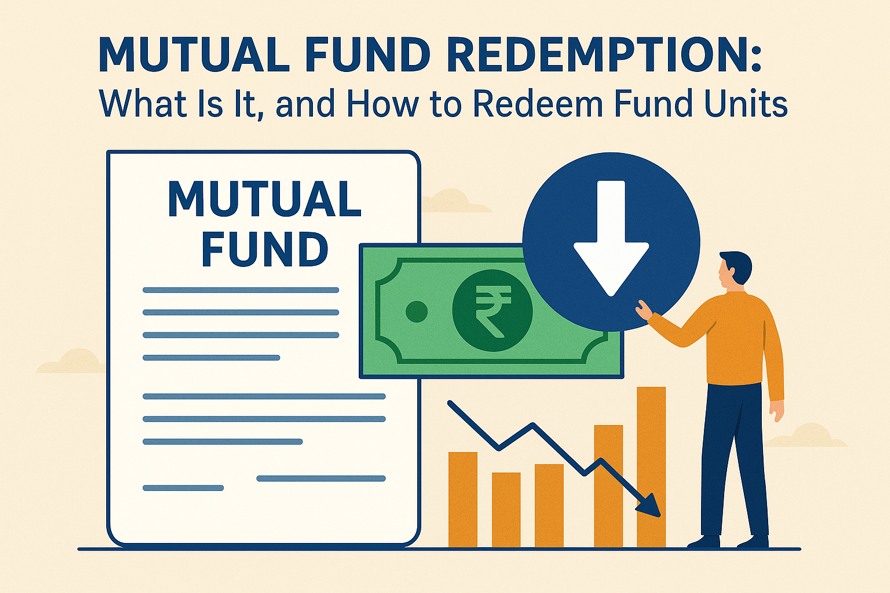
Every investor begins a journey with a dream, a goal, a plan, a purpose. But there comes a moment when that journey reaches a pause. Maybe you’ve met your target. Maybe the market feels uncertain. Or maybe you need money. That’s where mutual fund redemption steps in.
Redemption isn’t complicated, but it’s important. It’s the process of withdrawing your investment, and understanding how it works can save you time, taxes, and regret. Let’s break it down in a way that feels simple, human, and absolutely practical.
Meaning of Redemption in Mutual Funds
In mutual funds, redemption means selling your units back to the fund house and receiving the current value of those units in your bank account. It’s how you “cash out.”
For example, if the fund’s NAV (Net Asset Value) is ₹50 and you hold 1,000 units, your redemption value is ₹50,000, minus any exit load or applicable tax. That’s the essence of mutual fund redemption: getting your invested money back at the current market value of your fund.
Why Investors Redeem Their Fund Units
Every investor redeems for a reason. Some do it because their goals, like buying a house or paying tuition, are complete. Others exit because they’ve spotted better investment opportunities.
“Start investing with confidence! Explore the best
mutual funds
and grow your wealth.”
Things to Know Before Redeeming Mutual Funds
Redemption is easy to execute, but smart investors take a minute to understand its implications. What looks like a simple withdrawal could affect returns, taxes, and long-term goals if done in haste.
Exit Load and Lock-in Periods
When you redeem before a specified period, the fund may charge an exit load, a small fee (usually 1%) for early withdrawal. It’s the fund’s way of discouraging quick exits and protecting long-term investors.
Lock-in periods are different. Funds like ELSS (Equity Linked Savings Schemes) come with a three-year lock-in. You can’t redeem these units before that period. So, before redeeming, always check your fund’s exit load structure and lock-in clause.
Tax Implications of Redemption
Taxes depend on the type of mutual fund and how long you’ve held it.
For equity mutual funds:
- Redeeming within 12 months = 15% short-term capital gains (STCG) tax for holdings before July 23, 2024. For investments made after this date, STCG will apply at 20%.
- Redeeming after 12 months = 12.5% long-term capital gains (LTCG) tax on profits above ₹1.25 lakh per year.
Securities Transaction Tax (STT) is also applicable on the sale of these units.
For debt mutual funds purchased after April 1, 2023:
- Gains are added to your income and taxed according to your income slab. Indexation benefits have been removed. In essence, they are treated as short-term capital gains.
For debt mutual funds purchased before April 1, 2023:
For investments made on or after April 1, 2023, gains will be treated as short-term capital gains (STCG) and taxed at the investor’s slab rate.
For investments in debt mutual funds made before April 1, 2023, taxation will vary depending on the duration of the units held. If held for more than two years, LTCG at the rate of 12.5% will apply without indexation benefits.
If you plan your mutual fund redemption with tax in mind, you can time your exits better and keep more of your gains.
Impact on Long-Term Investment Goals
Every time you redeem, your investment base shrinks. That means less compounding power. So, before redeeming, ask yourself: “Am I stopping growth or redirecting it?”
Different Ways to Redeem Mutual Fund Units
Gone are the days of long queues and paper forms. Today, redemption is a few clicks away. Whether you invested directly with a fund house or through a broker, the process is quick and digital.
Redeeming Through AMC’s Website or App
If you invested directly through the AMC (Asset Management Company), you can redeem via their website or app.
Here’s how it works:
- Log in using your PAN or folio number.
- Select the scheme you want to redeem.
- Enter the number of units or the amount you want to withdraw.
- Confirm and submit your request.
The amount usually reaches your account within one to three working days, depending on the type of fund.
Redeeming Through Broker or Demat Account
If you’ve invested via online brokers or trading platforms, redemption is even simpler.
You log into your dashboard, select the fund, tap “Redeem,” and confirm. Your account and portfolio update automatically, and the redemption gets processed.
This is ideal for investors who prefer managing everything under one roof, from SIPs to stocks.
Redeeming Through Registrar (CAMS/KFintech)
Registrars like CAMS and KFintech act as back-end service providers for multiple AMCs.
If you have funds from different companies, you can redeem them all from a single login on these portals. It’s fast, secure, and extremely convenient for multi-AMC investors.
Offline Redemption via Physical Form Submission
For those who still trust paper more than pixels, offline redemption is still available.
You fill out a redemption request form, attach a cancelled cheque, and submit it at the AMC’s office or registrar branch.
Step-by-Step Mutual Fund Redemption Process
Logging into AMC/Broker Platform
Begin by logging in to your AMC, broker, or registrar account. Check that your KYC, bank details, and contact info are updated; missing data can delay the process.
Selecting the Fund and Number of Units to Redeem
Choose the mutual fund you want to redeem. You can either enter the number of units or the total amount you wish to withdraw.
Most portals show your total holding value, NAV, and potential redemption amount, making it easier to decide.
Confirming Redemption Request
After reviewing your details, confirm the redemption.
You’ll receive an acknowledgement number via email or SMS. This acts as your proof of request. Keep it handy in case you need to track the payout.
Processing Time and Payout of Redemption Proceeds
Processing time depends on fund type:
- Liquid Funds: Within 1 business day (T+1).
- Equity & Hybrid Funds: Within 2 business days (T+2).
Once processed, the money is directly transferred to your registered bank account. Some AMCs even offer instant redemption for liquid funds up to ₹50,000 per day.
Alternatives to Redemption
Sometimes, you don’t need to exit; you just need a little flexibility. Instead of redeeming everything, investors can explore smarter alternatives.
Switching to Another Fund Within the Same AMC
Switching allows you to move your money from one scheme to another within the same AMC, say, from a high-risk mid-cap fund to a balanced hybrid fund.
This keeps your capital working while aligning with your risk tolerance. It’s considered a redemption from one fund and a purchase in another, but is processed instantly.
Systematic Withdrawal Plan (SWP)
An SWP lets you withdraw a fixed amount at regular intervals.
It’s a great tool for generating consistent income, especially for retirees or anyone wanting cash flow without stopping compounding.
For instance, withdrawing ₹10,000 monthly from a ₹5 lakh corpus is far smarter than redeeming everything at once.
Partial Redemption vs. Full Redemption
Partial redemption means you withdraw only what’s needed and keep the rest invested. It’s a balanced way to access liquidity while maintaining long-term growth.
Expert Tips for Mutual Fund Investors
When Should You Redeem Mutual Fund Units?
Timing matters. Financial experts suggest redeeming only when:
- You’ve met the goal the fund was meant to achieve.
- The fund has consistently underperformed its benchmark for over a year.
- You’re rebalancing your portfolio after major gains or life changes.
Never redeem just because of short-term volatility. Markets breathe, what feels like panic today often becomes an opportunity tomorrow.
Tax-Saving Strategies Around Redemption
Redemption timing can make a big difference in taxes.
If you’re close to the one-year mark in equity funds, hold on, your gains may qualify for long-term rates. For debt funds, check if redeeming after March 31 moves gains to the next financial year, reducing your taxable income this year.
Tax efficiency often adds more to your portfolio than you realize.
Avoiding Emotional Redemption During Market Fluctuations
Markets rise, fall, and rise again. The mistake most investors make isn’t choosing the wrong fund; it’s exiting at the wrong time.
Selling when markets fall locks in losses; staying invested lets compounding do the heavy lifting.
Instead of reacting emotionally, schedule regular portfolio reviews every six months.
Conclusion – Making Smart Redemption Decisions
Mutual fund redemption is an inevitable part of every investor’s journey. But how you redeem matters more than when you redeem.
Understanding exit loads, taxes, and alternatives like SWPs ensures you stay in control of your money. The goal is simple: exit smartly, not suddenly.
FAQs
Q1: How long does it take to get money after redeeming mutual funds?
Most AMCs credit redemption proceeds within 1–2 working days, depending on fund type.
Q2: Is there any penalty for redeeming mutual funds before maturity?
Yes, certain funds charge an exit load (usually 1%) if redeemed early. Always check the scheme details.
Q3: Can I redeem mutual funds online?
Yes, redemption is possible through AMC portals, broker apps, or registrar websites like CAMS and KFintech.
Q4: Can I redeem only a part of my mutual fund investment?
Absolutely. Partial redemption lets you withdraw a chosen amount while keeping the rest invested for continued growth.
Disclaimer
The stocks mentioned in this article are not recommendations. Please conduct your own research and due diligence before investing. Investment in securities market are subject to market risks, read all the related documents carefully before investing. Please read the Risk Disclosure documents carefully before investing in Equity Shares, Derivatives, Mutual fund, and/or other instruments traded on the Stock Exchanges. As investments are subject to market risks and price fluctuation risk, there is no assurance or guarantee that the investment objectives shall be achieved. Lemonn (Formerly known as NU Investors Technologies Pvt. Ltd) do not guarantee any assured returns on any investments. Past performance of securities/instruments is not indicative of their future performance.
Related Posts


Download Lemonn
Download my mutual fund app - your mutual funds, stock, invest in ipo, mf, trade invest hub with demat account features.