Signs That Prove You Are Financially Stable
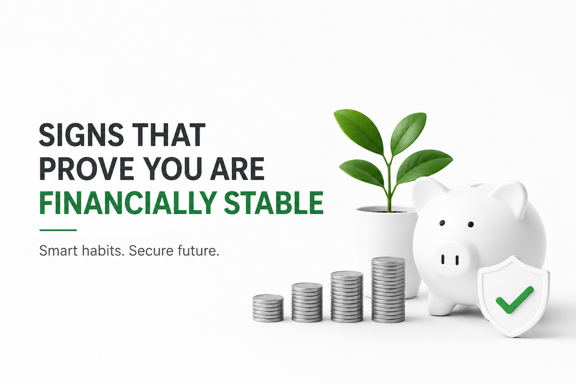
Financial stability is not about earning a huge salary or living a luxurious lifestyle. It is about having control over your money, meeting your financial obligations with confidence, and preparing for the future. If your finances support your lifestyle without constant stress, you are likely on the right track.
Here are the most common signs that show you are financially stable and building long term financial security.
What Does Financial Stability Mean?
Financial stability means you can comfortably manage your daily expenses, handle unexpected costs, and work toward future financial goals without relying on debt. It reflects healthy financial habits rather than a specific income level.
A financially stable person has a balanced approach to earning, spending, saving, and investing.
1. You Consistently Save Money Every Month
One of the strongest indicators of financial stability is regular saving. Whether you save 10% or 30% of your income, consistency matters more than the amount.
Your savings may include:
- An emergency fund
- Retirement savings
- Investment contributions
- Short term savings for planned expenses
Even during months with higher expenses, you still make saving a priority.
“Start investing with confidence! Explore
0 demat account
and grow your wealth.”
2. You Have an Emergency Fund
Life is unpredictable. Medical emergencies, job loss, or unexpected repairs can happen at any time.
A financially stable person usually has an emergency fund that covers at least three to six months of essential living expenses. This prevents the need to rely on credit cards or personal loans during difficult situations.
| Emergency Fund Size | Financial Security Level |
|---|---|
| Less than 1 month | Low |
| 1 to 3 months | Moderate |
| 3 to 6 months | Good |
| More than 6 months | Excellent |
3. Your Debt Is Under Control
Having debt does not automatically mean you are financially unstable. The key is whether your debt is manageable.
Signs your debt is healthy include:
- You pay your credit card balance in full every month.
- Loan repayments fit comfortably within your monthly budget.
- You rarely miss payment deadlines.
- High interest debt is minimal or completely eliminated.
Managing debt responsibly improves both your financial health and credit profile.
4. You Live Within Your Means
One of the clearest signs of financial stability is spending less than you earn.
This does not mean avoiding enjoyable experiences. Instead, it means making intentional spending decisions without depending on borrowed money to maintain your lifestyle.
People who consistently live within their means are better positioned to build long term wealth.
5. You Can Handle Unexpected Expenses Without Panic
If your car breaks down or a medical bill arrives unexpectedly, your first thought is not, “How will I pay for this?”
Instead, you already have savings, insurance, or available funds to manage the expense.
This level of financial preparedness reduces stress and protects your long term financial goals.
6. You Invest for the Future
Saving protects your money, while investing helps it grow.
Financially stable individuals often invest regularly through options such as:
- Mutual funds
- Stocks
- Exchange traded funds (ETFs)
- Retirement accounts
- Bonds
Regular investing supports wealth creation through the power of compounding over time.
7. You Have Clear Financial Goals
Financial stability is easier to achieve when you know what you are working toward.
Your goals may include:
- Buying a home
- Building retirement savings
- Funding your children’s education
- Starting a business
- Achieving financial independence
Having measurable goals makes financial decisions more focused and intentional.
8. You Are Not Constantly Worried About Money
Everyone thinks about money occasionally. However, financially stable people are not consumed by financial anxiety every day.
Instead of worrying about paying next month’s bills, they focus on improving their investments, increasing savings, or reaching future milestones.
Reduced financial stress is often one of the biggest rewards of good money management.
9. Your Income Covers Your Lifestyle Comfortably
Financial stability is not determined by income alone.
Someone earning a modest salary while controlling expenses can be more financially secure than someone with a much higher income who spends everything they earn.
A stable financial situation means your regular income comfortably covers:
- Housing
- Food
- Transportation
- Insurance
- Savings
- Leisure activities
without creating financial pressure.
10. You Review Your Finances Regularly
Financially stable people stay informed about their money.
They regularly review:
- Monthly budgets
- Investment performance
- Savings progress
- Debt balances
- Credit reports
Regular financial checkups help identify problems early and keep long term plans on track.
Habits That Build Financial Stability
Financial stability is rarely achieved overnight. It is usually the result of consistent habits over many years.
Some of the most effective habits include:
- Creating and following a monthly budget
- Avoiding unnecessary debt
- Saving before spending
- Investing consistently
- Increasing income through skill development
- Maintaining adequate insurance coverage
- Reviewing financial goals regularly
These habits strengthen your financial foundation regardless of your income level.
Common Misconceptions About Financial Stability
Many people misunderstand what financial stability really means.
| Myth | Reality |
|---|---|
| High income guarantees financial stability | Spending habits matter just as much as income. |
| Debt always means financial problems | Responsible debt management can support financial growth. |
| Investing is only for wealthy people | Small, regular investments can build wealth over time. |
| Saving alone is enough | A combination of saving, investing, and planning creates lasting financial security. |
How to Improve Your Financial Stability
If you do not identify with every sign above, do not worry. Financial stability is a journey.
Start with these practical steps:
- Track your monthly income and expenses.
- Build an emergency fund.
- Pay off high interest debt.
- Create a realistic budget.
- Invest regularly for long term goals.
- Increase your financial knowledge.
- Review your progress every few months.
Small, consistent improvements often lead to significant financial progress over time.
Frequently Asked Questions
Q. What is the biggest sign of financial stability?
The biggest sign is consistently living within your means while maintaining savings, managing debt responsibly, and preparing for future financial goals.
Q. How much should I have in an emergency fund?
Most financial experts recommend saving enough to cover three to six months of essential living expenses. People with irregular income may benefit from saving even more.
Q. Can someone with loans still be financially stable?
Yes. Many financially stable people have mortgages, education loans, or other manageable debt. The important factor is whether repayments fit comfortably within their budget.
Q. Is financial stability the same as being wealthy?
No. Financial stability means having control over your finances and meeting your obligations with confidence. Wealth refers to the value of your accumulated assets.
Q. How long does it take to become financially stable?
The timeline varies depending on income, expenses, debt, and financial goals. Building healthy financial habits consistently is more important than achieving stability quickly.
Key Takeaways
- Financial stability is about managing money wisely, not earning the highest income.
- Living within your means is one of the strongest indicators of financial health.
- An emergency fund provides protection against unexpected expenses.
- Regular saving and investing support long term financial security.
- Responsible debt management strengthens financial stability.
- Clear financial goals help guide better money decisions.
- Reviewing your finances regularly keeps you on track toward lasting financial success.
Disclaimer
The stocks mentioned in this article are not recommendations. Please conduct your own research and due diligence before investing. Investment in securities market are subject to market risks, read all the related documents carefully before investing. Please read the Risk Disclosure documents carefully before investing in Equity Shares, Derivatives, Mutual fund, and/or other instruments traded on the Stock Exchanges. As investments are subject to market risks and price fluctuation risk, there is no assurance or guarantee that the investment objectives shall be achieved. Lemonn (Formerly known as NU Investors Technologies Pvt. Ltd) do not guarantee any assured returns on any investments. Past performance of securities/instruments is not indicative of their future performance.
Related Posts


Download Lemonn
Download my app for share market trading, ipo investment, trading account, and all your investment needs.