
Specialised Investment Funds (SIFs): The Complete Guide for Investors (2026)
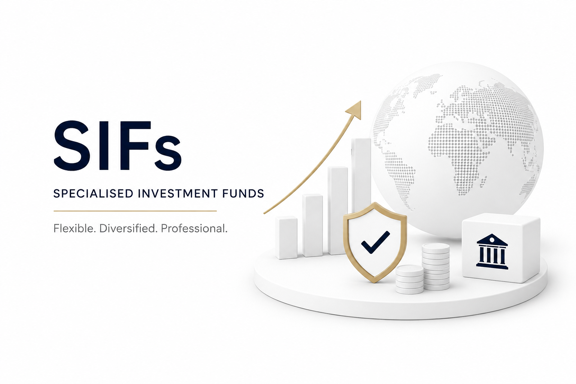
Specialised Investment Funds (SIFs) have become one of the most attractive investment structures for institutional and sophisticated investors seeking flexibility, diversification, and access to alternative asset classes. Originally introduced in Luxembourg, SIFs are designed to accommodate a wide range of investment strategies while benefiting from a well-established regulatory framework.
Whether you’re a fund manager, institutional investor, family office, or high-net-worth individual, understanding how Specialised Investment Funds work can help you determine whether they fit your investment objectives.
In this guide, you’ll learn what a Specialised Investment Fund is, how it operates, its advantages, potential risks, taxation, regulatory requirements, and why Luxembourg remains a global hub for SIFs.
What Is a Specialised Investment Fund (SIF)?
A Specialised Investment Fund (SIF) is a regulated investment vehicle created primarily for well-informed investors. Unlike traditional retail investment funds, SIFs offer greater flexibility in investment strategy while remaining subject to regulatory oversight.
Luxembourg introduced the SIF regime in 2007 to attract international investors seeking efficient, flexible, and globally recognized fund structures.
In simple terms
A Specialised Investment Fund allows professional investors to pool capital into a single investment vehicle that can invest across multiple asset classes while benefiting from a favorable regulatory and tax environment.
“Start investing with confidence! Explore
0 demat account
and grow your wealth.”
Quick Facts About SIFs
| Feature | Details |
|---|---|
| Jurisdiction | Primarily Luxembourg |
| Investor Type | Well-informed investors |
| Regulation | CSSF (Commission de Surveillance du Secteur Financier) |
| Investment Restrictions | Highly flexible |
| Eligible Assets | Almost any asset class |
| Risk Diversification | Required |
| Tax Treatment | Generally tax-efficient |
| Typical Investors | Institutions, family offices, professional investors |
How Does a Specialised Investment Fund Work?
A Specialised Investment Fund pools money from qualified investors and invests according to a predefined strategy outlined in its offering documents.
The fund is managed by experienced investment professionals who allocate assets while ensuring compliance with Luxembourg regulations.
The process typically follows these steps:
- Investors commit capital.
- The fund raises assets.
- Professional managers execute the investment strategy.
- Income and capital gains accumulate within the fund.
- Investors receive returns according to their ownership.
Who Can Invest in a SIF?
Specialised Investment Funds are not designed for retail investors.
Eligible investors generally include:
- Institutional investors
- Professional investors
- Banks
- Insurance companies
- Pension funds
- Family offices
- High-net-worth individuals who qualify as well-informed investors
To qualify, investors typically meet professional knowledge requirements or commit a minimum investment amount, subject to applicable regulations.
Key Features of Specialised Investment Funds
1. Investment Flexibility
One of the biggest strengths of SIFs is their broad investment mandate.
They may invest in:
- Private equity
- Venture capital
- Hedge funds
- Infrastructure
- Commercial real estate
- Renewable energy
- Debt instruments
- Commodities
- Digital assets (where permitted under applicable rules)
- Listed securities
Unlike many traditional funds, SIFs have few restrictions on asset allocation.
2. Risk Diversification
Although investment freedom is extensive, Luxembourg regulations require SIFs to maintain an appropriate level of diversification.
A commonly referenced guideline is that a SIF should generally avoid investing more than approximately 30% of its assets or commitments in a single investment, issuer, or exposure, unless justified under applicable rules or guidance.
3. Professional Management
Most SIFs appoint:
- Investment managers
- Depositary banks
- Fund administrators
- Auditors
- Legal advisors
- Compliance professionals
This governance framework helps ensure operational efficiency and regulatory compliance.
4. Regulatory Oversight
Luxembourg’s financial regulator, the Commission de Surveillance du Secteur Financier (CSSF), supervises SIFs.
While the framework is less restrictive than that of retail funds, regulatory oversight provides confidence for international investors.
Types of Specialised Investment Funds
Depending on investment objectives, a SIF may be structured as:
Open-Ended SIF
Investors can subscribe to or redeem units periodically.
Suitable for:
- Hedge funds
- Liquid investment strategies
Closed-Ended SIF
Capital remains invested for a fixed period.
Suitable for:
- Private equity
- Infrastructure
- Real estate
- Venture capital
Umbrella SIF
An umbrella structure contains multiple sub-funds under a single legal entity.
Benefits include:
- Cost efficiency
- Operational flexibility
- Segregated assets and liabilities between sub-funds (subject to applicable law)
- Multiple investment strategies within one structure
Legal Structures Available for SIFs
Luxembourg offers several legal forms, including:
- Investment company with variable capital (SICAV)
- Investment company with fixed capital (SICAF)
- Common fund (FCP)
- Limited partnership structures
- Corporate entities recognized under Luxembourg law
The appropriate structure depends on investor preferences, governance requirements, and tax considerations.
Advantages of Specialised Investment Funds
Broad Investment Freedom
Managers can pursue a wide variety of investment strategies without many of the limitations imposed on retail funds.
International Recognition
Luxembourg is widely recognized as one of the world’s leading cross-border fund domiciles.
Tax Efficiency
Many SIFs benefit from a favorable tax framework, making them attractive for international investment structures.
Strong Investor Protection
Professional service providers and regulatory supervision contribute to investor confidence.
Flexible Structuring
SIFs can be tailored to meet the needs of institutional investors and family offices.
Efficient Cross-Border Distribution
Luxembourg funds are well-known among global institutional investors and service providers.
Risks of Investing in a SIF
Like any investment vehicle, SIFs involve risks.
Potential risks include:
- Market volatility
- Liquidity constraints
- Concentration risk
- Credit risk
- Currency fluctuations
- Regulatory changes
- Valuation uncertainty for illiquid assets
- Operational and counterparty risk
Investors should review offering documents carefully and assess whether the investment aligns with their objectives and risk tolerance.
Taxation of Specialised Investment Funds
One of the primary attractions of Luxembourg SIFs is their tax treatment.
In general:
- SIFs are typically exempt from Luxembourg corporate income tax.
- They are generally exempt from municipal business tax.
- They are generally exempt from Luxembourg net wealth tax.
- Instead, they are usually subject to an annual subscription tax (taxe d’abonnement), subject to applicable exemptions.
The tax position of investors depends on their country of residence and individual circumstances. Professional tax advice is recommended before investing.
SIF vs UCITS
| Feature | SIF | UCITS |
| Target Investors | Well-informed investors | Retail investors |
| Investment Restrictions | Flexible | Strict |
| Regulation | Moderate | High |
| Eligible Assets | Broad | More restricted |
| Risk Profile | Higher | Generally lower |
| Distribution | Primarily professional investors | Global retail markets |
SIF vs RAIF
| Feature | SIF | RAIF |
| CSSF Approval | Required | Not required for the fund itself |
| Regulatory Supervision | Direct | Indirect through the AIFM framework |
| Time to Market | Longer | Typically faster |
| Investor Type | Well-informed investors | Well-informed investors |
| Investment Flexibility | High | High |
Why Luxembourg Is the Leading Jurisdiction for SIFs
Luxembourg has established itself as a global investment fund center because of its:
- Political stability
- Experienced financial ecosystem
- International investor confidence
- Strong legal framework
- Large network of fund service providers
- Cross-border expertise
- Supportive regulatory environment
These strengths continue to attract global asset managers and institutional investors.
How to Set Up a Specialised Investment Fund
The process generally includes:
- Define the investment strategy.
- Select the legal structure.
- Appoint a fund manager and key service providers.
- Prepare legal and offering documentation.
- Complete applicable regulatory approvals.
- Launch the fund and accept investor subscriptions.
- Maintain ongoing compliance, reporting, and governance.
Because fund formation involves legal, regulatory, and tax considerations, professional advice is essential.
Best Practices Before Investing
Before committing capital to a SIF:
- Understand the investment strategy.
- Review historical performance where available.
- Assess liquidity terms.
- Evaluate the management team’s experience.
- Review fees and expenses.
- Understand the fund’s risk profile.
- Consider tax implications in your home jurisdiction.
- Read the offering documents thoroughly.
Frequently Asked Questions
Q. What does SIF stand for?
SIF stands for Specialised Investment Fund, a Luxembourg investment vehicle intended for well-informed investors.
Q. Who can invest in a SIF?
Institutional investors, professional investors, family offices, and qualifying high-net-worth individuals can typically invest, subject to eligibility requirements.
Q. Are SIFs regulated?
Yes. Luxembourg SIFs are regulated under the applicable legal framework and supervised by the CSSF.
Q. Are SIFs tax efficient?
SIFs are generally designed to be tax efficient at the fund level under Luxembourg law, although investors should obtain advice regarding their personal tax position.
Q. Can SIFs invest in private equity?
Yes. Private equity is one of the most common asset classes held by Specialised Investment Funds.
Q. What is the difference between a SIF and a UCITS fund?
UCITS funds are designed for retail investors and operate under stricter investment rules, while SIFs are intended for well-informed investors and offer greater investment flexibility.
Key Takeaways
- Specialised Investment Funds are designed for well-informed investors.
- Luxembourg remains the leading jurisdiction for SIF structures.
- SIFs provide broad investment flexibility across traditional and alternative assets.
- They combine regulatory oversight with a comparatively flexible framework.
- Professional advice is essential when establishing or investing in a SIF.
Disclaimer
The stocks mentioned in this article are not recommendations. Please conduct your own research and due diligence before investing. Investment in securities market are subject to market risks, read all the related documents carefully before investing. Please read the Risk Disclosure documents carefully before investing in Equity Shares, Derivatives, Mutual fund, and/or other instruments traded on the Stock Exchanges. As investments are subject to market risks and price fluctuation risk, there is no assurance or guarantee that the investment objectives shall be achieved. Lemonn (Formerly known as NU Investors Technologies Pvt. Ltd) do not guarantee any assured returns on any investments. Past performance of securities/instruments is not indicative of their future performance.
Related Posts

Download Lemonn
Download my app for share market trading, ipo investment, trading account, and all your investment needs.



