How to Open a Demat Account: A Beginner’s Guide
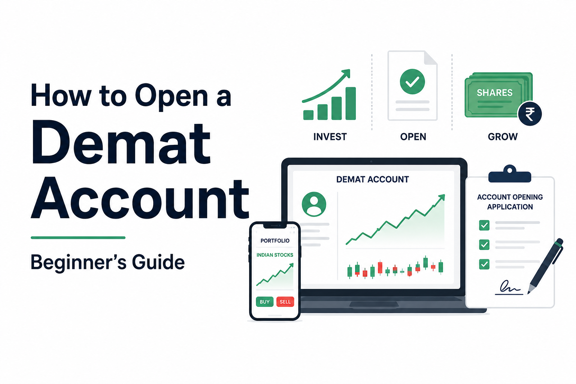
Investing in stocks, ETFs, mutual funds, and other securities has become easier than ever. However, before you can start investing in the Indian stock market, you’ll need a Demat account.
A Demat account acts like a digital locker for your investments, allowing you to hold shares and securities electronically instead of in physical form. Today, opening a Demat account can take just a few minutes online.
In this beginner-friendly guide, you’ll learn what a Demat account is, why you need one, how to open it, and what factors to consider when choosing a broker.
What Is a Demat Account?
A Demat (Dematerialized) account is used to store financial securities in electronic format. It eliminates the need for physical share certificates and makes buying, selling, and tracking investments much simpler.
With a Demat account, you can hold:
- Stocks and shares
- Exchange-Traded Funds (ETFs)
- Bonds and debentures
- Government securities
- REITs and InvITs
- Sovereign Gold Bonds (SGBs)
Every investor who wants to trade or invest in the stock market needs a Demat account.
Why Do You Need a Demat Account?
A Demat account offers several advantages:
- Secure storage of investments
- Faster settlement of trades
- Easy portfolio tracking
- Reduced paperwork
- Convenient online investing
- Automatic credit of dividends and bonuses
Without a Demat account, investing in most listed securities is not possible.
“Start investing with confidence! Explore
0 demat account
and grow your wealth.”
How Does a Demat Account Work?
When you buy shares:
- The shares are credited to your Demat account.
- The securities are stored electronically.
- You can view them through your broker’s platform.
When you sell shares:
- The securities are debited from your Demat account.
- The sale proceeds are credited to your linked bank account.
The process is seamless and fully digital.
Documents Required to Open a Demat Account
Before applying, keep the following documents ready:
Mandatory Documents
- PAN Card
- Aadhaar Card
- Mobile number
- Email ID
- Bank account details
Additional Documents (if required)
- Signature proof
- Income proof (for derivatives trading)
- Cancelled cheque
Most brokers verify these documents digitally through e-KYC.
Step-by-Step Guide to Open a Demat Account
Step 1: Choose a SEBI-Registered Broker
The first step is selecting a reliable stockbroker.
Look for:
- User-friendly platform
- Competitive brokerage charges
- Strong customer support
- Research and educational resources
- Secure trading infrastructure
For beginners, choosing a platform with a simple interface and educational tools can make the learning curve much easier.
Step 2: Complete Online Registration
Visit the broker’s website or mobile app.
You’ll typically need to provide:
- Mobile number
- Email address
- PAN details
An OTP verification process is usually required.
Step 3: Complete KYC Verification
Upload:
- PAN card
- Aadhaar card
- Photograph
- Signature
Most brokers use Aadhaar-based e-KYC for quick verification.
Step 4: Link Your Bank Account
Provide your:
- Account number
- IFSC code
This account will be used for fund transfers and withdrawals.
Step 5: Complete In-Person Verification (IPV)
Many brokers conduct IPV through:
- Video verification
- Selfie verification
- Live photo authentication
This process is usually completed online within minutes.
Step 6: E-Sign the Application
Review all details carefully and sign the application electronically using Aadhaar-based OTP authentication.
Step 7: Account Activation
After successful verification, your Demat and trading accounts are activated.
You can then start investing and trading.
Understanding Demat Account Charges
Different brokers may charge different fees.
Common Charges
| Charge Type | Description |
|---|---|
| Account Opening Fee | One-time setup fee (often waived) |
| Annual Maintenance Charge (AMC) | Yearly account maintenance fee |
| Brokerage Charges | Fees on buying and selling securities |
| DP Charges | Depository participant charges on sell transactions |
Always review the complete fee structure before opening an account.
How to Choose the Right Demat Account
Not all Demat accounts are the same.
Consider the following factors:
Ease of Use
A clean and intuitive platform is especially important for beginners.
Brokerage and Charges
Compare:
- Brokerage fees
- AMC charges
- Hidden costs
Lower fees can help improve long-term returns.
Research and Learning Resources
Educational content, stock analysis tools, and market insights can help new investors make informed decisions.
Mobile App Experience
Since many investors trade on smartphones, a reliable mobile app is a major advantage.
Customer Support
Responsive support becomes important when dealing with transactions, account issues, or technical concerns.
A Beginner-Friendly Option to Consider
If you’re new to investing and looking for a platform that combines ease of use with a modern investing experience, Lemonn is worth exploring.
Lemonn offers:
- Fully digital account opening
- User-friendly mobile interface
- Access to stocks, ETFs, and other investment products
- Educational resources for beginners
- Streamlined onboarding process
For first-time investors, having a simple platform can make it easier to understand the market and build investing habits without feeling overwhelmed by complex features.
As with any financial platform, it’s a good idea to review the latest features, charges, and account terms before opening an account.
Common Mistakes Beginners Should Avoid
Many new investors make avoidable mistakes when opening and using a Demat account.
Choosing a Broker Based Only on Low Fees
Low brokerage is important, but platform quality and support matter too.
Ignoring Charges
Always understand:
- AMC fees
- DP charges
- Brokerage structure
Not Completing KYC Properly
Incorrect documents can delay account activation.
Investing Without Research
Opening a Demat account is only the first step. Learning basic investment principles is equally important.
Key Takeaways
- A Demat account is essential for investing in stocks and securities.
- The account stores investments electronically and simplifies trading.
- Opening a Demat account is now a fully online process.
- PAN, Aadhaar, and bank account details are typically required.
- Compare brokers based on fees, usability, support, and features.
- Beginner-focused platforms like Lemonn can help make investing more accessible for new investors.
Frequently Asked Questions
Q. Can I open a Demat account online?
Yes. Most brokers offer a completely digital account opening process with e-KYC and video verification.
Q. Is a Demat account free?
Some brokers offer free account opening, but annual maintenance and transaction-related charges may apply.
Q. Do I need both a Demat and trading account?
Yes. The trading account is used to buy and sell securities, while the Demat account stores them electronically.
Q. How long does it take to open a Demat account?
In many cases, account activation can be completed within a few hours to a couple of business days, depending on verification requirements.
Q. Can beginners open a Demat account?
Absolutely. Anyone meeting the eligibility requirements can open a Demat account and start investing.
Conclusion
Opening a Demat account is the first step toward participating in the stock market and building long-term wealth. The process is now faster and more convenient than ever, allowing investors to complete everything online from the comfort of their homes.
By choosing a reliable broker, understanding the associated charges, and learning the basics of investing, beginners can start their investment journey with confidence. Platforms such as Lemonn offer a beginner-friendly experience that can make getting started simpler, especially for those entering the market for the first time.
Disclaimer
The stocks mentioned in this article are not recommendations. Please conduct your own research and due diligence before investing. Investment in securities market are subject to market risks, read all the related documents carefully before investing. Please read the Risk Disclosure documents carefully before investing in Equity Shares, Derivatives, Mutual fund, and/or other instruments traded on the Stock Exchanges. As investments are subject to market risks and price fluctuation risk, there is no assurance or guarantee that the investment objectives shall be achieved. Lemonn (Formerly known as NU Investors Technologies Pvt. Ltd) do not guarantee any assured returns on any investments. Past performance of securities/instruments is not indicative of their future performance.
Related Posts
Download Lemonn
Download my app for share market trading, ipo investment, trading account, and all your investment needs.