
What Is Stock Delisting? Voluntary vs. Compulsory Delisting Explained
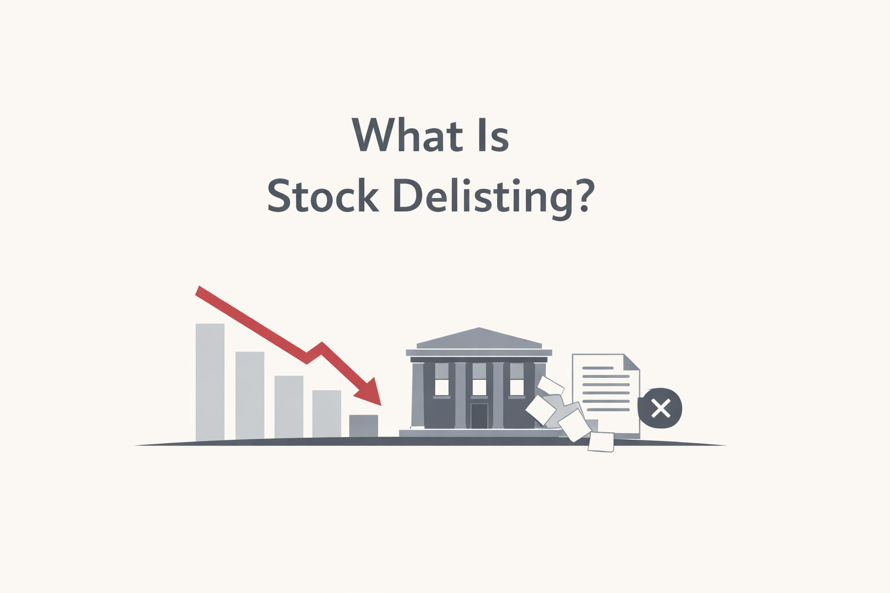
Most investors enter the stock market thinking in one direction — listing. IPOs excite. New tickers attract attention. But the market has another side that rarely gets discussed with the same clarity: stock delisting.
When a company delists, its shares stop trading on the exchange. Liquidity disappears. The ticker vanishes. The company either goes private or gets removed due to regulatory failure.
Delisting sounds dramatic. Sometimes it is. Sometimes it is strategic. Sometimes it signals distress. Sometimes it reflects consolidation.
In India, stock delisting follows a strict regulatory framework under SEBI. There are two primary types – voluntary and compulsory. Each affects shareholders differently. Each carries different implications.
If you hold a stock that has announced a delisting, your decision window narrows quickly. React correctly, and you exit cleanly. Ignore it, and liquidity may disappear.
Let’s break it down properly.
What is Stock Delisting?
Stock delisting happens when the equity shares of a company are removed from exchanges like NSE or BSE. Once the delisting is complete, investors cannot buy or sell these shares via exchanges.
Delisting does not mean the company shuts down. It simply means its shares no longer trade publicly.
In India, SEBI manages the entire delisting process through the SEBI (Delisting of Equity Shares) Regulations. There are two ways stock delisting happens. Either the company delists itself voluntarily, or SEBI makes it exist compulsorily.
Common reasons include:
- Promoters want full ownership
- Company merges or restructures
- Regulatory non-compliance
- Persistent losses
- Failure to meet listing norms
The market reacts differently depending on which path the company takes. The key distinction lies in control.
In voluntary delisting, promoters initiate the process.
In compulsory delisting, exchanges enforce it.
That difference changes everything for shareholders.
What Happens to the Shareholders?
When a company announces stock delisting, shareholders immediately face a decision.
In voluntary delisting, shareholders receive an exit opportunity through a mechanism called reverse book building. Promoters must buy back shares from public investors at a discovered exit price.
This ensures minority protection.
In compulsory delisting, exchanges remove the company due to violations such as non-compliance with listing requirements or failure to file financial statements. In such cases, liquidity risk increases sharply. Promoters may still be directed to provide an exit opportunity, but price discovery differs.
If you hold shares in a company that delists:
- You can tender them during the exit window (in voluntary cases)
- You may hold unlisted shares if you do not tender
- Liquidity after delisting becomes extremely limited
Once delisted, shares trade in the unlisted market, not on NSE or BSE. That market lacks transparency, spreads widen, and buyers become scarce.
For retail investors, liquidity risk becomes the primary concern.
Delisting does not erase your ownership. But it removes your exit convenience.
“Start investing with confidence! Explore
0 demat account
and grow your wealth.”
Voluntary Delisting
Voluntary stock delisting occurs when promoters decide to remove the company from public exchanges. This typically happens when promoters want complete ownership or believe that public listing no longer benefits the company.
In India, voluntary delisting follows SEBI’s reverse book building process.
Promoters must acquire at least 90 percent of the total shareholding to complete delisting. If public shareholding falls below 10 percent after the exit offer, delisting succeeds.
If they fail to reach that threshold, the delisting attempt collapses.
The process protects public investors by ensuring fair price discovery.
Let’s understand the two options shareholders face.
1. Offload Your Shares in Reverse Book Building
Reverse book building determines the exit price during voluntary delisting.
Here’s how it works.
Promoters announce a floor price based on a regulatory formula. Shareholders then bid the price at which they are willing to sell their shares. The discovered price becomes the exit price if it allows promoters to cross the 90 percent threshold.
If enough shareholders tender at a certain price, that price becomes binding.
Investors can choose to:
• Tender shares at floor price
• Tender at a higher price
• Not tender
The discovered price often exceeds the initial floor price, especially when minority shareholders believe intrinsic value remains higher.
Once promoters accept the discovered price, shareholders who tender receive payment.
This process ensures minority participation in price discovery rather than forcing a fixed buyback rate.
Reverse book building creates negotiation power for shareholders. But it also introduces uncertainty. If price demands rise excessively, promoters may reject the discovered price, and the delisting fails.
2. Hold Till You Find a Buyer
If you choose not to tender shares during voluntary stock delisting, you continue holding equity in an unlisted company.
After successful delisting, shares no longer trade on exchanges. You may sell them in the unlisted market through brokers specializing in private deals. However, liquidity drops sharply. Price transparency reduces. Bid-ask spreads widen.
SEBI allows a one-year exit window at the discovered delisting price for shareholders who did not tender initially. After that window, promoters are no longer obligated to buy.
Holding post-delisting suits investors who believe long-term private value may exceed the exit price. But liquidity constraints must be understood clearly.
Once listed liquidity disappears, exiting becomes significantly harder.
Compulsory Delisting
Compulsory stock delisting happens when exchanges remove a company due to regulatory violations.
Common triggers include:
• Failure to comply with listing norms
• Non-payment of listing fees
• Failure to submit financial statements
• Long trading suspension
In compulsory delisting, exchanges determine a fair exit value through independent valuation rather than reverse bookbuilding.
Promoters remain obligated to purchase shares from public shareholders at this valuation price.
However, compulsory delisting often signals operational or governance issues. Market confidence erodes sharply. Liquidity dries up even before formal delisting completes.
In many cases, share prices collapse prior to compulsory removal.
Unlike voluntary delisting, compulsory removal rarely reflects strategic consolidation. It usually indicates compliance failure.
For shareholders, compulsory delisting carries higher uncertainty and risk.
Can a Delisted Stock Come Back?
Yes. But not easily.
Under SEBI regulations, companies must follow a cooling-off period before relisting after voluntary delisting. In most cases, relisting requires a fresh IPO process.
If promoters delist a company to restructure privately, they cannot relist casually at a later stage without regulatory scrutiny.
Compulsorily delisted companies face stricter conditions. Relisting requires compliance restoration, regulatory approvals, and exchange permission.
In practical terms, relisting remains rare and complex.
Investors should not assume an automatic comeback.
Do Companies Benefit from Delisting Their Stocks?
Companies sometimes benefit from voluntary stock delisting.
Public listing brings compliance costs, regulatory oversight, disclosure obligations, and quarterly pressure. If promoters believe the market undervalues the company or public scrutiny limits flexibility, they may prefer private ownership.
Delisting allows:
- Operational flexibility
- Reduced compliance cost
- Long-term restructuring
- Freedom from quarterly earnings pressure
However, companies lose access to public equity markets. Raising capital becomes harder without a listing status.
For distressed companies, compulsory delisting rarely benefits management. It reflects regulatory failure and damages credibility.
So the answer depends on context.
Strategic voluntary delisting can benefit promoters.
Compulsory delisting usually signals weakness.
Conclusion
Stock delisting represents the reverse journey of listing. It removes public liquidity and reshapes the ownership structure.
In India, voluntary delisting protects shareholders through reverse book building. Compulsory delisting arises from compliance failure. Each path carries different implications for investors.
The moment a delisting announcement appears, shareholders must evaluate:
- Exit price fairness
- Liquidity implications
- Promoter intent
- Long-term value
Delisting does not mean bankruptcy. It does not automatically mean fraud. But it always changes liquidity dynamics.
When you understand the reason behind stock delisting, you can act decisively rather than react emotionally.
In markets, liquidity equals power. Delisting removes that power from exchanges and places it back in private hands.
That shift changes everything.
FAQs:
Q. What is the difference between voluntary and compulsory delisting?
When promoters decide that they want to remove their company’s shares from NSE/BSE under SEBI regulations, it’s called voluntary delisting. Here, shareholders receive an exit opportunity via the reverse bookbuilding process. But if the exchange removes a company, it’s called compulsory delisting. In that case, valuation-based exit replaces price discovery.
Q. What happens when a stock is voluntarily delisted?
Promoters offer to buy public shares through reverse bookbuilding. If they reach the required 90 percent holding, delisting succeeds. Shareholders can tender shares at the discovered exit price. But once the delisting is complete, shares stop trading on exchanges.
Q. What is an example of a voluntary delisting?
Vedanta Ltd attempted voluntary delisting in 2020. Promoters sought to buy out public shareholders through reverse bookbuilding. However, shareholders demanded a higher exit price, and the attempt failed. The company remained listed.
Q. Why do companies delist voluntarily from the stock market?
Promoters may seek full ownership, reduce compliance costs, or restructure privately. Some believe the market undervalues the business. Voluntary delisting removes quarterly reporting pressure and allows long-term strategic flexibility.
Disclaimer
The stocks mentioned in this article are not recommendations. Please conduct your own research and due diligence before investing. Investment in securities market are subject to market risks, read all the related documents carefully before investing. Please read the Risk Disclosure documents carefully before investing in Equity Shares, Derivatives, Mutual fund, and/or other instruments traded on the Stock Exchanges. As investments are subject to market risks and price fluctuation risk, there is no assurance or guarantee that the investment objectives shall be achieved. Lemonn (Formerly known as NU Investors Technologies Pvt. Ltd) do not guarantee any assured returns on any investments. Past performance of securities/instruments is not indicative of their future performance.
Related Posts

Download Lemonn
Download my app for share market trading, ipo investment, trading account, and all your investment needs.



