Why Is Inflation 8% in Kerala but Only 0.01% in Bihar?
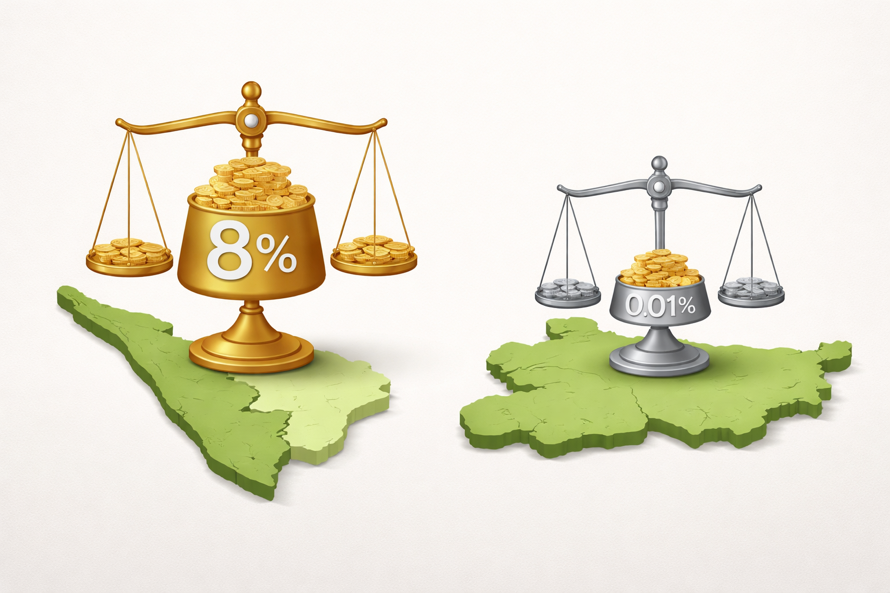
If inflation is rising across India, why does Kerala report around 8% inflation while Bihar shows almost zero (0.01%)?
At first glance, it feels confusing – even unfair. But once you look at how inflation is calculated and how these two states differ economically, the gap starts to make sense.
What Inflation Really Measures (Quick Context)
Inflation does not measure how expensive a place is.
It measures how fast prices are changing compared to last year.
So:
- A rich, expensive state can show high inflation
- A poor, low-cost state can show very low inflation
Inflation is about price movement, not absolute prices.
1. Different Consumption Patterns Matter
Inflation is calculated using a Consumer Price Index (CPI) basket. Each state has a different basket based on what people actually buy.
“Start investing with confidence! Explore
0 demat account
and grow your wealth.”
Kerala’s consumption basket
- More spending on:
- Milk, meat, fish
- Private healthcare
- Education
- Transport and fuel
- Services
- These items saw sharp price increases recently
Bihar’s consumption basket
- Higher weight for:
- Rice, wheat, pulses
- Government-subsidized food
- Basic necessities
- Prices of these items stayed stable or fell slightly
Result: Even small price hikes in Kerala’s basket push inflation up more than in Bihar.
2. Higher Income = Higher Inflation Sensitivity
Kerala has:
- Higher per-capita income
- Strong remittance inflows
- Greater urban consumption
This leads to demand-driven inflation:
- People can afford higher prices
- Businesses pass on cost increases more easily
Bihar, on the other hand:
- Has lower purchasing power
- Faces demand constraints
- Sellers struggle to raise prices
Simply put: prices rise where people can pay.
3. Food Subsidies Keep Bihar’s Inflation Low
Bihar benefits heavily from:
- Public Distribution System (PDS)
- Free or subsidized grains
- Government welfare schemes
When food prices rise in the market:
- The CPI impact in Bihar is muted
- Households are shielded from volatility
Kerala relies more on open-market food purchases, making households more exposed to price changes.
4. Supply Chain Differences Play a Big Role
Kerala
- Imports a large share of:
- Vegetables
- Milk
- Poultry
- Higher transport and fuel costs
- Any disruption quickly raises prices
Bihar
- Largely agrarian
- Local production of staples
- Shorter supply chains
Fewer middlemen = less price pressure.
5. Services Inflation Hits Kerala Harder
Inflation today isn’t just about food.
Kerala sees higher increases in:
- Medical fees
- School and college costs
- House rents
- Personal services
Bihar’s services sector is:
- Smaller
- Less formal
- Less price-flexible
This keeps overall inflation artificially low.
Is 0.01% Inflation in Bihar “Good News”?
Not entirely.
Very low inflation can signal:
- Weak demand
- Slow income growth
- Limited pricing power for producers
In contrast, Kerala’s higher inflation reflects:
- Stronger demand
- Higher consumption
- A more service-oriented economy
Low inflation isn’t always a sign of economic health.
Key Takeaways
- Inflation measures price change, not cost of living
- Kerala’s higher inflation comes from:
- Consumption-heavy lifestyle
- Service-sector price increases
- Supply-chain dependence
- Bihar’s low inflation is due to:
- Subsidies
- Lower demand
- Stable food prices
- Neither number alone tells the full economic story
FAQs
Q. Is inflation data manipulated by states?
No. Inflation figures are calculated using national statistical methods, but state-level consumption patterns differ.
Q. Will Bihar’s inflation rise in the future?
Yes. As incomes grow and consumption increases, inflation is likely to normalize.
Q. Does high inflation mean Kerala is doing worse?
Not necessarily. It often reflects stronger demand – though it does strain household budgets.
Disclaimer
The stocks mentioned in this article are not recommendations. Please conduct your own research and due diligence before investing. Investment in securities market are subject to market risks, read all the related documents carefully before investing. Please read the Risk Disclosure documents carefully before investing in Equity Shares, Derivatives, Mutual fund, and/or other instruments traded on the Stock Exchanges. As investments are subject to market risks and price fluctuation risk, there is no assurance or guarantee that the investment objectives shall be achieved. Lemonn (Formerly known as NU Investors Technologies Pvt. Ltd) do not guarantee any assured returns on any investments. Past performance of securities/instruments is not indicative of their future performance.
Related Posts



Download Lemonn
Download my app for share market trading, ipo investment, trading account, and all your investment needs.