What Caused the “Everything Fall” in January 2026? A Breakdown of the Market Crash
A Rare Market Event: Everything Fell at Once
In the final days of January 2026, financial markets around the world were rocked by a massive, synchronized sell-off. Stocks, precious metals, and cryptocurrencies all dropped sharply-a rare event now referred to as the “everything fall.”
This wasn’t just about investor fear. It was a fundamental shift in how markets are pricing risk, value, and trust in global institutions. Here’s what triggered the crash and what it signals for the future.
1. The Federal Reserve’s Hawkish Pause Surprised the Market
Many investors were expecting the U.S. Federal Reserve to continue cutting interest rates into 2026. Instead, at its January 28 meeting, the Fed paused all rate cuts, citing persistent inflation and a resilient labor market.
Even more dramatic was the political backlash. The Trump administration pressured the Fed for more cuts and launched an investigation into Chair Jerome Powell. This conflict raised fears about the independence of central banks-a cornerstone of financial stability.
Without the liquidity investors were hoping for, riskier assets like tech stocks and crypto lost their support.
“Start investing with confidence! Explore
0 demat account
and grow your wealth.”
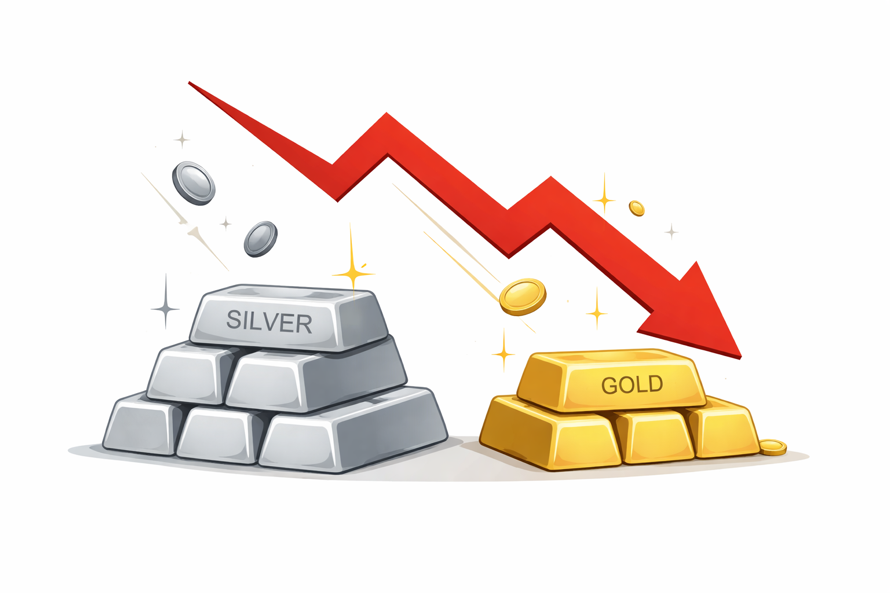
2. Precious Metals Went Parabolic, Then Collapsed
Gold and silver had been on a tear, with silver quadrupling in price over the past year. Investors flooded into these assets as hedges against inflation, geopolitical conflict, and concerns over U.S. debt.
But on January 30, CME Group raised margin requirements, triggering a wave of forced liquidations. Silver plunged by double digits in under an hour. Gold also lost trillions in market value as technical traders were wiped out.
This wasn’t about fundamentals-it was a violent reset of speculative excess.
3. The AI Bubble Hit a Wall of Reality
Big Tech drove the market in 2025, largely thanks to hype around AI. But in early 2026, investors started asking a hard question: How much will AI actually cost?
- Microsoft revealed that a major chunk of its cloud backlog depended on OpenAI, which is still unprofitable and losing momentum to rivals.
- Meta shocked the market with plans to spend over $100 billion on infrastructure, despite flat profit forecasts.
The problem? AI software is getting cheaper, but the energy and hardware to run it is getting exponentially more expensive.
The result: Tech stocks fell hard, dragging the Nasdaq down with them.
4. Crypto Failed Its First Real Test as “Digital Gold”
Bitcoin was supposed to shine in a crisis. Instead, it dropped nearly 15% in a week as institutional investors pulled billions from crypto ETFs.
Why? That same money was flowing into tokenized gold and silver-real, tangible assets that have a longer history as safe havens.
Bitcoin’s strong correlation with tech stocks didn’t help. As risk appetite dried up, so did support for digital assets.
5. Geopolitics Got Ugly-Fast
Trade wars, tariff threats, and resource nationalism returned in force:
- The U.S. threatened new tariffs on Canada and Europe over diplomatic disputes.
- Tensions with China over EV and solar overcapacity flared up.
- The Strait of Hormuz saw live-fire naval exercises amid rising tensions with Iran.
These conflicts aren’t just about politics-they’re inflationary. The more global supply chains fracture, the more expensive goods become. And inflation is exactly what keeps central banks from easing.
6. The U.S. Fiscal Crisis Shook Global Confidence
On January 30, the U.S. government faced another shutdown deadline-just weeks after the longest federal closure in recent history. A standoff over Department of Homeland Security funding added fuel to the fire.
Markets don’t just watch numbers-they watch symbolism. And repeated shutdown threats, debt ceiling battles, and political dysfunction erode global trust in the U.S. dollar and Treasury markets.
7. Technical Triggers Accelerated the Crash
Once prices started falling, margin calls and leverage made everything worse:
- Silver and gold saw cascading selloffs as leveraged traders couldn’t meet higher margin requirements.
- To cover losses, many dumped their crypto and tech holdings, causing a chain reaction.
This wasn’t just panic-it was a liquidity crunch.
Key Takeaways: The 2026 Market Crash in Context
- The market is moving from speculation to pragmatism.
- Investors are rethinking AI, not because it’s dead-but because it’s expensive.
- Commodities still have a strong case, but not at any price.
- Trust in institutions-central banks, government budgets, geopolitical stability-is the new currency.
This crash is not the end of the bull market. But it’s a wake-up call: From now on, the cost of “stability” will be much higher.
FAQs: January 2026 Market Crash
Q. What triggered the crash?
The Fed’s rate pause, political pressure, margin calls in metals, tech spending concerns, and geopolitical tensions all played a role.
Q. Is this like 2008?
No. This is more about liquidity repricing and institutional trust than credit collapse. But it’s still serious.
Q. Is AI dead?
Not at all. But the easy gains are gone. Investors now want real returns-not just cool demos.
Q. Will gold recover?
Likely yes. The drop was margin-induced. Fundamentals for hard assets remain strong over the long term.
Q. Should I sell my crypto?
Only if it no longer fits your risk profile. Bitcoin is acting like a tech stock, not digital gold.
Disclaimer
The stocks mentioned in this article are not recommendations. Please conduct your own research and due diligence before investing. Investment in securities market are subject to market risks, read all the related documents carefully before investing. Please read the Risk Disclosure documents carefully before investing in Equity Shares, Derivatives, Mutual fund, and/or other instruments traded on the Stock Exchanges. As investments are subject to market risks and price fluctuation risk, there is no assurance or guarantee that the investment objectives shall be achieved. Lemonn (Formerly known as NU Investors Technologies Pvt. Ltd) do not guarantee any assured returns on any investments. Past performance of securities/instruments is not indicative of their future performance.
Related Posts



Download Lemonn
Download my app for share market trading, ipo investment, trading account, and all your investment needs.