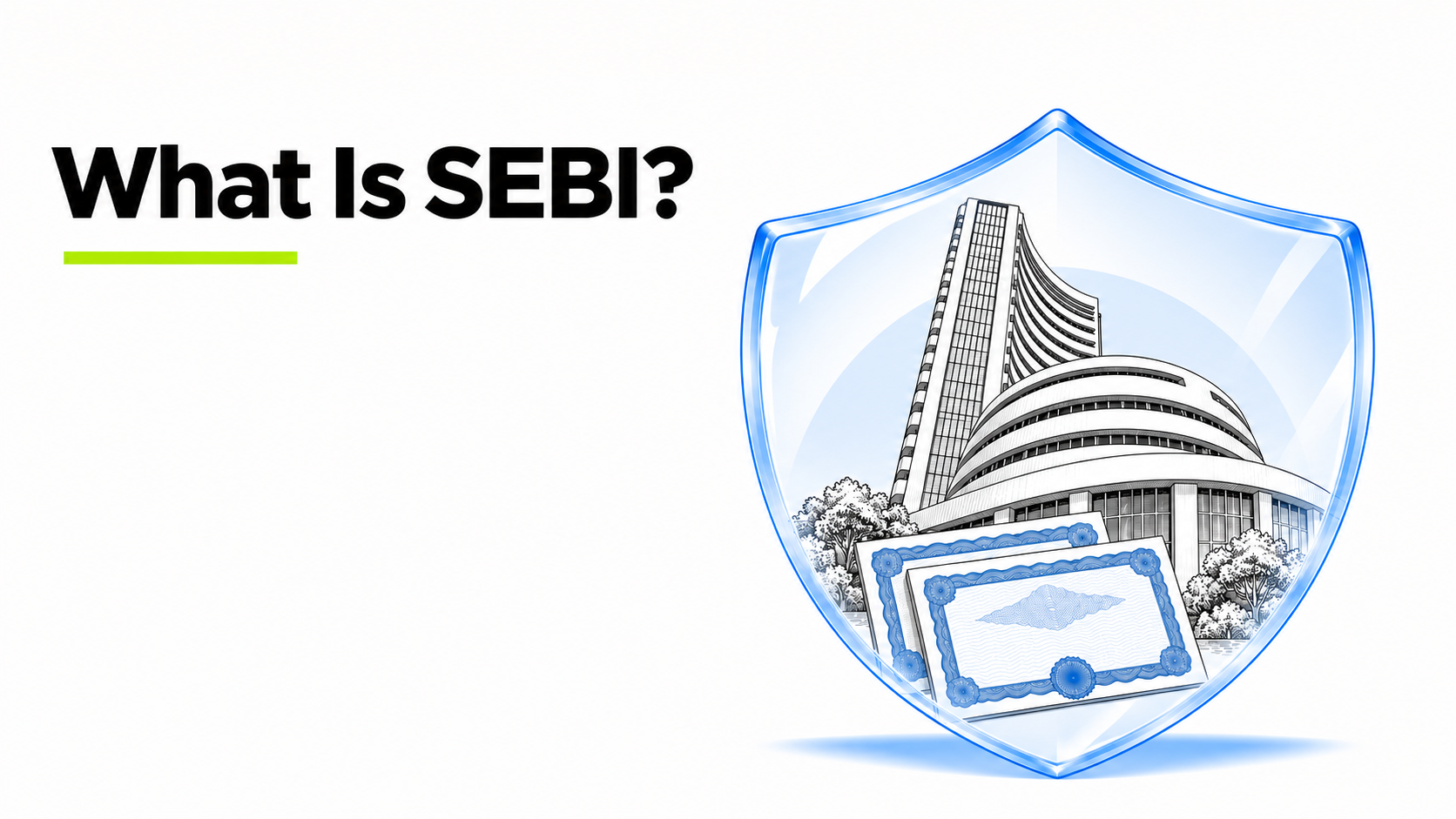
What Is SEBI? Role, Functions and Investor Protection
 Written by Ipsita Baishya
 Reviewed by Gaurav Garg, SEBI-registered Research Analyst
When opening a trading account and buying your first stocks, you’ll get a contract note. But how do you know that your broker will follow the rules? Or what if a listed company doesn’t provide you with key information? Or your complaint isn’t resolved?
This is where SEBI comes in.
Understanding what is sebi could be important if you’re investing in Indian stocks, mutual funds or derivatives. SEBI regulates various aspects of the market, conducts investigations and provides a way for investors to raise complaints. However, it cannot guarantee that you’ll make money from your investments.
SEBI’s role
SEBI stands for Securities and Exchange Board of India and originally became a non-statutory body in 1988. It became a statutory body in 1992 under the SEBI Act.
SEBI aims to protect investors, regulate and promote the securities market.
When you place an order through your broker, the stock exchange will match your order. Then clearing and depository services will process any obligations and securities. Different institutions will be involved, and they will follow the applicable rules.
SEBI regulates the intermediaries involved in the market (brokers, investment advisers, mutual funds) and also sets out disclosure requirements for listed companies. It also regulates recognised market institutions.
It also has the power to investigate suspected market manipulation, insider trading and other breaches of securities laws. It can issue directions depending on the situation.
However, there is always some risk in a regulated market. You could lose a lot of money on stocks, even if you’ve bought them through a registered broker.
Key regulations for retail investors
You don’t need to remember all the SEBI circulars, but there are some key aspects you should know.
Registered Brokers and KYC
Brokers must be registered and be members of an exchange. Investors will also be asked to complete KYC.
Always ensure that the broker you’re transferring money to has the correct legal name and registration by referring to SEBI or exchange documentation.
Contract Notes
Your broker must provide you with information on your trades, including quantities, prices and charges. Ensure this information matches your orders.
Listed companies must also provide certain information on their financials and key events. This will help you understand what’s going on with the stock.
Investment Advice
Those providing regulated investment advice must be registered and follow the correct rules. Be wary of anyone promising guaranteed returns or requesting money to be sent to their personal account.
Margin and Derivatives
Derivatives have rules around margin and settlement and carry a high level of risk. Just because a position has low margin requirements doesn’t mean you won’t lose a lot of money.
While SEBI has rules in place to help improve risk management and ensure transparency, it is important to understand the product.
How SEBI protects you
Investor protection can seem quite vague. Here are some aspects that apply when using your trading app.
Transparency
Companies must provide certain information, and intermediaries will provide information on services, charges and risks. This helps give investors additional information.
Oversight
SEBI oversees regulated entities and can take action if they breach any rules. Exchanges and depositories also have processes in place to help ensure compliance.
Education
SEBI provides guidance on how to spot scams, keep your account secure, understand securities and know your rights.
Payment Scams
If you receive a request to pay money to someone claiming to represent a registered broker and they have a convincing logo, should you pay?
No! You should always double-check who you’re paying.
From October 2025, verified UPI handles have been available for payments to SEBI-registered intermediaries. You can also use the SEBI Check tool to help ensure you’re using the correct payment details. This helps ensure you aren’t being scammed by someone pretending to be an intermediary.
Never share your passwords, trading PIN or one-time password. Just because an intermediary is registered doesn’t mean the investment advice is suitable for you.
If you receive an unsolicited message saying a stock will double in value next week, ask who is making this claim and why. Try to search for any official announcements rather than relying on screenshots of messages that have been sent to you. While a regulator can investigate unlawful activity, it may not be able to check every message you receive. Be cautious if someone is asking you to pay urgently or keep it secret.
Filing complaints on SCORES
If your broker hasn’t dealt with an incorrect charge or a listed company has failed to deal with an eligible issue relating to investor services, what should you do?
Contact the relevant broker, company or intermediary. Ensure you have copies of any messages, account statements and trades.
If you’re not satisfied with the response, you can use the SCORES tool. This can be accessed here: scores.sebi.gov.in
To raise a complaint:
- Click on the official SCORES page and log in or register.
- Select the relevant entity and complaint category.
- Describe the issue clearly. Include dates and trades.
- Upload any relevant documentation.
- Submit the complaint. Take note of your complaint reference.
- Review the complaint on the dashboard.
The SCORES 2.0 system was launched in 2024. Any eligible complaints will be automatically sent to the relevant entity. It will usually have 21 calendar days to submit an Action Taken Report.
If you’re not satisfied with this, you can ask for a first review within 15 calendar days. This will be reviewed by a designated body. You may also be able to utilise a second review via SEBI.
While SCORES makes it easier to raise complaints, it is not a court and won’t resolve every legal issue. Other solutions may be relevant to your situation. For example, the Online Dispute Resolution process for the securities market.
Always ensure you’re eligible to raise a complaint and are aware of the timeframes. Not all financial issues will be covered by SEBI.
Recent SEBI rule changes for traders
Rules are always changing to reflect the way trading is done. If you’re a trader, especially one trading futures and options, it is important to keep up to date with official circulars.
Derivatives Expiry
In May 2025, SEBI introduced a new framework for equity derivative expiries. Each exchange will have its own expiry day on a Tuesday or Thursday. Each exchange can only have one benchmark index options contract with a weekly expiry. Other contracts will follow the rules around tenor and expiry.
This will affect how you plan your positions for the week. Always check the actual contract calendar for the exchange.
Intraday Position Limits
SEBI has placed stricter rules around intraday position limits for index derivatives. This will help identify excessive positions during the day.
As a trader, you should know your position limits, margin requirements and any restrictions from your broker. If you go over these limits, your orders may be rejected.
Verified UPI Handles and SEBI Check
In October 2025, verified UPI handles and SEBI Check were launched. Investors can utilise the official verification tool to ensure they’re using the correct payment details.
While this doesn’t eliminate risk, it does mean there are new rules in place. Always check the current exchange rules.
FAQs
What does SEBI do?
SEBI regulates the securities market in India. It oversees registered intermediaries, sets out rules for disclosure, investigates breaches and works to ensure investor protection. It also helps with resolving complaints and educating investors. It cannot guarantee you will make money, and there is always a risk of losing money in the market.
How to file a complaint with SEBI?
Contact the relevant regulated entity. If you’re not happy with the outcome, you can register on the official SCORES portal. Select the relevant entity, describe your complaint and upload any documentation. Save your complaint reference.
Is my broker SEBI registered?
Check your broker’s registration number and legal name against official SEBI documentation and the member list for the relevant stock exchange. Don’t just rely on the description in your app. Always double-check who you’re paying by checking the payment details.
What is SEBI SCORES?
This is an online tool provided by SEBI to allow eligible complaints to be raised regarding listed companies and regulated entities in the securities market. This helps investors raise complaints, view Action Taken Reports and request reviews within the correct timeframe.
Conclusion
Now that you know what is SEBI, you understand why it is important even if you’re making a small investment. You’ll need to ensure you’re using a registered intermediary, understand the disclosures, trading rules and complaint process.
Always ensure you’re using a legitimate intermediary, understand the risks and keep your documentation. If anything goes wrong, contact the entity first and utilise the correct complaint process.
Disclaimer: This article is for educational purposes only and should not be taken as investment or legal advice. Rules can change, so please refer to official SEBI and exchange publications.
Disclaimer
The stocks mentioned in this article are not recommendations. Please conduct your own research and due diligence before investing. Investment in securities market are subject to market risks, read all the related documents carefully before investing. Please read the Risk Disclosure documents carefully before investing in Equity Shares, Derivatives, Mutual fund, and/or other instruments traded on the Stock Exchanges. As investments are subject to market risks and price fluctuation risk, there is no assurance or guarantee that the investment objectives shall be achieved. Lemonn (Formerly known as NU Investors Technologies Pvt. Ltd) do not guarantee any assured returns on any investments. Past performance of securities/instruments is not indicative of their future performance.