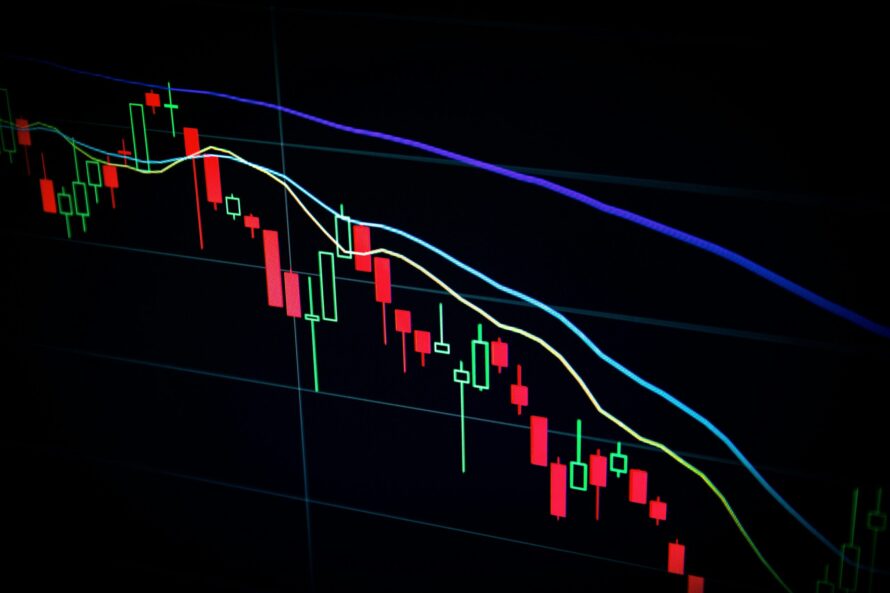
Bull vs Bear Market: Meaning, Signs and How to Invest in Each
 Written by Ipsita Baishya
 Reviewed by Gaurav Garg, SEBI-registered Research Analyst

The Sensex shoots up by 800 points one day, people rejoice, and everyone is seen as a stock buyer. The same index drops precipitously a few months later. Those talking about profits are now concerned about getting their money back.
Sounds familiar?
Prices in the stock markets rise and fall. Some phases last for months and others for years. These periods are usually referred to as bull markets and bear markets by investors.
How can we detect them, though? Does a 5% drop imply a bearish move in the market? And should investors shift gears whenever the market shifts?
Let’s explore what bull vs bear market means, the tell-tale signs of both phases, some significant events in Indian stock market history and how investors can handle such markets.
Definitions
A bull market is a time when overall investor sentiment and expectations are positive, and the stock market is generally moving higher.
The opposite is a bear market. Share prices go down, and the economy, company profitability and market valuations become more and more uncertain.
There’s also a commonly used numerical definition.
A bull market is generally considered a significant market increase of 20% or greater. Likewise, if the price drops 20% or more from a recent high, it’s typically a bear market.
But these are conventions of the market! They do not imply that all stocks have the same percentage movement.
Bull Market vs Bear Market
| Factor | Bull Market | Bear Market |
|---|---|---|
| Movement on the chart | Generally rising | Generally falling |
| Investors’ sentiments | Optimistic | Cautious or pessimistic |
| Economic expectations | Often improving | Often weakening |
| Stock demand | Generally strong | More selling pressure |
| Volatility | May be moderate or high | May increase during dramatic drops |
| What investors worry about | Buying at too high a price | Recovering losses |
Signs of each phase
New cycles are not signalled in the market. Investors may have missed the trend by the time they realise that it has taken place.
Despite this, there are some patterns that can give an indication.
Signs of a Bull Market
When the trend is bullish, the major indices typically create higher highs and higher lows over a longer period of time.
Companies can potentially boost their profits. Businesses declare growth initiatives, customers increase their demand, and investors are more ready to pay a premium for future growth.
Additionally, you’ll see:
- A gradual increase in benchmark indices over a number of months.
- Positive corporate earnings and revenue expectations.
- More investors investing in stocks.
- Improving business and economic confidence.
- Improved demand in various markets.
Signs of a Bear Market
Bear markets are quite different. Share prices continue to drop, and any gains that investors have made over the years can evaporate within days.
This causes panic selling and this results in more market correction. There are multiple factors that can lead to such a market rout. For example, economic slowdown or geopolitical uncertainty can cause turmoil.
Sometimes, poor earnings and unexpected bad results cause a market sell-off.
So overall, there is no specific event that can trigger a bear market. But if you are seeing multiple signs as mentioned above, it might be the start of a bear market.
But there is an interesting caveat here. Even in bull markets, there are sometimes sharp rallies. A market might rally up to 5 to 10%! But even with such flash rallies, overall market sentiments stay negative.
Historic Indian bull and bear runs
The 2003–2007 Bull Run
The Indian equity market performed well in the years leading up to the global financial crisis.
Share prices rose as a result of economic growth, expansion of companies and the inflow of investments.
The Sensex crossed 10,000 points in 2006 and 20,000 in 2007.
Investors who had invested early had made great gains. But the rally was also a catalyst for more aggressive risk-taking with higher valuations.
Then came 2008.
The Global Financial Crisis of 2008
Major financial institutions collapsed, and fears over the global banking system led to a broad sell-off.
Indian markets were badly hit.
The Nifty 50 index fell around 59% from its peak in January 2008 to its bottom in October 2008.
Suppose you had invested in shares valued at ₹1 lakh, and the price of these shares dropped to about ₹41,000 during such a decline.
Nor was the recovery quick. Nifty didn’t sustainably break out above its previous peak until years had passed.
The 2020 COVID-19 Crash and Recovery
2020 COVID-19 crash was one of the most extraordinary events for global markets. As the pandemic gained momentum and business activities came to a halt across the globe, markets reacted very sharply.
Nifty dropped about 37% from its previous high in a few weeks. The Sensex dropped by 3,935 points in one day alone, on 23 March 2020.
However, the recovery was very quick.
Indian equities recovered from their losses with policy support, better liquidity and an increase in investor participation. Towards the end of 2020, Nifty hit its previous highs once again.
Strategies for bull markets
Here are some bull market strategies:
Avoid Chasing Every Rally
Assume that the price of a stock increases from ₹200 to ₹350 in 3 months. Just purchasing due to the price increase may lead to buying at a high valuation. Review the earnings, debt, cash flow and catalyst of the rally. Even a desirable company can be an undesirable buy if it costs too much money.
Maintain Diversification
Successful-looking concentrated positions can be the result of bull markets. If, for example, an investor owns primarily banking stocks, he or she may be able to generate solid returns when the banking sector is doing well.
However, trends in the sector also evolve. A diversified portfolio across companies, industries and appropriate asset classes can help lessen the risk of relying on a single source of return.
Review Your Portfolio
Assume that you had 60% of your investment portfolio in equities initially. They make up 75% after a lengthy rally. You have greater exposure with no new investment.
Rebalancing may be a way to adjust to your desired allocation, but that requires taxes and transaction fees to be taken into account.
The larger lesson? Don’t increase your risk level just because prices are going up.
Strategies for bear markets
Bear markets, they say, live up to their name. Companies, even those that are financially successful, can see a dramatic fall in prices when investors become conservative.
But nobody knows when the market will end its downward trend.
Avoid Panic Selling
Let’s say that an investor sells all his assets after the market drops by 25% and thinks that it will continue to go down.
If they don’t invest back in the market, what will happen if the market recovers?
They may miss a great deal of the bounce-back.
But that doesn’t mean you should buy and hold every falling stock. The fundamentals of a company can be permanently harmed.
Invest Gradually
A few investors continue investing through SIPs, even when the market falls.
As prices drop, a specific amount of money will buy more mutual fund units.
Lower prices, however, don’t mean future profits. The underlying investment itself will need to meet the investor’s investment objectives and tolerance for risk.
Safeguard Short-Term Financial Requirements
Don’t rely on a rapid recovery of the stock market to make up for money that you need for bills, unexpected expenses or a planned purchase.
A long-term bear market may pose problems if you need cash in the next year.
Examine Business Fundamentals
The price of a stock going down could be a signal, but sometimes it could be an indication of real issues in the company. Conduct a review of debt, profitability, cash generation and business prospects.
If the value of a stock has dropped 50%, then it can drop another 50%. Its previous price doesn’t determine its future value.
FAQs
How long do bear markets last?
There is no definite time period. Some are shorter in duration, lasting for only a few months, while others are longer-term and can last for years. There is also a wide variation in recovery times.
What triggers a bull market?
A bull market can be facilitated by positive corporate earnings, economic growth, favourable interest rates, liquidity and investor confidence.
Should I invest in a bear market?
It is determined by your investment objectives, investment time frame and risk tolerance. The reduction in prices might provide opportunities, but losses may also persist.
What is a correction?
Typically, a market correction is a drop of 10% to less than 20% from a recent high. The definition of a bear market is generally a loss of 20% or more.
Conclusion
Bear market and bull market are both sides of the same coin. They are an inevitable part of the stock market. No market can forever stay in any one cycle.
When you understand bull vs bear market, you understand the psychology of the market. It can help you identify and understand trends, along with potential risks. Result? You can make better investment decisions.
If you are planning to invest in the bull or bear market, it’s always better to study the trends in detail and use a reliable broker like Lemonn.
Lemonn offers competitive brokerage rates with the latest features that make trading easy. So, ready to begin your stock market journey? If yes, let’s get started together!
Disclaimer
The stocks mentioned in this article are not recommendations. Please conduct your own research and due diligence before investing. Investment in securities market are subject to market risks, read all the related documents carefully before investing. Please read the Risk Disclosure documents carefully before investing in Equity Shares, Derivatives, Mutual fund, and/or other instruments traded on the Stock Exchanges. As investments are subject to market risks and price fluctuation risk, there is no assurance or guarantee that the investment objectives shall be achieved. Lemonn (Formerly known as NU Investors Technologies Pvt. Ltd) do not guarantee any assured returns on any investments. Past performance of securities/instruments is not indicative of their future performance.