F&O Margin Explained: SPAN, Exposure and Peak Margin
 Written by Prateek Desai
 Reviewed by Gaurav Garg, SEBI-registered Research Analyst
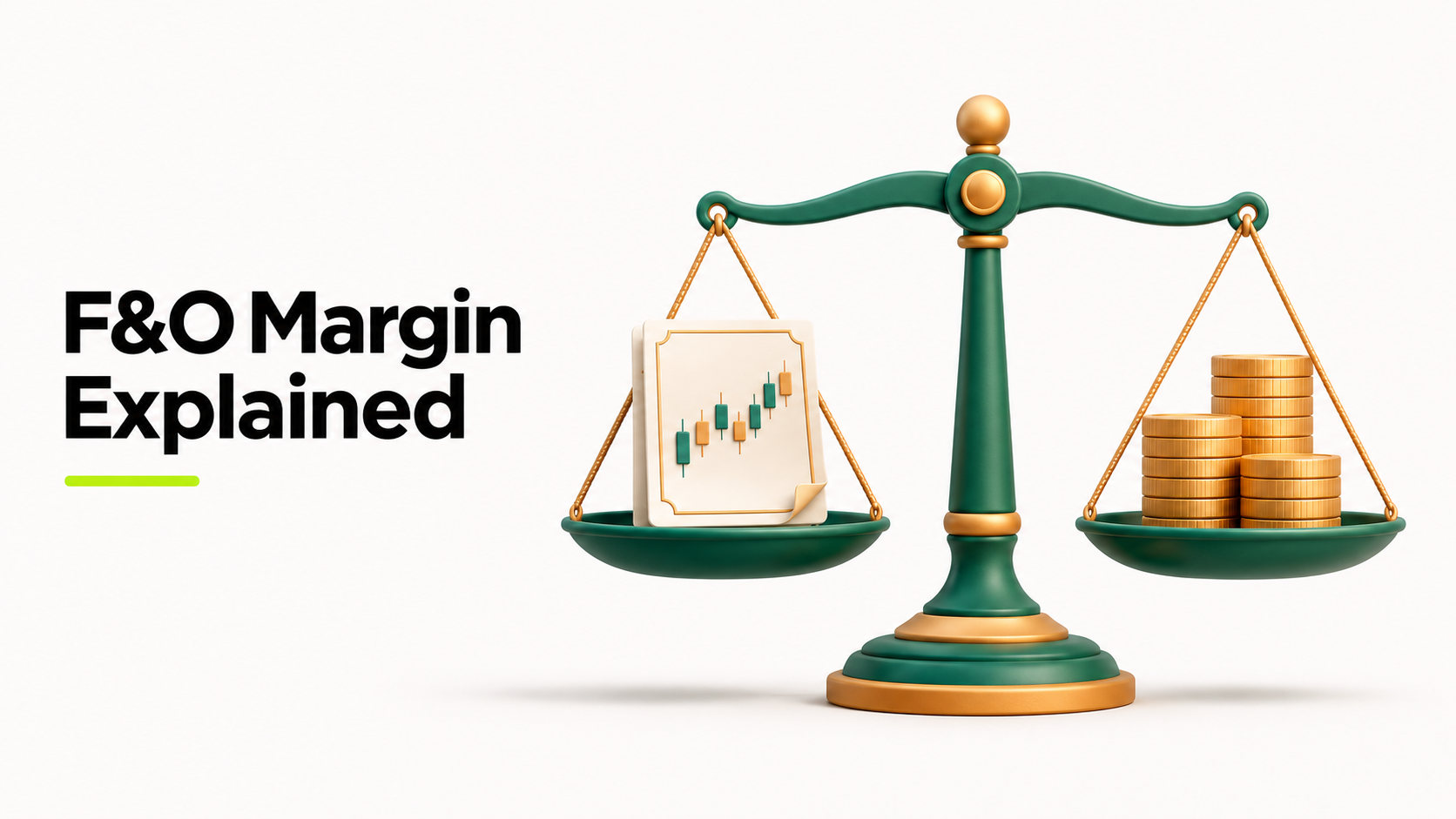
When trying to sell a Nifty option in your trading app, you may notice that you need to have a large amount of money even though the premium is low. Why do you need so much money?
The amount you need relates to F&O Margin. Brokers and clearing corporations will require you to maintain margins to account for the risk of traders not being able to meet their obligations. This amount can vary throughout the day depending on how volatile the price has been.
Let’s look at what SPAN, exposure and peak margins mean and what can happen if you don’t have enough.
Why margin is needed
Margin is an amount of money or eligible collateral that is required to support your position. This acts as a safety net for possible losses that could occur.
When buying an option, you usually pay the premium. As a regular option buyer, you’ll usually lose up to the premium that you paid (excluding charges).
However, when selling an option, you’ll receive a premium. If the market doesn’t go your way, you may lose a large amount of money. This means the exchange requires margin from option sellers. Futures traders also have margin requirements as they have ongoing obligations.
Is margin a cost?
No, the margin is blocked or set aside. Brokerage, taxes and other charges will incur costs. You may also receive some of the margin back once you close your position, provided there are no outstanding losses or obligations.
Just because you have a low margin requirement does not mean you are trading with low risk. You could lose more than you had originally set aside. This is especially true for leveraged futures or short options.
“Start investing with confidence! Explore
option trading
and grow your wealth.”
SPAN margin
SPAN stands for Standard Portfolio Analysis of Risk. SPAN calculates the initial margin requirement based on the risk associated with derivatives portfolios.
Instead of just looking at the price today, it looks at possible scenarios. These could include volatility, underlying price changes and the mix of contracts you have.
For example, when selling a call option on an index, if the index price rises quickly, you could make a loss. SPAN looks at what could happen if the market moves unfavourably.
Why does this fluctuate?
The market is never static. As prices and volatility change, so can the risk parameters and exposure. Your broker may show you a higher margin requirement later.
It also takes into consideration eligible offsets. This means your portfolio margin may not be the sum of all your individual order margins.
This is a technical calculation you don’t need to do manually. However, it’s a good idea to check your live margin estimate with your broker.
Exposure margin
In addition to SPAN margin, the exchanges will also require additional margin. This is often referred to as exposure margin or Extreme Loss Margin (ELM) for relevant F&O positions.
This is to cover additional risk. Depending on the category of contract and the clearing rules, the amount will vary.
For example, index derivatives may have different requirements compared to single-stock derivatives.
Let’s look at an example.
| Margin Component | Amount |
|---|---|
| SPAN Margin | ₹85,000 |
| Exposure Margin | ₹25,000 |
| Total Initial Margin | ₹1,10,000 |
These are just examples.
Your broker may require additional amounts for premiums, delivery obligations, mark-to-market losses and other applicable charges. Always check how much you’ll need to have in total.
Peak margin rules
Some traders may think they can open a large position with a low margin requirement. They can then add the money before the market closes. However, this can cause issues.
In India, there is a peak margin monitoring system. Clearing corporations will take several snapshots of client margin requirements throughout the day. This means your broker will need to collect the required initial margin. This will be monitored throughout the day.
According to NSE Clearing, there should be a minimum of 4 snapshots throughout the day for monitoring relevant equity derivatives. This means peak margin can play a role even if you reduce your position before the market closes.
What happens if the margin increases?
If you have ₹1,20,000 available and your position only requires ₹1,10,000, you may run into issues. If there has been an increase in volatility and you now need ₹1,30,000, you will be short by ₹10,000.
Your broker may notify you, stop you from opening new positions or square off your position based on its risk policy. However, you may not always be notified.
Always check how much margin you have available throughout the day, especially around major announcements or expiry.
Margin benefit on hedged positions
When you hedge, you enter a position that may help reduce some of the risk of your original trade. For example, you may sell a call option and buy a higher-strike call with the same expiry date.
This can help reduce your potential losses on the spread. As you’ve reduced your overall risk, a calculation may be applied to reduce your margin requirement.
Example
If selling a call requires ₹1,40,000 to open, adding an eligible protective call could reduce your total margin to ₹45,000, plus any applicable premium and charges.
This is just an example. The actual benefit will depend on the strike, expiry, contract size, risk parameters and exchange rules.
Calendar Spreads
A calendar spread is when you have positions with different expiry dates. You may not always get the usual offset benefit.
Index derivatives have restrictions on calendar spreads on the expiry day. From May 2026, single-stock derivatives also have these restrictions on the expiry day of the expiring contract.
This means that even if you have a comfortable margin today, you may need extra margin on expiry. This is why it’s a good idea to check what margin you’ll need early. Whilst a hedge can reduce your risk, it won’t eliminate losses or other issues.
Margin shortfall penalty
A penalty may be applied if you don’t have the required margin. Depending on the type of margin and reason for the issue, your broker may apply a penalty. Clearing corporations will also apply penalties to members for specific reasons relating to shortfalls.
According to NSE Clearing, the general rule is a penalty of 0.5% of the shortfall for smaller eligible shortfalls and 1% for other eligible shortfalls. Penalties can be higher for ongoing shortfalls.
Example
If you are liable for a 0.5% daily penalty for a shortfall of ₹10,000, the penalty would be ₹50. This is just an example.
Always check your margin statement with your broker and its penalty policy. Some shortfalls may be due to a sudden increase in requirements. Others may be due to crystallised obligations or a lack of eligible collateral.
How to avoid shortfalls
Have a reasonable buffer. Check your eligible pledged collateral after applying any applicable haircuts. Check your mark-to-market losses. Check if your hedge is eligible.
Most importantly, don’t create a position based on the maximum amount you can use in your app. This won’t give you much room for any surprises.
If you are using collateral, remember that your pledged securities may fall in value. Your broker may require you to have some cash. Your available margin will also be reduced by the haircuts.
FAQs
What is SPAN margin?
SPAN margin is an initial margin requirement calculated based on risk. It takes into consideration your derivatives positions and any eligible offsets. The requirement can fluctuate based on market conditions and risk parameters.
Why is option selling margin high?
As an option seller, you could potentially lose a large amount of money. This means the exchange requires initial SPAN and exposure/Extreme Loss Margin. If you have a qualifying hedge, this may be reduced.
What is a margin penalty?
A penalty may be applied if you don’t have the required margin. Depending on the type of shortfall and the reason, there will be different rates. Always check your margin statement with your broker and the applicable clearing rules.
Do hedged positions need less margin?
Often, they do. Eligible offsets can help reduce the risk of your portfolio. This may result in a lower margin requirement. However, this will depend on your strategy and the rules around the contract. Some calendar spreads won’t qualify.
Conclusion
Understanding F&O Margin can help you understand why you may need a larger amount of money to sell an option. SPAN gives an estimate of risk, whilst exposure margin provides a buffer. Peak margin monitoring ensures obligations are met throughout the day.
Always check what total margin you’ll need, potential losses, how your hedging will be treated and what penalties apply. Just because you have a lower margin doesn’t mean you’ll have lower losses.
If you want to trade eligible futures and options, check out what F&O contracts are available on Lemonn. We are one of the leading platforms traders use to take positions in futures and F&O contracts.
So don’t wait; check out our platform today.
Disclaimer
The stocks mentioned in this article are not recommendations. Please conduct your own research and due diligence before investing. Investment in securities market are subject to market risks, read all the related documents carefully before investing. Please read the Risk Disclosure documents carefully before investing in Equity Shares, Derivatives, Mutual fund, and/or other instruments traded on the Stock Exchanges. As investments are subject to market risks and price fluctuation risk, there is no assurance or guarantee that the investment objectives shall be achieved. Lemonn (Formerly known as NU Investors Technologies Pvt. Ltd) do not guarantee any assured returns on any investments. Past performance of securities/instruments is not indicative of their future performance.
Related Posts

Download Lemonn
Download my app for option trading, IPO, 0 demat account, stocks, and dive into the stock market.